djordan
Pine Tree


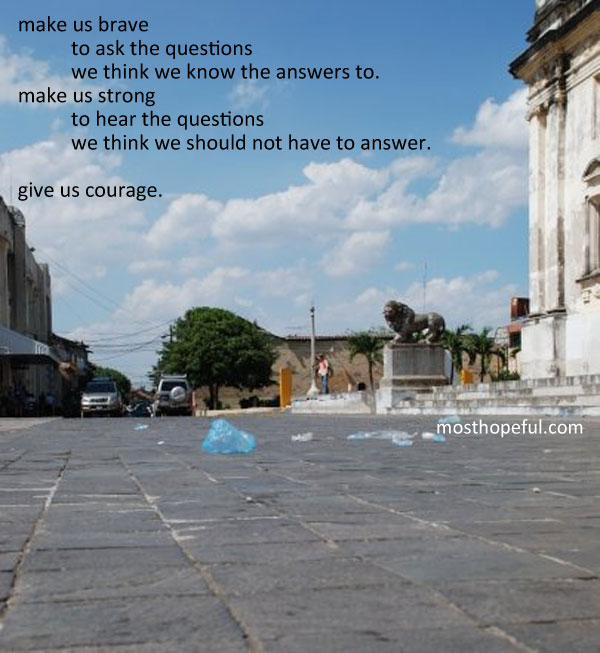
I find myself often asking questions to clients that I know I need to be asking myself. Much of the art of clinical work has little to do with giving answers or telling people what they need to know, as these things are never beneficial when I am struggling with something.
The art seems instead to be in asking the questions, out loud, that we are unable to ask ourselves when we are holding on with dear life to whatever it is that is holding on to us so tightly. And in all the ways that my clients are generous enough with me to offer the space for me to put a new question in the air, it is in that same moment that I hear that question being asked out loud.
Often, like it was today, the words float in space and I recognize that I am hearing the question posed for the very first time as I ask it to the person sitting across from me…
“Why do you think you need the last word?”
“Why do you think it is so important that they understand what you are saying?”
“Why do you think they heard it one way when you intended something very different?”
“Why do you think that became so unbearable for you? What about it is really so impossible?”
‘Why do you think those words from that person meant so much to you?”
“Why do you think you worry about this particular possibility so much?”
“What is it about you that makes this in particular worth so much?”
The bravery my clients show in speaking their realities into the air offers me the opportunity to hear, usually for the first time, the questions that I have not yet been brave enough to ask myself. And so as they share in their own vulnerability, I am able to take a more honest look at whatever is buried in my quiet interior. I am able to ask myself a question that I didn’t even know I needed to ask.
Paired with the gift this has become is the frightening reality that at whatever moment I think I know enough to tell a client what they should know or need to do…in that moment I am missing the opportunity to learn from them what I need to be asking myself.
Their humility and bravery, and generosity with their humanity, are teaching me a great deal about what it means to be a human being in the world.
djordan
Pine Tree
RELATED POSTS | What they are teaching me | What they are teaching me 2
One of the things that has become a favorite of teaching has been when students disagree with me. This semester has seen a class filled with diversity in age, income, race, and worldview. It has made conversations thicker and richer because no one in the room can get away with saying something while assuming everyone both sees it the same way and agrees with our conclusion.
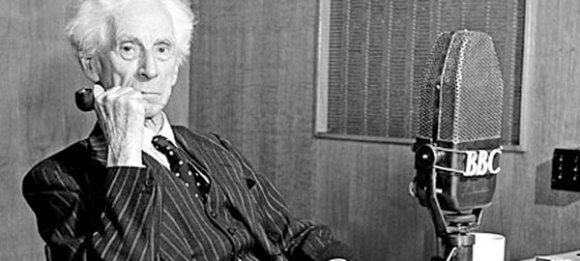
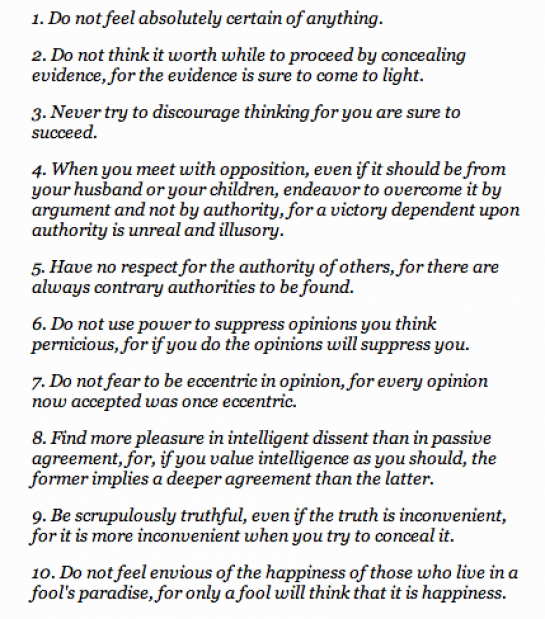
I’ve seen the nature of the class feeling and creating a culture of safety in dialogue grow all of us into wiser practitioners and students of those around us. They have been a gift, and I thought of our class when I read these notes from Bertrand Russell in last week’s braingpickings.org weekly email. Considering Russell’s stance on religion, and also considering sending practitioners into the world who are Christians, it feels that more important than even knowing certain things is knowing how to think through certain things, how to disagree, how to ask questions, and how to engage.
I hope you find these as interesting as I did, in light of Russell’s zeitgeist and the one in which we find ourselves.
djordan
Pine Tree
RELATED POSTS | The Best First Class Ever | We Can Assume | Failure to Imagine | The Risk of Narrowing the Voices

Choosing a paint color is one thing; seeking the truth is another.
One of my favorite lines of Madeleine L’Engle’s is, not in quotations because I can’t remember where it was, that God does not need our protection, and welcomes as many questions as we can dream up.
And I’ve noticed in the meantime that we are at risk not only of taking other people’s answers for truth, but also of taking other people’s advice on what the questions are to be asking in the first place. When our questions are guided, we are of course lead to certain answers from certain narrowed voices.
When we narrow the voices, we weaken our ability to discern at all. In thinking throughout history of all the situations and all those power and all those in the church, even, who have been led in obedience because they trust that someone else is doing the discerning, it is horrifying. We mistake proclaimed expertise for due diligence, and we are left unthinkingly joining in protection of the status quo.
Stifled questions means stifled dialogue, and it is in dialogue that progress is born and we get a little closer to the truth we are all of us after. Dialogue requires broad voices rather than a single voice, and there is perhaps no doubt in the promise that where two or more are gathered, there is something more true and holy present and happening.
I’ve been reading, this time by choice, the book that we long ago read in high school by mandate: Fahrenheit 451. I remembered thinking at the time that how ridiculous the notion was that people would be told what to read and what not to read, and that reading and thinking off of an approved list could result in death.
Book burning followed driven by those in charge, under the guise of protecting humanity from dangerous thought. Children then came up into families never knowing the art of book reading, thinking, questioning, debating, creating and imagining.
I thought it foolish then, but it doesn’t seem so foolish now. In fear of discerning many voices, we seek to narrow them down to the ones we know, or the ones we have been told to agree with: the approved book list. To read past the first page of another voice becomes treacherous and intimidating, because we wont know what to do with another line of thought. And so, as encouraged, we don’t think anymore. We ask the questions we’ve been told to ask and take the answers we’ve been given.
If we idolize those speaking or writing, or simply take their words, we aren’t able to listen to multiple voices because we have challenged the ability for the spirit to work in community, and given authority to some single voice.
With broad voices, however, we learn the art of listening and asking, hearing and being heard. With broad voices we learn how experience shapes understanding, and how injustice and power breed certain lines of thought. We learn where we are blind, and where we are gifted. With broad voices, we think enough to welcome for dinner a Boo Radley or a Hester Prynne. With broad voices, the combination of these truly human acts yields compassion and humility.
I’ve been in meetings where a million voices made it impossible to choose a paint color, and it has indeed been a nightmare.
I’ve also been in meetings where power is used to beg discussion, criticism, thoughtfulness, ideas, questions, dreams and disagreement…none of which should be mistaken for disunity…and it has been a beautiful and community-affirming endeavor.
There’s a difference between choosing a paint color and seeking the truth.
And what have we to fear if it’s the truth we’re after together.
djordan
Pine Tree
OTHER RELATED POSTS | BECAUSE YOU DID NOT ASK, FEAR OF THE WEAK AMONG US

“We chase them out with a rake!”
I remember as a child talking to a friend of mine at church who lived next door to the Mormon church in our town. We were children, granted, but I remember her saying one day when I asked her about Mormons that she chased them with a rake. There is no telling what actually happened, and there is no telling what stories people could tell about me. Neither is the point.
I am teaching “Poverty and the Church” this semester for the School of Social Work at our local University, and the issue of diversity is inherent in our conversations about poverty and the church. As an extra credit assignment, I asked my students to attend a church that was unlike their own, and write about their experience. One student, raised as a mormon but since evangelicalized, invited me to attend “Mormon Church” with her. So alas, Sunday Morning, it was off to Mormon Church.
Part of why I mention my conversations with a childhood friend is that I realized walking through the parking lot that morning that my fear was based on very, very little. I have a remedial understanding of Mormon belief, enough to know I can say, “No, Thank You” to people who ring my door bell at three thirty on Sunday afternoons.
***
As a side note, the power of fear to shape our experience of people is fascinating and terrifying. If we are taught to be afraid of someone, are we not more likely to be unjust, violent, discriminatory, and hateful? The danger is startling, but where I live there is still, sadly, a value to propagating fear of “the other,” no matter the ignorance required to do so.
***
So, I noticed as soon as I sat down that my clothing choice was incorrect. Every other male in the room had on a white button up collared shirt and a tie. I had on neither, and it was obvious. I was asked if I was a visitor…yes, what gives me away…and then asked my name. A minute later, my last name. I must admit, I panicked when asked for my last name. I was tempted to lie…I remember making up a name on the school bus one day when asked for my name, naming one of my dad’s law partners. “Jordan,” I said. “Donald Jordan.”
What strikes me most about the day, save my own uninformed fear and therefore ignorant judgment, was the content of what followed in the sermon. The message was given, instead of by one person, by three different members of the congregation, two females and one male. I liked the thought of this, assuming that the congregation might have a great deal of insight and wisdom to share with the congregation. I then learned that the sermon topic had been assigned as had the reference for their thoughts. The sermon topic was “Sustaining your leadership,” and the references given for the speakers to use were not from scripture itself, but rather from past talks given by previous “apostles” from their previous meetings.
They went on to quote prior leadership saying that the health of the church depended on not questioning the leadership, unity based on not questioning leadership, true calling being made known to them from the leadership, and faithfulness being measured by their allegiance to the leadership.
Fascinating.
The ability of an organization to propagate itself by instilling the value of not asking questions, not holding leadership accountable, and even doing so by associating position with a certain amount of divinity…
Fascinating.
I left thankful for those who have taught me to ask good questions, to think carefully, and to follow the truth, even when it leads away from common accepted wisdom.
What was most startling is how I have learned to be afraid of a group of people I have never really met, and also how the things that ultimately bothered me most about this past Sunday morning were not unique to the Mormon church.
One of the “missionaries” who spoke, around my age or a little younger it seemed, said to the crowd in a way that made me feel she was saying it to herself as much as anyone else, “I believe this is the true church. I have to. It’s like I heard someone say one time, ‘show me something better, and we will talk.'”
I thought, as I heard those words come off her tongue, “I don’t know much at all, but I know something better.”
djordan
Pine Tree
 most hopeful