

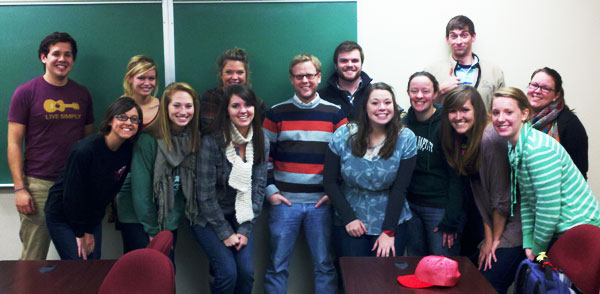
I debated before my very first classroom teaching experience whether or not to pretend like I knew what I was doing. Whether or not to tell the truth when we began that they were joining me on a journey that was the first of its kind for me, or “Don’t let them see you sweat,” as I’ve heard people in leadership say to me before. It never settled well with me. We all sweat. Why shouldn’t they see it?
I think when I walked into the room, I still had not made up my mind. They were seated quietly (this once), waiting to see what the shape of the class would be. I was just as curious as they were.
“Well, I tried to decide whether to pretend like I know what I’m doing with you folks, but, I feel like I should come clean: This is my first undergraduate teaching experience. So there. Now you know.”
Apparently, my mouth had decided the game plan but had not remembered to inform my mind.
“Uh oh…” someone said, then the room laughed, and then we began one of the most enjoyable experiences I’ve ever had. Definitely the best first class ever. Admitting that I would likely sweat that very first day allowed us to sweat together, and made something very communal, spiritual and human possible and present in the room.
We engaged for the next semester in a class about “faith-based social service,” and the wheres, hows, whys, and whats of how the church and people of faith bring the good news that God through Christ will make right all things cursed by sin, bringing his kingdom come on earth as it is in heaven. Things you can get fired for talking about. Things like the human heart, sex-trafficking, homelessness, planned poverty, economic injustice, christian arrogance and ignorance, poverty, greed, pride, loneliness, mental illness, individualistic idolatry, systemic injustice, abuse, trauma, and on and on and on.
“As far as the curse is found,” the old hymn reminds us. And it’s found far beyond only our human hearts and inside our churches, but in our broken communities waiting to see and hear the good news all the same. The big and broad good news that has more to do with everything else than it has to do with us.
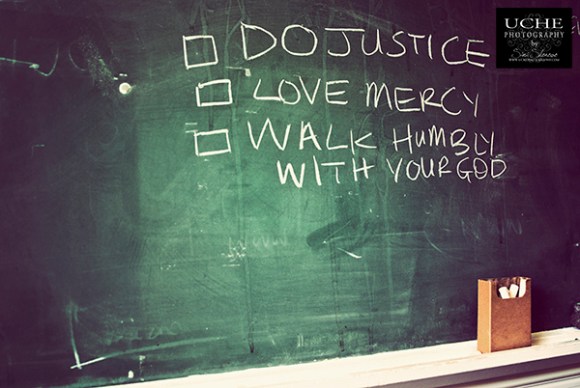
And as a class, we began to engage these issues, tried different typologies out on them, dressed them in different best-practice approaches, and delved into scripture to see what it is we work toward and how we are called to work toward it. Throughout, we explicitly tried to guide our discussions and studies with a few questions that we would ask of each other, authors of the texts, practitioners in the field, and pastors in our churches:
1. Is it a bad either or?
Are these bad either/or scenarios that we are working within? Have we picked a side on something that may not (although it very well may) be a real either/or situation? How can we back up enough to see this clearly?
2. What are the assumptions?
What assumptions are we working from but ignoring as we move forward? Have we questioned these assumptions, and are we okay with them if we are building on them? How can we notice these assumptions? Who or what can be engaged to reveal them to us?
3. What are the power dynamics?
What power dynamics are at play, and what are they costing us and those we serve? Are we being honest to notice them, or are we trying to convince ourselves that they don’t exist? Whose voice and eyes can help us see them, and readjust?
4. Where did this information come from?
Where did this information come from? Is it valid? Is it biased? (Yes.) So where is the other side of the bias, and have we considered it? Are we looking for the truth, or looking for something that defends our current stance?
And finally,
5. What is absent but implicit?
Built out of the narrative therapy tradition that has stolen my imagination, this question is important and fresh. What have we left out of our questions, our conversations, our research, our planning, our programming and our praying? And what can its absence reveal to us about how we may be thinking wrongly or ignorantly about the issues? Whose voice, opinion, insight or criticism are we ignoring, and what does that reveal about us and our work?
When the class would be engaged in discussion, and a student would offer one of these questions to help push us into more clarity, I would feel my insides jump for joy. More than any solutions or approaches we came to as a class, or read about in our texts, the impact for Christ and his kingdom that is likely to be had will come from a student being guided by the curiosity and humility that these guiding questions encourage. So when they were thrown into the conversation by the students themselves, I would immediately envision them running organizations, pastoring churches, or working in businesses in the future, throwing out these same questions from the field, the pulpit, or the boardroom.
It makes me beyond hopeful.
And then, the best of all, toward the end of the semester, I was challenged––called out––by a student when I made a comment beginning with a phrase I had warned them to be wary of. In talking about a particular issue, the words, “Well, it all boils down to this: …” came from my lips.
I didn’t hear them. But my students did. One spoke up from the back, “But Donald, does it really? Does it really all boil down to that?” Much like that first class, we all laughed, someone says, “Uh oh….” and we continue with a more honest, more appropriate, more life-giving conversation than ones stifled by a person in the front informing everyone of how complex and nuanced issues “all boil down” to something that they of course do not and cannot. I had been called out, and it was the most rewarding experience of the entire semester.
So to those students, the best first class I will ever have, I give my deep thanks! You have taught me to be comfortable with what I do and do not know. You have taught me that laughing at myself and the clumsiness of the process creates space for honest dialogue and true progress. You have taught me that respect comes in the form of accountability and honesty, not position or title. And you have taught me that making room to be called out can be most rewarding.
And you have taught me that there is much to be hopeful for as you enter the world with the good news of Christ and his kingdom. The practice fields, the pulpits, and the boardrooms you operate in will be graced with a fresh humility and curiosity that will always be pregnant with the hope of all things being made new.
I look with great anticipation toward your futures.
djordan
Pine Tree Dr.

This Thanksgiving was the first major holiday that my grandfather’s absence has been felt without the need to try to pretend otherwise. His love of cooking and hosting and dinner partying was well-known, and that flowed into holidays well. As a little boy, a grandson, that was one thing I knew my granddad valued: throwing a good party.
This year, my mom had gotten the bright yellow aluminum dish that my granddad has made dressing in for Thanksgiving every year I have been alive. She made his dressing recipe in it, and there it sat on the counter. His presence was in the room. A party. Drinks. Laughter. Tears. Family. His legacy was strong in the room, even in his first absence.
Much has gone on since we lost him in March. My life has changed. The life of other friends has changed. And interestingly enough, with each shift, I think of my grandfather. When I was in that surreal position of standing during visitation talking to people I knew well and people I didn’t know at all, who my grandfather was became solidified. People didn’t have generic things to say; they said the same thing from different points of view. The refrain was always the same.
Whoever you are, you are worth something. The men he served on board of directors with said he treated them like they were somebody. The man who ran the press at the printing company said to me in the line: “You know how your granddad treated you and your cousin when you were in the shop? Like you were the most important person on earth? That’s how he treated all of us. He treated everyone that way.”
Whether board president of a major bank, or press operator of a small printing company, his legacy was that of treating people with dignity and respect.
I’m thankful for a legacy. His wise planning and generosity has sent me around the world. His encouragement has taught me to believe in myself. But now, in his physical absence, he is teaching me the most important lesson. Whoever you are, you are somebody. Whoever they are, whatever role they play in your world, they are worth all your attention and all your respect.
Thanks, Dabo. In your absence, you are present. And in our lives, you will continue to teach us to live bravely, compassionately, humbly and generously. Thanks to God for you.
djordan
Pine Tree Dr.
My comments at Dabo’s funeral in March 2011 are listed below:
On behalf of the grandchildren––Jamey, my older brother, and Katie and Suzanne, my first cousins, we wanted to share with you only a few of the things we think make Donald Laycook, or Dabo as we have all always called him, such an incredible man and the perfect grandfather to all of us. It seems as if a time of sharing these moments would be more appropriate were he to be here sitting with us, listening to us brag about him to all of you. There are other ways, however, that he would not have stood for that. He was a man of incredible talent, knowledge, wisdom, graciousness and fun, but he was not proud. With a list of things that make up only a slice of his legacy, he would have directed your attention to what you had to offer, and to what he saw in you.
But, since he can’t much fight with us today for bragging on him, that is just what we will do.
Last night, as the grandkids sat around a patio table for a good meal and good drinks, we reminisced on the things that Dabo taught us. One of those things was, in fact, to sit around a patio table with good drinks, gourmet food, close family and deep laughter. We all remember seeing Dabo on the other side of the kitchen counter, standing over the stove, explaining what recipe he was trying for the first time, or what family favorite he was cooking for Sunday lunch. I remember sitting pulled up to the coffee table in Mama Two and Dabo’s den as he would set appetizers in front of me and the twenty other family friends who were gathered around for dinner or a party. His newest album would be playing on his Bose sound system, and we would laugh and eat until it was all we could do to fall asleep. Whether in his house, at the beach, or out to eat in Chicago, Memphis, New York City, or even Jackson…he knew how to make a kind of kingdom hospitality come to life.
We have all, now, fallen in love with good food, good drinks, and sitting around patio tables full of deep laughter. Thank you for teaching us to enjoy hospitality like it will be enjoyed in the kingdom of heaven.
As we were picking out pictures and reminiscing about the moments they attempted to capture, we also remembered his love for travel. We saw pictures of mom and Carol sitting in Acapulco in their middle school years with Dabo bearing that trademark sideways grin, camera over his shoulder. We saw pictures of Mama Two and Dabo in front of Big Ben, holding each other and again grinning like they knew exactly the kind of good time they were having. There are albums and albums that capture a family trip to beach every single summer until only a few years ago with all ten of us, Mama Two and Dabo, Mom and Dad, Carol and Van and all the grandkids standing on the deck with the beach behind us. We talked last night about the time Dabo came out to dinner at the beach with a ball cap that had a gray pony tail sewed into its seams hanging out the back. “You like it?” he would say, and laugh. After wearing that hat out to dinner had given him all the fun it could, we remembered him coming back into the condo one afternoon showing my grandmother his brand new nose-ring, a magnetic silver stud that he had put right on the edge of his nostril. “What?” He would say…”You don’t like it?”
His love of traveling not only filled pictures of his photo albums with trips, but that love paired with the generosity of Mama Two and Dabo has made it possible for us to enjoy the world with him. Through his planning and hard work, I’ve already been able to travel all over the world and see the kinds of places I had once only seen in his albums. Even this past Sunday at his house, he asked me where I was going next. “Cape Town,” I said. He asked me who I was going with, what I would do, and not to forget to tell him all about it.
We have all, now, fallen in love with traveling. Brazil, Japan, Nicaragua, Cape Town, Israel, Indonesia, Europe, Kenya. Thank you, Dabo, for teaching us all to do and enjoy the exploration of God’s good earth like it will be enjoyed in the kingdom of heaven.
Finally, and probably most importantly to me, Dabo taught us to value learning over knowing. I remember Mama Two saying that whenever she would open to the door at her home to be greeted by an encyclopedia salesman, the she would apologize, saying that she wouldn’t be needing any encyclopedias because she was married to Don. He could quote Shakespeare and Dostoevsky, pick out Chopin and Beethoven, and tell you the latest Hollywood film and its current reviews. He knew the history of everything, and probably had a few books on the shelf that he could point to without looking. Valedictorian and Latin tutor from what I heard from some of you yesterday, he taught us to study hard. But more than teaching us to be smart, he taught us to consider learning itself as the goal. We talked last night about how he would always pick out the most magical, techno-saavy Christmas gifts that we, his grandchildren, didn’t even know existed. The memory of those gifts now seem to have embedded in them for me the kind of wonder and humility that a value of learning over knowing is wrapped up in. He taught us to anticipate learning from those we work with, those that work for us, those that we serve, and those that we laugh, eat and travel with. If anyone could value knowing, it was Dabo. And yet he was always learning.
Thank you, Dabo, for teaching us to walk in wonder and humility at all the world and its people can teach us through their culture, their food, their literature, their music, and their art. It is a kind of wonder and humility that I suspect we will move within in greater ways in the kindom of heaven.
The four of us learned a great deal from Dabo, and in a commitment to his legacy we will move forward learning from those around us as we eat well, laugh hard, and walk humbly. You were always ahead of your time, Dabo. And as the four of us toasted to you last night at dinner, I felt overwhelmed as I do now, and as I did in those last moments by your bedside, to whisper, “Thank you for everything.” Even today, you are ahead of your time, and closer to the already, not yet kingdom. I pray that we can walk humbly in your legacy.
We love you, Dabo. And we thank God for you.

I walked the labyrinth at the hospital today. I can see it from my office window, the maples blooming with a sharp red that distracts me all day long as I watch past my clients through the glass into the courtyard beyond my office. I finished the drudge of my paperwork today in time to spend thirty minutes walking through it.
I see it everyday through the glass; today was the day to walk it.
I have read about them before, but I’ve never walked through one. I found myself taking one step at a time, observing the thoughts passing through my mind with each step.
Loop one: What am I supposed to be doing? Am I thinking solemnly enough? Am I messing this up? The last time I was here was when Brooke’s dad was in ICU after a stroke. Should I even be here right now?
Loop two: Shouldn’t I be learning something profound right now? Isn’t this supposed to be an existential process; a joining of mind and body and soul at one time? Am I doing this right? I have friends going through mammograms right now. I have other friends losing their jobs right now. I have other friends in the hospital with their parents right now; shouldn’t this be about them?
Loop three: You don’t know what you are doing. Be quiet in your mind. Stop working to figure this all out. Just put one foot in front of the other, and know that whether or not you see how the path in front of you plays out, it does––in fact––play out. You will keep walking, and make it to the other side. Stop pushing.
The person going through the mammogram right now is what is on your mind. Let it be.
The person who is losing a job is on your mind. Let it be.
The person who is in the hospital with his mom is what is on your mind. Let it be.
This is not about an existential process; this is about being truthful about where you are, what you can and cannot do, and who God is. Keep putting one foot in front of the other.
Loop four: You, God, are the same. You are the God who changed the course of the story in the garden. You are the same God who made Abraham the promise. You are the same God who anointed David King. You are the same God who gave Isaiah a vision. You are the same God who sent Christ. You are the same God who raised him. You are the same God making all things new. You are the same God whose son is King of the kingdom.
There is nothing magical about that maze of concrete that sits between the walls of the hospital and my Pathways office. There is, however, something sacred about the journey through a guided piece of art that brings me where I need to be: completely unsure about where this winding path leads, but knowing––more than I know most things––that where I will end up is where I need to be.
Be still and know.
djordan
Pine Tree
We were sitting around a table spread with pads, pens and leftovers a few feet off of Beale Street in Memphis. We had a two-day staff retreat for Area Relief Ministries, and we were closing up our time together with some overarching reflections on our different ministry areas, what we were seeing and feeling, and where we wanted to go in the days ahead.
Having been through the National Civil Rights Museum together, a staff of half women and half men, half black and half white, we were reflecting on our own experiences and those of the people we serve every day at ARM. One of our staffers, Vakendall, started talk-praying in a kind of musical tone that he often speaks in; what came out of his mouth has been lingering in my head since then.
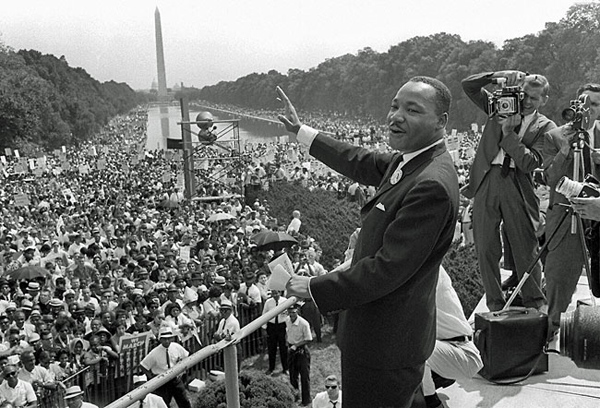
In reference to the photos and pictures throughout the Civil Rights Museum of men and women standing up to oppression, racism and violence with a kind of sharp meekness seldom see, Kendall asked, “Who told them they were somebody?”
As I think of the people who walk through the doors at Area Relief, the kids who show up at The HUB Club for tutoring and mentoring in the afternoon, the clients that sit in my office at Pathways fighting bravely against all shades of mental illness, I am now wondering who is telling them they are somebody.
Churches often get swallowed up in the business of deciding who is and who is not…somebody.
There seems to be a task at hand, a responsibility and a privilege bundled up together the moment eye contact is made with another. Just as we hope to be bearers of a holy image, we feel a call to look another in the eyes, reach down deeply, and speak of their somebodyness.
The people not in those photos at the Civil Rights Museum were likely their teachers, neighbors, postal carriers––maybe if we are lucky, even their pastors––the women and men who made it clear over and over again that they were somebodies. People who were made to be kings and queens, even if nothing else in the world at that moment suggests that is anywhere near the truth.
I’ll be more satisfied if I ever end up not being the person who speaks at the pedestal for the world to hear, but rather the one who told him or her that she was somebody.
djordan
Pine Tree
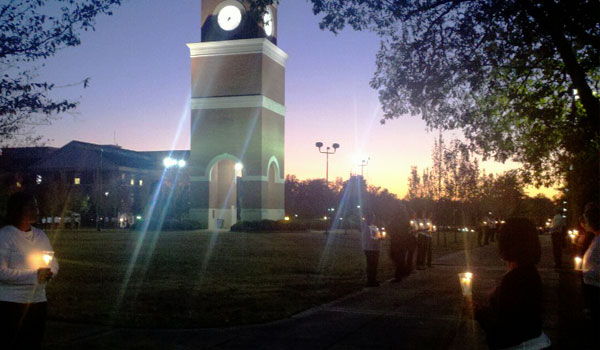
There is something quite stunning about this group of men and women. I watched them walk through the candle-lit, witness-lined path at the fourth annual Remember Me walk for homicide-loss survivors, and while emotions varied from person to person, there was a stunning mark of resilience that was breathtaking on all faces. Faces covered in tears beamed with resilience. Faces covered in solemnness beamed with resilience.
And it is stunning.
I am prone to be all one thing.
All furious.
All joyful.
All hopeful.
All helpless.
But I am learning the deeply human art of being all of two things at once. I am learning to carry two emotions in their fulness at one time, refusing to let one swallow up the other. I can be enraged at injustice, arrogance and ignorance on my own part or the part of others that causes grief and pain in the world; and at the same time, I can be grateful for the peacemaking, the meekness and the thoughtful engagement on my own part or the part of others that slowly gives promise to the reality of the coming kingdom.
There is this need for the truly human women and men to stand in a space between horror and hope and refuse to lie about the former in an effort to find the latter. There is a call to stand, much like Christ, with arms outstretched in an effort to keep a tight grip on both reality and promise, knowing our hearts can hold the tension.
And these men and women––walking with photographs in hand of the husband, daughter, mother, grandbaby they had ripped from their lives in violent murder––they walk, faces shining with complete resilience and complete grief. They promise by the mere act of putting one foot in front of the other that God has placed deeply within us his own nature of being fully enraged and fully proud of all that humanity is and will one day be.
Kingdom come.
djordan
Memphis, Tennessee


 most hopeful