Tag Archives: peace

before the end of this day

You are God of all our possibilities. You preside over all our comings and goings, all our wealth and all our poverty, all our sickness and all our health, all our despair and all our hope, all our living and all our dying.

And we are grateful.

You are God of all of our impossibilities. You have presided over the emancipations and hearings of our mothers and fathers; you have presided over the wondrous transformations in our own lives. You have and will preside over those parts of our lives that we imagine to be closed.

And we are grateful.

So be your true self, enacting the things impossible for us, that we might yet be whole among the blind who see and the dead who are raised; that we may yet witness your will for peace, your vision for justice, your vetoing all our killing fields.

At the outset of this day, we place our lives in your strong hands. Before the end of this day, do newness among us in the very places where we are tired in fear, we are exhausted in guilt, we are spent in anxiety.

Make all things new, we pray in the new-making name of Jesus.


+ W. Brueggeman, from “You beyond our weary selves” in Prayers for a Privileged People


Tagged , , , , , , , , ,

rule-breakers and peace-makers

Although we think we are all alone,
we are all overflowing
in the margins;
we are filling up the outer-spaces

left by the normal
rule-keepers and
peace-keepers

left by the normal
answer-takers and
non-troublemakers.

We find ourselves recklessly seeking
and moreso even recklessly wondering
what it means to be rule-breakers and peace-makers.

So we wonder around
thinking we are on our own
working toward kingdom come
only to find that the road toward
the kingdom is filled with
rule-breakers and
peace-makers and
law-changers and
question-askers and
justice-singers
story-tellers and
kingdom-bringers.

And it is in this work
that we bump into our counterparts
who have been feeling,
also,
that they are all alone.

But in their work
and in their grieving
and in their praying
and in their hoping
they have bumped into us
and we have bumped into them

and the pity lessens
and the courage strengthens

and we find ourselves joined by so many others
living and trying to live
in the margins
pushing toward
the kingdom come
on earth as it is in heaven.

djordan
Pine Tree

Tagged , , , , , , , , , , , , , , , ,

from a long line of rule-breakers


History is marked by those pushing
into uncharted waters
unexamined worlds
and mostly unacceptable arenas
where people who were not to be
allowed
accepted
approved or
appreciated

were asked to
contribute
comprehend
compose and
conspire

against the ways that things are
and toward the way that things should be

in the kingdom
in the beloved community
in the new ecology
of a world and
of a community where
rich and poor
sick and well
like and unlike
loud and quiet
important and ignored

sit together
eat together
serve together
weep together
laugh together
learn together
give together
sing together and
hope together.

And while we are still so far behind
we have moved so far ahead
of where we have been

and only a few moments of remembering
will give us the wisdom and the humility
to pray to God–our only hope–that we will keep moving forward
faster and surer than the ways we are pulled to move backward

and we will remember
in our trepidation and
in our eagerness for
things to stay the same

that we are descendants of a long line
of rule-breakers
of peace-makers
of hope-holders and
of kingdom-bringers.

And now is not the time for stillness.

Amen.

djordan
Pine Tree

Tagged , , , , , , , , , , , , , ,

on psalm 72

Give the King your justice, O God,
and your righteousness to the King’s Son;

That he may rule your people righteously
and the poor with justice

That the mountains may bring prosperity to the people,
and the little hills bring righteousness.

He shall defend the needy among the people;
he shall rescue the poor and crush the oppressor.

He shall live as long as the sun and moon endure,
from one generation to another.

He shall come down like rain upon the cut grass, 
like showers that water the earth.

In his time shall the righteous flourish;
there shall be abundance of peace till the moon shall be no more. 

He shall rule from sea to sea,
and from the River to the ends of the earth. 

+Psalm 72

We ask for the courage to speak into justice for the poor,
and freedom for the oppressed.
We ask for humility to know that as we speak into these requests,
we speak out against ourselves.
We ask for the imagination necessary to hold us until
we see you covering all the earth like the morning sun and dew.
We ask for the patience to know that as we join you now
still we wait until it is your time.

Give us eyes to see and ears to hear.
And give us courage to speak and work as we wait.

Amen.

djordan
Pine Tree


Relate Posts | Monday mornings | Some days we open our eyes | Half ready, half afraid

Tagged , , , , , , , , , ,

“Thank you for your prayers, we are tired of war” | a guest post by Caroline Powell

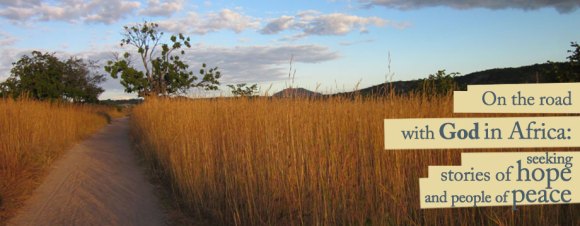
Caroline Powell is a dear friend of mine and native of Cape Town, South Africa. She works with The Warehouse, also dear friends of mine seeking to see the church be a transformative presence in the community in issues of poverty, injustice and division. Caroline has been sent on sabbatical by The Warehouse, in Caroline’s words, to seek kingdom “stories of hope and people of peace.”I’ve been following her blog these last several weeks, and this post is one I’ve enjoyed the most.

Join Caroline on her sabbatical journey at www.thelongwindingroad.me, and in the meantime, thank her for joining the guest voices here at mosthopeful.com. Her words are always words with which to spend considerable time and generous thought. Thank you Caroline. 

“Thank you for your prayers, we are tired of war” | a tribute to the DRC

When I was planning this trip, one of the first places I desired to visit was the town of Goma, on the Democratic Republic of Congo (DRC) side of the western border between DRC and Rwanda. There were several reasons for this. In Cape Town, I study with and enjoy the friendship and encouragement of several Congolese people, through connections at college, church and my work at The Warehouse. I have been fascinated with and deeply troubled by the story of this part of Africa for some time. I have met some very inspiring residents of Goma through Amahoro-Africa who run awe-inspiring initiatives through their churches in their town, and I longed to see first hand what they are involved with on a daily basis.

Getting there and fulfilling this dream has been a different story but one that has invited me into a deeper sense of love and committed prayer for this nation. Advised by Joel from Goma, that I must  have a visa before trying to visit the DRC, I went about filling in application forms and getting invitations letters from my friends in Goma. Once this was done, and all was sent off to the embassy in Pretoria, the waiting game started. I was convinced that visiting this region was to be part of the plan for my trip and especially felt that I would love to go there to encourage my friends by receiving their hospitality – visiting them despite the fact that at times, there are more people leaving the DRC than coming to visit for a holiday. I prayed about it and felt that, while I would take no unnecessary risks at all, if it was a time of peace, I would strive to spend a portion of my trip there.

At about the same time as I was planning for my visit, rebel warlords in the region were planning their next move and just as my passport was arriving in Pretoria for processing, war was breaking out in the very region I was hoping to visit. My passport got stuck at the embassy for too long, as they were in crisis mode due to the conflict and it became clear that this was not to be part of my journey. I called the visa agency and asked them to send my passport home to me. I wrote to my friends, thanking them for the great effort they had gone to in writing invitation letters, scanning signatures and planning to host me. With a deep sadness in my heart I explained that I would not be visiting. With a hope that they did not sound like empty words, I said that I would be praying for them.

A kind reply came back to me, sharing sentiments that they hoped there would be a chance in the future. It was signed off: “Thank you for your prayers, we are tired of war”

Very few words on a computer screen have affected me as deeply as this simple, sad greeting. In much the same way as I might say “I am tired of being cold” at the end of a long winter in Cape Town, they stared back at me. A stated fact. We are tired of war. A fact that I cannot imagine for my own context and yet a fact for countless numbers of people on our planet.

I have just returned from visiting the town of Gisenyi on the border of the DRC. I had arranged to meet my friend Joel on the Rwandan side of the border that is shared between Gisenyi and Goma, and as I travelled from Kigali towards Lake Kivu, the lake that shares is shores with the two cities, the man seated next to me on the bus pointed out a large tented settlement. “Transit Camp” he told me. We were passing one of the many refugee camps that exist, sometimes temporarily, but often permanently in this part of the world. I have made friends in the past few weeks with people who grew up for many years of their childhood in a camp much like this.

Joel met me at “Grand Barrier”, a not so grand piece of road that makes the enormous difference between living in a land at war and a land in times of peace. This same piece of road operated in the opposite direction during the 1994 Rwandan genocide as thousands of people fled their homeland. Then, the transit camps were on the others side. Today, for me, it is a cul-de-sac on my long and winding road. A country that I can only dream of visiting. Homes, less than a kilometer away with rooms and beds where in more peaceful times, I would have visited and slept. Joel took me on a walking and moto tour of his town from the safe side of the border. The two towns are separated by a stone wall at most in some places, even less in others. They are reportedly the two closest border towns in the world. He showed me the region where his family home was destroyed along with thousands of others during the eruption of Ndiragongo in 2002. I took a photo of him with this still active volcano in the backdrop. He pointed toward where he now lives with his family. We walked and talked- of church, recycling, youth ministry, war, upcoming life events and hope. And then he returned home and I went back to Auberge de Gisenyi and watched some of the Queen’s Diamond Jubilee celebrations on TV in French.

It is my hope that this essay, as insignificant as it is in the grand scheme of things, will serve as a tribute to the Democratic Republic of Congo and her courageous people. There are too many wars like this one in the world for us to pray individually and with understanding for each one, but sometimes, as the case is with me in this season, God brings one thing to your attention, and all you CAN do, is pray. DRC, I pray for hope, peace, courage and patience for you. I pray too, that one day I will be able to enjoy your hospitality on your soil, not just from over a stone wall.

Amen.

Tagged , , , , , , , , , , , , , , , ,

beyond sides of a story

Our temptation is, of course, to listen for the evidence and decide which side of the story we will choose to stand on. And our temptation then is, of course, to fight for where we have chosen to stand. And our temptation then is, of course, to stop listening because when fighting for the side of the story we have chosen, we fight with all our might because it has become the ground on which we are now standing.

But what happens if we consider moving beyond sides of a story? What if we have been fighting for the either or for the or when it was never an either or to begin with? What if our need for choosing sides comes more from a need to stop listening, because listening is harder than fighting. Persisting in curiosity is harder than moving into superiority.

I know when I speak, I am telling what I’ve seen. What I’ve smelled. What I’ve felt.

And when they speak, they are telling what they’ve seen. What they’ve smelled. What they’ve felt.

And if we experienced the crash of the story me from one bank, and them from the other, we may both tell the truth, and still tell a different story.

So is there a way to listen widely, getting so many sides of the story that we move beyond sides all together and rather begin to experience the fulness of the story we know we exist anyway? A fullness that breeds humility and compassion and generosity because we continue to listen and therefore take on the fulness and complexity of the story itself rather than landing on a side and being forced to start a fight.

It is, of course, the work of being a peacemaker. And the peacemakers are, of course, the children of God.

djordan
Pine Tree

Tagged , , , , , , , , , , , , , ,

on silence

Silence

Propped up in the bed holding the book, I must have been so chained down to the story that when the fly came barreling straight past my left ear, I nearly yelled. It was early morning, the kind of early morning that really belongs to the late evening before, and I was sucking the words off every page. I had become so silent that I was more startled by the fact that a fly could buzz past me than I was by the fly itself.

I laughed at my overreaction, and went immediately back into the book. Of course, thirty seconds later, the same fly and the same startled overreaction. Four times this happened. Every time, I was caught completely unaware.


Silence

I stretched out on an empty bench, looking at the great mountain as my park backdrop, thinking for just a moment about the perfect Sunday afternoonishness of it all, and I started to read. Silence.

But the silence was different this time. It was loud.

The winds were so strong that I could hear them crashing into my ears. That was the foreground noise, and the people and kids playing, laughing and running were the background noise. I could hear all kinds of things, and yet nothing at all. My mind had quieted completely. It was a perfectly loud, Sunday-afternoon kind of silence.


Silence

I think of times when I knew a horrible conversation of conflict was about to happen, or a horrible event was unfolding, and everything­­––whether there was other audible noise or not didn’t matter––everything became so silent.

Except for my heartbeat.

My body became cavernous and my heartbeat became connected to a loudspeaker that only I could hear. It’s the kind of silence I would try to turn down the volume on. My dry swallows become unbearably hearable.

Heartbeat. Heartbeat.


Silence

And then, just after those conversations start, a new silence comes and muddles out the heartbeat and swallowing silence. A certain kind of peace arrives, a clarity around the words being spoken, the truth of the people speaking the words. From the loud-heartbeat-silence I begin to hear the truth, and things quiet down.

The conversation has started: I can see where it will end.

The car is spinning off the road: I can tell I’ve lost all control.

A new kind of silence emerges.

A kind of chosen silence.

A kind of you-don’t-have-to-understand-me silence.

A kind of this-is-where-I-am silence.

This is who I am.

This is who you are.

This is where we are.

This is where we are not.

A kind of this-is-what-this-is silence.


djordan
Cape Town

Tagged , , , , , , , , , ,