


I cannot remember the last time I’ve fallen so deeply into a novel. I’ve said for many years that I’m not grown up enough to read fiction, so I mostly stick with memoirs and textbooks.
After finishing Foer’s “Extremely Loud and Incredibly Close,” I’m sticking to my guns and saying I’m not grown up enough for fiction,
but that it is surely time for me to start growing up.
A better summary can be found HERE, but in a single swipe of great injustice, I’ll try: it’s a story of a young boy whose father was killed in the 9/11 attacks. It is his parallel journeys through finding a lock that a mysterious key of his father’s opens, and through a child’s honest and sharp grief of losing a father on “the worst day ever.” I often found myself with tears about to break, just after a laugh would suddenly erupt. I felt more human while reading than I’ve felt in a very long time.
What I noticed the most were the dozen times that I would find myself shielding my eyes from the upcoming lines, often closing the book in the middle of a conversation, an argument in motion, a story in telling, a memory in recollection.
I knew I wasn’t ready for it.
I knew I couldn’t bear to go on. Yet.
So I shut the book; I looked around to wonder why no one else was as worried about the impending outcome as me. And then finally, after the not-knowing would outweigh the not-wanting-to-know, I would flip the book back open, hold my breath, and …
***
I read books and journal articles constantly about clinical and community work because I want to do justice with the beyond-generous people who offer me their beyond-personal stories as we look to do hopeful and honest work together in therapy.
But I’ve never closed a text on grief and grieving because I couldn’t bare to read what came next. My heart doesn’t bleed out onto the pages of an article about responses of communities to children who lost parents on September 11. A text can name and normalize complex emotions, but the voice in a well-written novel can make me feel it.
Make me feel it so much that I have to close the story and catch my breath.
And you can close the book and catch your breath until you know that you must find out what happens in a novel. And precisely in those closed-book moments, I think we are being honest with ourselves, and the teller of the story––and ourselves when we are the teller of the story––honest in that we simply can’t bare it anymore, and we must take a breather if we are to remain human. The thickness of our humanity is often more than even we can tell or hear or feel about.
Textbooks make it clean. Novels make it raw. Living voices make it true.
So we have to do whatever it takes to finish hearing the stories.
The stories of poverty.
Of abuse.
Of abused power.
Of arrogant leadership.
Of selfless givingship.
Of painful loss.
Of ridiculous loss.
Of silent suffering.
Of resilient sufferers.
Of global conflict.
Of über-local conflict.
Of the conversations and stories of the flesh-and-blood people who are acting in those roles as antagonist and protagonist and an(pro)tagonist.
If it takes closing the book for a few moments to catch our breath before we say, “Go on. If you have to tell, I have to know…”
***
I’m a better person for feeling what the book invited me to feel. I’m sure I’ll keep reading textbooks and articles, but it’s time for me to grow up into a deeper humanity and brave the world of fiction for all that it can help me see and feel. For all that it can help me hear. And then listen to.
It feels necessary as part of living and leaning into the kingdom.
Even if it takes closing the book multiple times over to catch my breath before losing it again.
djordan
Cape Town, South Africa
RELATED POSTS | Fahrenheit 451 and Mrs. Kee | Narrowing the Voices

There’s this clunky urge in me to always take a picture.
To try to capture a moment so that I can remember the smells and the moods and the words and the looks tied to it.
I’ve done it before in all kinds of places and at all kinds of times. The moment seems so absolutely perfect that I start fumbling through pockets or bags to find the right camera with the right setting at the right time in the right light to get it captured––stored––for later use.
It feels clunky. Like I’m crashing through the moment with some back-to-the-future kind of gear in an effort to trap its perfect mystery.
So that I can pull some more of the energy from it later on. Or the smell. Or the mood. Or the words and the looks.
But they were tied to the moment. And as the moment goes, so they go.
Quickly.
And then I find myself, after the moment…maybe days or weeks or years…wishing I had stopped my clunky fumble for a camera to capture something fleeting, but rather sat and enjoyed its fleeting nature when I realized the kind of moment I was in.
There’s a danger to trusting this kind of thin space, the moments when time and heaven and earth not so much collide together, but rather when our eyes suddenly notice that they’ve always been dancing together. In trusting the thin space, we have to only take from it what it offers us.
We have to trust what it will leave in us.
What it will do to us.
What it speaks to of a kingdom future for us.
There’s no trapping it for more of anything.
It comes.
And it goes.
A tide.
I had one of those moments last night: Sitting in the back yard eating a community-made meal, catching up over good wine with stellar people. I fought the grab-my-camera urge for about thirty minutes, and then the freedom of trusting the thin space found me.
I had one of those moments a week ago: Sitting on the stairs in a home eating a community-made meal, catching up over good wine with stellar people.
There are no pictures to take me back to either.
But both moments are faithful in what they have graciously offered to leave behind for me.
And I will trust that it was worth not grabbing the camera.
djordan
Cape Town
It is with great joy that I enter 2012.
2011 was filled with pain, loss, struggle, sadness, anxiety, and anger.
The year overall was one of seeing the best of circumstances end up as the worst of possible outcomes.
And yet through each season and struggle, there has been tearful laughter, growing community, deeper honesty, brave introspection, and tenuous hope.
And it all feels a little closer to the truth. A little closer to telling the truth.
To others.
To myself.
To the part of all of us that tries to close our eyes to what we know the painful truth is sometimes.
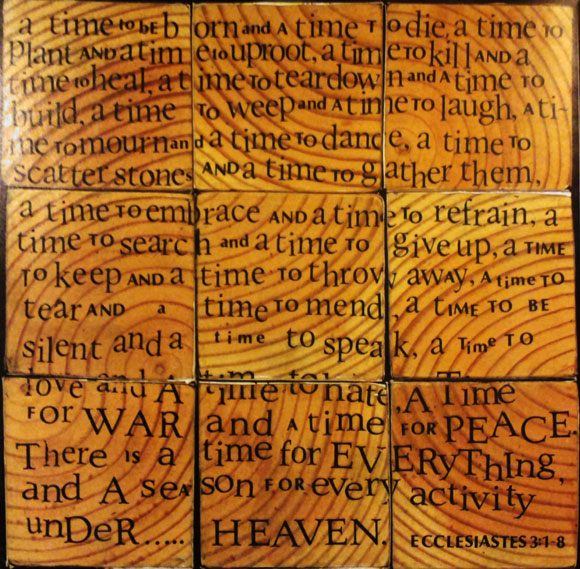
There are times when everything in me wants to arrange my circumstances in ways that hope for the best; those same times, if I were being honest with myself and those around me, I would instead be anticipating the worst. Before this year, I think I’ve tried to push everything, no matter the truth, into a single season.
As if allowing ONLY a season for birth, and then trying to translate death into birth in order to make sense of it.
As if allowing ONLY a season for building, and then trying to add on to things that needed only to be torn all the way down.
As if allowing ONLY a season for embracing, and then awkwardly trying to embrace when I should have refrained from doing so.
As if allowing ONLY a season for speaking out, and then trying to explain why I couldn’t be silent if I had wanted to.
The pain of 2011 has made important room for fall and winter. There is a need and space for dying, for tearing down, for refraining from embrace, for remaining silent. A season for these things.
And in the spaces made from telling the truth about our winters, spring comes on the heels. The ground is made soft, the legs become limber, the imagination becomes ready, and things begin to take root, people begin to dance and build again.
And so here’s to the new year, filled with possibilities for both celebration and mourning. Life and death. Dancing and weeping. Building and tearing down.
And an insistence on the holiness of both––on telling the truth about both–to ourselves and others.
For everything there is season.
djordan
Pine Tree Dr.

This Thanksgiving was the first major holiday that my grandfather’s absence has been felt without the need to try to pretend otherwise. His love of cooking and hosting and dinner partying was well-known, and that flowed into holidays well. As a little boy, a grandson, that was one thing I knew my granddad valued: throwing a good party.
This year, my mom had gotten the bright yellow aluminum dish that my granddad has made dressing in for Thanksgiving every year I have been alive. She made his dressing recipe in it, and there it sat on the counter. His presence was in the room. A party. Drinks. Laughter. Tears. Family. His legacy was strong in the room, even in his first absence.
Much has gone on since we lost him in March. My life has changed. The life of other friends has changed. And interestingly enough, with each shift, I think of my grandfather. When I was in that surreal position of standing during visitation talking to people I knew well and people I didn’t know at all, who my grandfather was became solidified. People didn’t have generic things to say; they said the same thing from different points of view. The refrain was always the same.
Whoever you are, you are worth something. The men he served on board of directors with said he treated them like they were somebody. The man who ran the press at the printing company said to me in the line: “You know how your granddad treated you and your cousin when you were in the shop? Like you were the most important person on earth? That’s how he treated all of us. He treated everyone that way.”
Whether board president of a major bank, or press operator of a small printing company, his legacy was that of treating people with dignity and respect.
I’m thankful for a legacy. His wise planning and generosity has sent me around the world. His encouragement has taught me to believe in myself. But now, in his physical absence, he is teaching me the most important lesson. Whoever you are, you are somebody. Whoever they are, whatever role they play in your world, they are worth all your attention and all your respect.
Thanks, Dabo. In your absence, you are present. And in our lives, you will continue to teach us to live bravely, compassionately, humbly and generously. Thanks to God for you.
djordan
Pine Tree Dr.
My comments at Dabo’s funeral in March 2011 are listed below:
On behalf of the grandchildren––Jamey, my older brother, and Katie and Suzanne, my first cousins, we wanted to share with you only a few of the things we think make Donald Laycook, or Dabo as we have all always called him, such an incredible man and the perfect grandfather to all of us. It seems as if a time of sharing these moments would be more appropriate were he to be here sitting with us, listening to us brag about him to all of you. There are other ways, however, that he would not have stood for that. He was a man of incredible talent, knowledge, wisdom, graciousness and fun, but he was not proud. With a list of things that make up only a slice of his legacy, he would have directed your attention to what you had to offer, and to what he saw in you.
But, since he can’t much fight with us today for bragging on him, that is just what we will do.
Last night, as the grandkids sat around a patio table for a good meal and good drinks, we reminisced on the things that Dabo taught us. One of those things was, in fact, to sit around a patio table with good drinks, gourmet food, close family and deep laughter. We all remember seeing Dabo on the other side of the kitchen counter, standing over the stove, explaining what recipe he was trying for the first time, or what family favorite he was cooking for Sunday lunch. I remember sitting pulled up to the coffee table in Mama Two and Dabo’s den as he would set appetizers in front of me and the twenty other family friends who were gathered around for dinner or a party. His newest album would be playing on his Bose sound system, and we would laugh and eat until it was all we could do to fall asleep. Whether in his house, at the beach, or out to eat in Chicago, Memphis, New York City, or even Jackson…he knew how to make a kind of kingdom hospitality come to life.
We have all, now, fallen in love with good food, good drinks, and sitting around patio tables full of deep laughter. Thank you for teaching us to enjoy hospitality like it will be enjoyed in the kingdom of heaven.
As we were picking out pictures and reminiscing about the moments they attempted to capture, we also remembered his love for travel. We saw pictures of mom and Carol sitting in Acapulco in their middle school years with Dabo bearing that trademark sideways grin, camera over his shoulder. We saw pictures of Mama Two and Dabo in front of Big Ben, holding each other and again grinning like they knew exactly the kind of good time they were having. There are albums and albums that capture a family trip to beach every single summer until only a few years ago with all ten of us, Mama Two and Dabo, Mom and Dad, Carol and Van and all the grandkids standing on the deck with the beach behind us. We talked last night about the time Dabo came out to dinner at the beach with a ball cap that had a gray pony tail sewed into its seams hanging out the back. “You like it?” he would say, and laugh. After wearing that hat out to dinner had given him all the fun it could, we remembered him coming back into the condo one afternoon showing my grandmother his brand new nose-ring, a magnetic silver stud that he had put right on the edge of his nostril. “What?” He would say…”You don’t like it?”
His love of traveling not only filled pictures of his photo albums with trips, but that love paired with the generosity of Mama Two and Dabo has made it possible for us to enjoy the world with him. Through his planning and hard work, I’ve already been able to travel all over the world and see the kinds of places I had once only seen in his albums. Even this past Sunday at his house, he asked me where I was going next. “Cape Town,” I said. He asked me who I was going with, what I would do, and not to forget to tell him all about it.
We have all, now, fallen in love with traveling. Brazil, Japan, Nicaragua, Cape Town, Israel, Indonesia, Europe, Kenya. Thank you, Dabo, for teaching us all to do and enjoy the exploration of God’s good earth like it will be enjoyed in the kingdom of heaven.
Finally, and probably most importantly to me, Dabo taught us to value learning over knowing. I remember Mama Two saying that whenever she would open to the door at her home to be greeted by an encyclopedia salesman, the she would apologize, saying that she wouldn’t be needing any encyclopedias because she was married to Don. He could quote Shakespeare and Dostoevsky, pick out Chopin and Beethoven, and tell you the latest Hollywood film and its current reviews. He knew the history of everything, and probably had a few books on the shelf that he could point to without looking. Valedictorian and Latin tutor from what I heard from some of you yesterday, he taught us to study hard. But more than teaching us to be smart, he taught us to consider learning itself as the goal. We talked last night about how he would always pick out the most magical, techno-saavy Christmas gifts that we, his grandchildren, didn’t even know existed. The memory of those gifts now seem to have embedded in them for me the kind of wonder and humility that a value of learning over knowing is wrapped up in. He taught us to anticipate learning from those we work with, those that work for us, those that we serve, and those that we laugh, eat and travel with. If anyone could value knowing, it was Dabo. And yet he was always learning.
Thank you, Dabo, for teaching us to walk in wonder and humility at all the world and its people can teach us through their culture, their food, their literature, their music, and their art. It is a kind of wonder and humility that I suspect we will move within in greater ways in the kindom of heaven.
The four of us learned a great deal from Dabo, and in a commitment to his legacy we will move forward learning from those around us as we eat well, laugh hard, and walk humbly. You were always ahead of your time, Dabo. And as the four of us toasted to you last night at dinner, I felt overwhelmed as I do now, and as I did in those last moments by your bedside, to whisper, “Thank you for everything.” Even today, you are ahead of your time, and closer to the already, not yet kingdom. I pray that we can walk humbly in your legacy.
We love you, Dabo. And we thank God for you.

I walked the labyrinth at the hospital today. I can see it from my office window, the maples blooming with a sharp red that distracts me all day long as I watch past my clients through the glass into the courtyard beyond my office. I finished the drudge of my paperwork today in time to spend thirty minutes walking through it.
I see it everyday through the glass; today was the day to walk it.
I have read about them before, but I’ve never walked through one. I found myself taking one step at a time, observing the thoughts passing through my mind with each step.
Loop one: What am I supposed to be doing? Am I thinking solemnly enough? Am I messing this up? The last time I was here was when Brooke’s dad was in ICU after a stroke. Should I even be here right now?
Loop two: Shouldn’t I be learning something profound right now? Isn’t this supposed to be an existential process; a joining of mind and body and soul at one time? Am I doing this right? I have friends going through mammograms right now. I have other friends losing their jobs right now. I have other friends in the hospital with their parents right now; shouldn’t this be about them?
Loop three: You don’t know what you are doing. Be quiet in your mind. Stop working to figure this all out. Just put one foot in front of the other, and know that whether or not you see how the path in front of you plays out, it does––in fact––play out. You will keep walking, and make it to the other side. Stop pushing.
The person going through the mammogram right now is what is on your mind. Let it be.
The person who is losing a job is on your mind. Let it be.
The person who is in the hospital with his mom is what is on your mind. Let it be.
This is not about an existential process; this is about being truthful about where you are, what you can and cannot do, and who God is. Keep putting one foot in front of the other.
Loop four: You, God, are the same. You are the God who changed the course of the story in the garden. You are the same God who made Abraham the promise. You are the same God who anointed David King. You are the same God who gave Isaiah a vision. You are the same God who sent Christ. You are the same God who raised him. You are the same God making all things new. You are the same God whose son is King of the kingdom.
There is nothing magical about that maze of concrete that sits between the walls of the hospital and my Pathways office. There is, however, something sacred about the journey through a guided piece of art that brings me where I need to be: completely unsure about where this winding path leads, but knowing––more than I know most things––that where I will end up is where I need to be.
Be still and know.
djordan
Pine Tree
We were sitting around a table spread with pads, pens and leftovers a few feet off of Beale Street in Memphis. We had a two-day staff retreat for Area Relief Ministries, and we were closing up our time together with some overarching reflections on our different ministry areas, what we were seeing and feeling, and where we wanted to go in the days ahead.
Having been through the National Civil Rights Museum together, a staff of half women and half men, half black and half white, we were reflecting on our own experiences and those of the people we serve every day at ARM. One of our staffers, Vakendall, started talk-praying in a kind of musical tone that he often speaks in; what came out of his mouth has been lingering in my head since then.
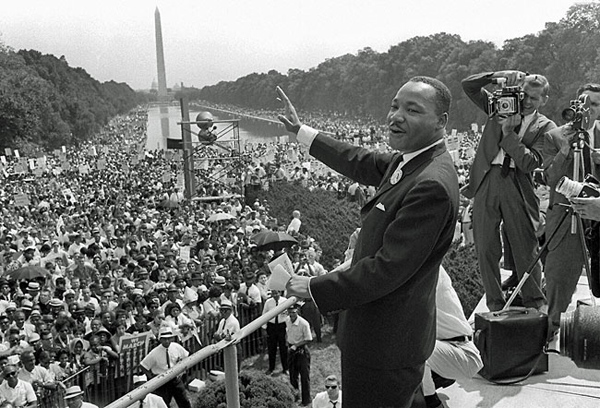
In reference to the photos and pictures throughout the Civil Rights Museum of men and women standing up to oppression, racism and violence with a kind of sharp meekness seldom see, Kendall asked, “Who told them they were somebody?”
As I think of the people who walk through the doors at Area Relief, the kids who show up at The HUB Club for tutoring and mentoring in the afternoon, the clients that sit in my office at Pathways fighting bravely against all shades of mental illness, I am now wondering who is telling them they are somebody.
Churches often get swallowed up in the business of deciding who is and who is not…somebody.
There seems to be a task at hand, a responsibility and a privilege bundled up together the moment eye contact is made with another. Just as we hope to be bearers of a holy image, we feel a call to look another in the eyes, reach down deeply, and speak of their somebodyness.
The people not in those photos at the Civil Rights Museum were likely their teachers, neighbors, postal carriers––maybe if we are lucky, even their pastors––the women and men who made it clear over and over again that they were somebodies. People who were made to be kings and queens, even if nothing else in the world at that moment suggests that is anywhere near the truth.
I’ll be more satisfied if I ever end up not being the person who speaks at the pedestal for the world to hear, but rather the one who told him or her that she was somebody.
djordan
Pine Tree

I was squatting down looking through the glass wall just outside the elevators on the third floor of the hospital. I found tears sitting in my eyes; I was both curious as to why the tears, and also not curious at all. He talked about his brand new baby boy’s eyes. His chin. His neck. His temperament. He talked about the things he had already learned from him.
And then he said what has been sitting with me.
“I can’t wait to get to know him.”
My best buddy looked through the glass at his brand new son he’s known for just over 24 hours. He is excited about getting to know him, his perspective, his personality. He can’t wait to see all he brings to the world. All the world brings out in him.
“I can’t wait to get to know him.”
In my class this semester, I’ve learned a great deal from my students already. I’ve tried to “catch” them talking about the people we serve in ways that aren’t filled with dignity and respect, but they have surprised me completely. As I get to know them more, they are filled with compassion, humility and energy to serve those around them in ways that will no doubt, and already have, been used to transform our community into something that looks more like the kingdom of God. I’ve been changed as I get to know them.
For all I still can’t seem to get into my head, I’m learning about the thrill it is to get to know someone, some group, some people…not because of what I can find out, but because of who I am likely to become and what I am likely to learn.
For those who have allowed the time and chance to get to know me, I’ll do the same in your honor.
And for this baby boy, there will be no greater honor. I can’t wait to get to know him either!
djordan
Pine Tree Dr.

“When you put on a luncheon or a banquet,” he said, “don’t invite your friends, brothers, relatives, and rich neighbors. For they will invite you back, and that will be your only reward. 13 Instead, invite the poor, the crippled, the lame, and the blind. 14 Then at the resurrection of the righteous, God will reward you for inviting those who could not repay you.” 15 Hearing this, a man sitting at the table with Jesus exclaimed, “What a blessing it will be to attend a banquet[c] in the Kingdom of God!”
16 Jesus replied with this story: “A man prepared a great feast and sent out many invitations. 17 When the banquet was ready, he sent his servant to tell the guests, ‘Come, the banquet is ready.’ 18 But they all began making excuses. One said, ‘I have just bought a field and must inspect it. Please excuse me.’ 19 Another said, ‘I have just bought five pairs of oxen, and I want to try them out. Please excuse me.’ 20 Another said, ‘I now have a wife, so I can’t come.’
21 “The servant returned and told his master what they had said. His master was furious and said, ‘Go quickly into the streets and alleys of the town and invite the poor, the crippled, the blind, and the lame.’ 22 After the servant had done this, he reported, ‘There is still room for more.’ 23 So his master said, ‘Go out into the country lanes and behind the hedges and urge anyone you find to come, so that the house will be full. 24 For none of those I first invited will get even the smallest taste of my banquet.’” | Luke 14:12-24
I’ve always heard the story told as an opportunity for me to do “the right thing.” As if, were I to choose to do something else, I would be fine, but they wouldn’t be. If I choose to do “the right thing,” then they will be better off…but don’t worry; I’ll get mine. I’ll be rewarded when kingdom comes in its fullness.
And yet, this past week, I heard it all differently.
When you throw a party, invite the people you would never invite. When you do, all the rules change. Instead of it being about a who’s who, a name-dropping-affair in an effort to get an invite to the actual parties, it becomes a whole different affair. It becomes more like a dinner party in the kingdom of God.
And it will be incredible.
If you think you are too good to sit down at the table with the homeless man, the chronically ill woman, the woman out of prison, the man who stands just outside of downtown Jackson in the soup kitchen parking lot staring at the street as North Highland traffic drives by…if you think you are too good to have them at your party, you’ll invite all the “important people,” and they will…no doubt…stand you up. And when you invite the man from the corner to keep from embarrassing yourself when no one else shows to your party, you will actually find that you are enjoying yourself––perhaps even becoming more of yourself. You are likely to decide that the “men of standing” aren’t invited to your parties anymore.
This weekend, and these last several days, I have been thinking about the people I wouldn’t have invited to my table in the first place. Those who come in for counseling just out of jail. The people who show up for help on their utility bills because times are hard. The people who think God is mad at them because they left a fist-throwing spouse five years ago, but sat down for a church service sermon today about “sticking with it” for God’s sake. I think about the things that they have taught me that I would never, ever have learned otherwise.
The things that I now know to be true about God’s world, because I ended up, despite my best efforts, throwing and enjoying a dinner party with “them.”
Truth is told as we sit together at the table. Passing the bread. Refilling the wine.
The passage has haunted me for much of the last week, and much of this weekend. It’s been more of a fair warning than an opportunity for me to be “more than fine” by doing “the right thing.”
When I throw a party, if I want to know anything about the truth of the world, and the depths of God’s love, and the promise of God’s kingdom––if I want to be taken from my safety and cowardice at all into something bigger and truer––then I will invite the homeless, the ill, the ex-cons, the poor, the lonely; I will invite them to my table. I will throw a party and they will be the guests on my actual guest list. I need them at my party more than they need to be invited. Not so much because it will be good for them, or the right thing to do, but because I need to see the world as they see it. Not because I will teach them about Jesus, but because they will allow me to meet him. Not because I will tell them about the kingdom, but because they will open my eyes so I can see it.
It is at the party table that we will find it. Sitting together. Passing the bread. Refilling the wine.
“When you throw a party,” Jesus says, “let me tell you how it’s done.”
djordan
Pine Tree Dr.


 most hopeful