when we know we need to
Pine Tree Dr.
It’s easy to sit in our offices or living rooms, around kitchen tables or restaurant tables, and talk about what we would do if we were in someone else’s shoes. We see others as those in positions of power, and yet we look at ourselves as either the victims or the martyrs. We see ourselves as those who have been taken down by good men gone wrong, or by the bad men gone wrong. Either way, we imagine ourselves as standing for something and going down because of it.
I do, at least. It occurs to me in writing this that not everyone feels that way. We are all of us trying to figure out what we are doing while pretending like we know what is going on. We have all been told by someone above us that we aren’t supposed to let them see us sweat, so we push forward as if we have any idea what forward should to look like.
And all the while, we see others in the positions of power, and ourselves as merely players in the game. We see others as those we are willing to follow, or as those we desire to complain about.
And yet we are, of course, charting the course of the future.
And I think about what it means to either participate in or push back against the regime. I think about what it means to either participate in or push back against the resistance.
I have found myself sitting on concrete slabs in the middle of downtown parks considering whether to blindly trust those in power, or to ask questions and push harder toward what it might mean to be the church in the world, even when I have no idea what that means. I have found myself sitting around tables, weighted with silence, because the powers of blindness are at work in the world and my paycheck has depended on them, but I’m not sure what the next step needs to mean for me. I have found myself in meetings around conference room tables where the truth of the kingdom is harder to demand than the appeasement of the rich Christians who are demanding solace and the protection of status quo, and I’m not sure which I’m willing to push for or lean into. I have found myself in tears with my sisters and brothers on living room floors asking what it will cost to seek first the kingdom before the education of my children, the safety of my family, the reputation of my career, and the pursuit of my own American dream.
And the answers are never easy.
I have found myself, in all of these situations, pretending as though I am all alone so I can have great pity for myself that I am asking these difficult questions and doing the best I can, at least. My pity makes me think it’s honorable. Until, I realize how arrogant I can so quickly become.
I have never been alone.
Not only have I never been alone because God himself has been there, however cheesy and ious that may sound. But I have never been alone also because I have been sitting on those concrete slabs with others. I have been sitting around tables, sitting in conference rooms, sitting in tears on living room floors with others who are pushing through the very same things. We don’t always end up in the same places, but we told the truth together.
It is these same people that I have clinked glasses with in celebration and in hope, because we know we are on the edge of something better and truer and a little more hopeful than the places in which we find ourselves or once found ourselves. And it is in doing life with these women and men who have been known for breaking rules and asking questions that I am pushing against the regime into the resistance, knowing that while the world goes not well…the kingdom comes.
I have no choice, really. Forward it is.
djordan
Pine Tree
This post, written by Donald Jordan, is part 2 of a two-part post. Part 1 is a guest post by Wes Gristy which can be found by clicking HERE.

There’s a line in a song called The Resistance by Josh Garrels that haunts me. It comes at the end of the first verse. After poetically describing the power structures of this world that abuse the masses, Garrels asks, how do good men become a part of the regime? The question assumes these systems of captivity to be the handiwork of good people, good Christians even. Ethical businessmen. Rule followers. It’s an assumption that runs contrary to our own. Unlike Garrels, most of us think that the waves of oppression, domination, and injustice arise solely from the drug lords, crooked politicians, and criminals—in other words, from the bad men. They are the ones responsible for the regime. Yet while bad men certainly play their part, I think Garrels has a point.
The truth is that good men contribute much to the structures of this world. Think about it. Good men are prone to protect, and so they work for stability. Good men like to keep the boat steady, and so they don’t allow for radical course corrections. Good men want to give assurances and make promises, and so they create lots of policies and procedures to keep us safe. Good men like to show the prettier side of things, and so questions that poke holes in their presentations are often labeled as negative or even disloyal. Good men can be conservative in the worst sense of the word, stiff-arming innovation with rolls of red tape, declaring with confidence, “The system works well enough. We’re doing the best we can. Our intentions are noble.” And so the status quo holds fast due to the diligent efforts of good men.
How does this happen? How do good men become a part of the regime? Garrels offers an answer: They don’t believe in resistance. They fail to critically analyze the ideologies of this world, and so they are unprepared to resist them. Too many good men fail to heed the words of the Apostle Paul, “Don’t let yourself be squeezed into the shape dictated by the present age” (Rom 12:2). Obedience here requires active resistance; the regime flourishes by subtle means when we let down our defenses. Without resistance, we’re assimilated, and we don’t even know it.
Without resistance, good men with good intentions will inevitably slip into the patterns of this evil age.
It’s not that sooner or later good men are unwittingly going to turn around and start shooting people, but rather that popular notions, incompatible with the ethic of Jesus, will begin to sound reasonable to embody—certain notions of success, of courageous leadership, of religious conviction, and of personal ambition. These notions slowly become the subject of our conversations, the content of our imaginations, the stories we tell our children, and ultimately the fuel of the very regime we say we despise.
I had a professor who once offered his students this proverb: “I used to think that bad people did bad things for bad reasons. Now I believe that good people do bad things for seemingly good reasons.”
That’s my fear.
That’s why this lyric returns to my mind again and again. And so I pray, Heavenly Father, save me from becoming a good man who quietly and unknowingly becomes a part of the regime. Teach me to practice resistance.
Wes Gristy is an associate pastor at All Saints Anglican Church in Jackson. He’s been married to his kick-butt wife Abbie for eleven years, and they have a brilliant four-year-old daughter and hilarious one-and-a-half-year-old son. Wes is one of my very best friends who has taught me much about the costs of resistance, and about what it actually looks like to push hard into the questions and compassion and work of the kingdom. I’m grateful to him for guest posting, among many other things.
This post is Part 1 of a 2 Part series. For Part 2, CLICK HERE.
djordan
It occurred to me while getting a cross of ash smeared over my brow, hearing the words, “from dust you came, and to dust you will return,” that one of the things I appreciate the most about the faith I’m finding myself leaning into more and more is that we are a people not only allowed to tell the whole truth, not only even encouraged to do so, but ultimately demanded to do so.
We must tell the truth: the good, the heartbreaking, and the completely unexplainable.
And so we operate in a season of lament and reflection. We begin it by marking ourselves with the dust we come from and the dust to which we will return. We take time to fast from things to remind us of our desperation and dependence on the king of the coming kingdom for anything to be worth telling in the end.
And even when shiny churches and slick preachers grin and tell us how to be happy, we must tell the truth that the world goes not well. Injustice abounds and work toward justice often feels like tiny drops in an enormous ocean. Hearts ache with broken families and open wounds. Loss stings years later like the day death stole life from our fingertips.
And so we tell the truth. All of it.
The hope of the kingdom coming is only truly hopeful if it is the refrain after the we see the deep gray all around us, and admit that we are both broken by it and perpetrators of it.
Until all is made new.
And so, for lent, we remember that from dust we came, and to dust we will return.
djordan
Washington D.C.
It’s no secret that racism is not okay.
Most people know it. A lot of people pretend like they agree with it. Some people fake it. Everyone deals with it.
But we all know that racism is not okay.
And so we think of ourselves as matured. As evolved. As just and honest and good and lovely.
But we are, all of us, racist, of course.
+++
I was walking through the mall a few weekends ago with a guy who used to be a college student in a small group of mine. We were there for me to run an errand, and this guy, a man who is soon to be a youth pastor in a church, made a comment that has been haunting me since that day.
“It’s dark in here.”
I looked around, looked up at the skylights, around at the stores and back at him.
“What?”
“It’s dark in here.”
The same again.
I looked around, the sky is blue, the light is shining in through the skylights, the mall is brightly lit, and at the same time as my head is turning back toward him in confusion, I understand what he is saying. I feel my heart break the moment we make eye contact, and I wish I could control anything but in that moment I realize that I can control nothing.
“There are lots of black people,” he whispers.
I have no idea what I said. I’m sure I was a jerk. My memories of that day go back to me as much as they do to him.
And today, both Inauguration Day and the day we celebrate the life and work of Martin Luther King Jr., I find myself speechless, still.
I grew up in a world where racism was acceptable, and in a home where it was not. I grew up in a faith where if you are poor and on drugs, it’s because you don’t know Jesus, not because of personal, systemic and global injustice.
More than this, I grew up knowing that it’s not okay to be a racist, but seeing those around me make it okay to be a little racist. At the right time, with the right people, in the right way.
As an upper, middle-class white male, that means that many around me, outside my home and often in a family of faith, think that those who are not any of those things are likely not Christians, so we should pray for them, and that they are both irresponsible and dangerous, so we should be afraid of them.
And whether I admit it or not, that same thought is buried deeply in me somewhere. Thank you, Southern, wealthy, Christian United States.
+++
And today, I show up for work each day with brothers and sisters of faith, both black and white. I show up for work with men and women seen as equally bringing the truth of the faith and the work of the kingdom. I show up to work each day and hash out the difficulty of what it means to work and live and laugh with those who are both the same as well as different from me, and I am a better man for it.
I am still racist. I still make assumptions about others who look like me that I would hope to never be associated with. And I know, in turn, that I am still seen as someone who makes those assumptions.
It is not completely unfair.
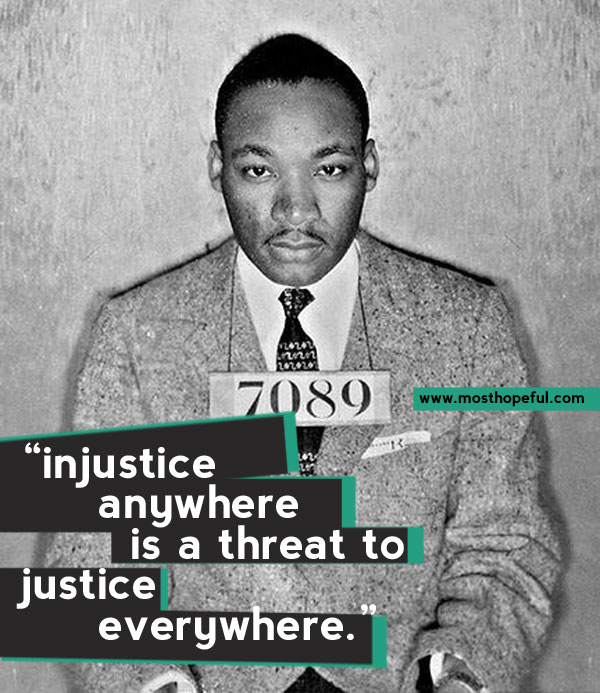
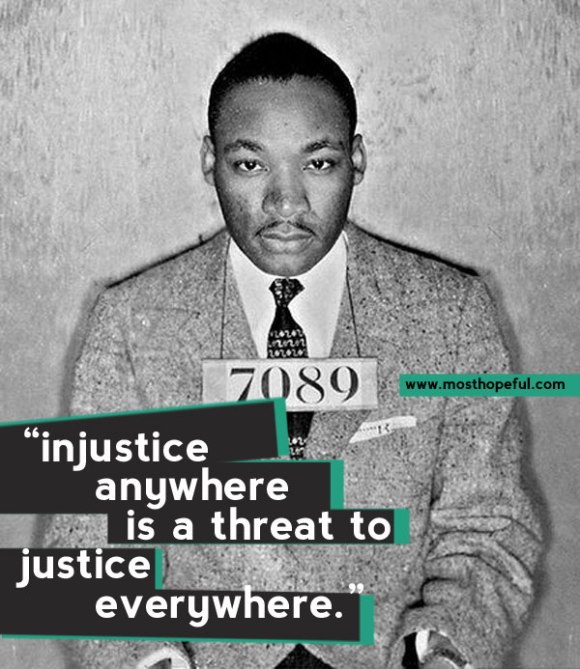
So on this day, when I think about the black pastor in the southern US who wrote letters to white pastors in the Southern US saying this must be the time––when I think about a pastor who wrote those letters from a Birmingham Jail–I hear them now in a deeper place than I have heard them before. I see and feel those white pastors listening who are convinced that the calls are untimely. And the challenge is more personal than it has been before. And in the global world, in the polarized world, in the rich and poor world, I hear the words of Martin Luther King, Jr. say “Injustice anywhere is a threat to justice everywhere,” and I hear my King say, “The kingdom of heaven belongs to them.”
+++
To my buddy in the mall that day, as I felt my jaw drop and my eyes broaden and heart sink, I wish I had told you, “There is so much of the kingdom you are missing.”
djordan
Pine Tree Dr.
Other recommended links for MLK DAY
KATHY ESCOBAR | THIS DREAM IS SO POSSIBLE – Kathy Escobar
10 THINGS YOU MAY NOT HAVE KNOWN ABOUT MLK – Huffington Post
A DREAM THAT CAME TRUE – The Washington Post

it’s one thing to sit with a huge twenty-dollar coke
watching the story unfold on the big screen
making decisions pretending like we don’t know how the story goes.
of course, i would vote for the thirteenth amendment.
i’d be a monster otherwise.
i know it has to do with money.
i know it has to do with the economy as we know it.
i know we don’t know how to move forward without slavery.
but, i’m a good enough person to know that i’m in favor of it.
i think to myself, eating popcorn,
watching the story, ending already known, unfolding on the screen.
and I think about the stories unfolding right now
the stories in congress
the stories in the courts
the stories in the projects
the stories in the suburbs
the stories in the churches
the stories in the living rooms
the stories in the villages
the stories in the high-rises
the stories unfolding right now
across not only this city
across not only this nation
but all over the globe
and i wonder,
as i eat my popcorn and drink my twenty-dollar drink,
do I have it in me
to stand for justice
to take the risk
to make the jump
when i have no idea what it will mean about money
when i have no idea what it will mean about the economy as we know it
when i have no idea what it will mean about how to move forward
when i have no idea what it will mean
but, on this side of history,
where will i be standing
one hundred and fifty years from now
when people will be eating popcorn
imagining what they would have done
had they been me.
may we be courageous.
djordan
Pine Tree

A mess is made whenever people get together.
Always.
And I’m amazed how others, but mostly myself, still pretend that any time people get together it will not be a mess, among all the other beautiful and stunning things that it always is as well, of course.
But beyond that mess, ever present and reliable, is something deeper and a little more true. Beyond the inevitable mess made when people get together is a promise that people stay together, in one way or another, in the mess of it all. And sometimes staying together means staying physically housed together. Sometimes it means continuing to work together.
And sometimes it means taking the pieces of each other that, as much as we thought or intended or assumed would do otherwise, still stick to us and move into new worlds and new places and new possibilities with those sticky pieces of where we come from and what we are made of.
It’s bound to us in the same way our family name is bound to us and the heritage of our story and trial and DNA are bound to us. Like it or leave it, this is where we have come from, and this is who we are.
This morning, I had the chance to celebrate the 175th anniversary of the church I was raised in. And while time has passed and circumstances have moved faster than passing time, I was struck by the celebration of the organist who has played at that church for the last fifty years. He was playing the organ for the church when my parents met, when they were married, when I was born, when I chose to commit to the faith, when I graduated, and when it was time for me to move on.
His service is marked by a long-time faithfulness to the ins and outs of the messiness of people and groups of people just as much as his long-time faithfulness to the celebration of all that is good and true in a congregation. And today, as he marched up the platform stairs with his cane to receive a gift of appreciation for his fifty-year service, I was caught emotionally off guard. His walk up the stairs reminded me of the value of the mess, and the occasional times of not-messiness, that happen when people get together, and what it can mean to see things through.
But moreso, it reminded me of the goodness of looking back, half a century later, and seeing that the work continues, and the call continues, and the kingdom still comes. Mess and no mess. God works through his people toward kingdom come on earth as in heaven.
So to Bobby, from the heart of my bottom as he would say, thanks for your longtime service, and for the reminder that the world goes not well, but the kingdom comes.
djordan
Pine Tree