Category Archives: grief and trauma

our stories are close together


The stories are always close together;
Whether banked on the west coast looking out over the Pacific
or banked on another west coast looking out over the Atlantic.

Stories of trial and error
hope and defeat
attempt and confusion
love and war
peacemaking and peacekilling
connectedness and isolation
restful work and work gin rest
redemption and destruction

an undercurrent of longing
that someone else
on one coast or another
resonates with the stories we keep
shackled behind our eyes––

stories remarkably close together––
even with miles of history or miles of dirt between.
but we keep them to ourselves
because our story, we’ve been told,
is the only one that looks this way.

and so we imagine the space between our stories
that was never there to begin with.

Our stories are always close together.

djordan
Napa Valley


Tagged , , , , , , , , , , ,

apparently still and incredibly crisp

floored again in dialogue with a client today
the incredible resilience following him into the room
ignored by the very person living under so much
withstanding, but still struggling
struggling with real and reasonable and incredible grief

and still holding it together
hair on, face on, courtesy on, honesty on

the wrestling only barely under the surface of
otherwise apparently still and incredibly crisp waters
all hiding
all hoping
no one notices what a mess
we all show and tell each others stories

and in hiding and hoping no one notices
we all ourselves fail to notice
our fighting resilience as the only thing stronger than our struggles
and the only thing strong than our fight to hide our struggles

until we see it through a dark mirror
that we all look much the same
and we are all incredibly resilient as we float over
otherwise apparently still and incredibly crisp waters

djordan
Pine Tree

Tagged , , , , , , , , , , , , ,

“Thank you for your prayers, we are tired of war” | a guest post by Caroline Powell

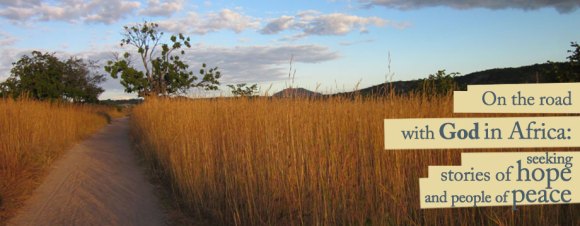
Caroline Powell is a dear friend of mine and native of Cape Town, South Africa. She works with The Warehouse, also dear friends of mine seeking to see the church be a transformative presence in the community in issues of poverty, injustice and division. Caroline has been sent on sabbatical by The Warehouse, in Caroline’s words, to seek kingdom “stories of hope and people of peace.”I’ve been following her blog these last several weeks, and this post is one I’ve enjoyed the most.

Join Caroline on her sabbatical journey at www.thelongwindingroad.me, and in the meantime, thank her for joining the guest voices here at mosthopeful.com. Her words are always words with which to spend considerable time and generous thought. Thank you Caroline. 

“Thank you for your prayers, we are tired of war” | a tribute to the DRC

When I was planning this trip, one of the first places I desired to visit was the town of Goma, on the Democratic Republic of Congo (DRC) side of the western border between DRC and Rwanda. There were several reasons for this. In Cape Town, I study with and enjoy the friendship and encouragement of several Congolese people, through connections at college, church and my work at The Warehouse. I have been fascinated with and deeply troubled by the story of this part of Africa for some time. I have met some very inspiring residents of Goma through Amahoro-Africa who run awe-inspiring initiatives through their churches in their town, and I longed to see first hand what they are involved with on a daily basis.

Getting there and fulfilling this dream has been a different story but one that has invited me into a deeper sense of love and committed prayer for this nation. Advised by Joel from Goma, that I must  have a visa before trying to visit the DRC, I went about filling in application forms and getting invitations letters from my friends in Goma. Once this was done, and all was sent off to the embassy in Pretoria, the waiting game started. I was convinced that visiting this region was to be part of the plan for my trip and especially felt that I would love to go there to encourage my friends by receiving their hospitality – visiting them despite the fact that at times, there are more people leaving the DRC than coming to visit for a holiday. I prayed about it and felt that, while I would take no unnecessary risks at all, if it was a time of peace, I would strive to spend a portion of my trip there.

At about the same time as I was planning for my visit, rebel warlords in the region were planning their next move and just as my passport was arriving in Pretoria for processing, war was breaking out in the very region I was hoping to visit. My passport got stuck at the embassy for too long, as they were in crisis mode due to the conflict and it became clear that this was not to be part of my journey. I called the visa agency and asked them to send my passport home to me. I wrote to my friends, thanking them for the great effort they had gone to in writing invitation letters, scanning signatures and planning to host me. With a deep sadness in my heart I explained that I would not be visiting. With a hope that they did not sound like empty words, I said that I would be praying for them.

A kind reply came back to me, sharing sentiments that they hoped there would be a chance in the future. It was signed off: “Thank you for your prayers, we are tired of war”

Very few words on a computer screen have affected me as deeply as this simple, sad greeting. In much the same way as I might say “I am tired of being cold” at the end of a long winter in Cape Town, they stared back at me. A stated fact. We are tired of war. A fact that I cannot imagine for my own context and yet a fact for countless numbers of people on our planet.

I have just returned from visiting the town of Gisenyi on the border of the DRC. I had arranged to meet my friend Joel on the Rwandan side of the border that is shared between Gisenyi and Goma, and as I travelled from Kigali towards Lake Kivu, the lake that shares is shores with the two cities, the man seated next to me on the bus pointed out a large tented settlement. “Transit Camp” he told me. We were passing one of the many refugee camps that exist, sometimes temporarily, but often permanently in this part of the world. I have made friends in the past few weeks with people who grew up for many years of their childhood in a camp much like this.

Joel met me at “Grand Barrier”, a not so grand piece of road that makes the enormous difference between living in a land at war and a land in times of peace. This same piece of road operated in the opposite direction during the 1994 Rwandan genocide as thousands of people fled their homeland. Then, the transit camps were on the others side. Today, for me, it is a cul-de-sac on my long and winding road. A country that I can only dream of visiting. Homes, less than a kilometer away with rooms and beds where in more peaceful times, I would have visited and slept. Joel took me on a walking and moto tour of his town from the safe side of the border. The two towns are separated by a stone wall at most in some places, even less in others. They are reportedly the two closest border towns in the world. He showed me the region where his family home was destroyed along with thousands of others during the eruption of Ndiragongo in 2002. I took a photo of him with this still active volcano in the backdrop. He pointed toward where he now lives with his family. We walked and talked- of church, recycling, youth ministry, war, upcoming life events and hope. And then he returned home and I went back to Auberge de Gisenyi and watched some of the Queen’s Diamond Jubilee celebrations on TV in French.

It is my hope that this essay, as insignificant as it is in the grand scheme of things, will serve as a tribute to the Democratic Republic of Congo and her courageous people. There are too many wars like this one in the world for us to pray individually and with understanding for each one, but sometimes, as the case is with me in this season, God brings one thing to your attention, and all you CAN do, is pray. DRC, I pray for hope, peace, courage and patience for you. I pray too, that one day I will be able to enjoy your hospitality on your soil, not just from over a stone wall.

Amen.

Tagged , , , , , , , , , , , , , , , ,

ten years | a guest post by ashley gill

ten years later

Ten years after the suicide of her sister, these words speak to the experiences of grief, healing and community by a sister over the ten years since her loss. You can read more of Ashley’s work by following her blog “There is no later, this is later.” Thanks, Ashley, for sharing your words. 

***

In the early morning of this day ten years ago, I slept in blissful ignorance. When my dad woke me up, I opened my eyes to see his, red, but dry. My blissful ignorance vanished as he spoke.

I can count on my two hands the days that have passed in the past ten years without thinking about my sister. When she sneezed, it sounded like she was yelling. When she walked, her right foot stuck out ever so slightly at the wrong angle. She hated board games, and changing plans. She drove a hideous car, the horn screaming from the red frame like a dying animal. She was great at being a sister. She was a good listener. She quickly admitted when she was wrong, and forgave even faster. She taught me how to love without even realizing it. She never owned a cell phone, never had a Facebook account; she is forever nineteen years old.

I’m not sixteen anymore. I feel like a completely different person. It still hurts to remember her, to think about her for too long. I am not writing this to dwell on the past or to make a shrine to someone I’ve lost. The reason for this post is to thank all the people that have been in my life for these past 10 years. I wish I could list you all by name, but it would take ages and I would of course probably forget more than one.

So I put you in groups.

My family. We talk. We talk about Meghan and we laugh about all the silly things she did. I have never once felt afraid or guilty about bringing up her name. When my parents lost their daughter, they did not forget about their other children. They loved us well. My brother stopped yelling at me. He let me sleep on a mattress in his room for the first week. My extended family never counted the cost. They traveled for miles, just to sit with us. They helped me get ready for my prom. They took pictures at my high school graduation. They sent me birthday cards. Years later, they acknowledge that it still hurts.

Meghan’s friends became a part of my family. They talked for hours on the phone. They listened to me recount all the memories, trying not to forget. I got to sing with them while we all cried. They love Mom and Dad like they are their own parents. They love my brother and me like we are their siblings.

In high school, I had two best friends. They never made me feel dumb for being sad at the wrong time. They threw me a surprise birthday party when I thought my birthday had forever been ruined. They tried to make me laugh, even when I felt guilty for smiling at anything. Through trips to Lubbock, a certain Italian food place, and countless other tiny things; they made what could have been the worst days of my life into some of the best. They continue to be my best friends.

Over the past years, I have made so many good friends who never met my sister. They have remembered her birthday, listened to my stories, asked questions about her, and asked to see her picture. They acknowledge and validate a part of my life they likely don’t understand.

My brother hasn’t always been known for having the best judgment. But he married this girl that is fantastic. It’s been a joy to have a sister again. Like a breath of fresh air, Klaire, my niece, was born in March, three years ago.

You have all been the bandages God has used to patch up a wound I never thought would heal. He has used your hugs, letters, phone calls, laughter, time, money and flowers to show me that He is good. He can create beauty from ashes. And He does. Every day.

Some of you don’t believe in Him the same way I do, but He’s used you just the same. This restoration of my heart is what He’s done for us all. He’s taken our shame and guilt and replaced it with Goodness. He is the Great Physician. Even though I’ve doubted Him, I’m reminded, today more than ever, that He is good and He heals.

Grief is the most difficult thing I have ever experienced. I miss my sister very much. I wish things could have happened differently. But I think she was healed too. Judging from the sixteen years that I knew her, I think Meghan would probably want to thank you for taking such good care of me.

You smell like a banana!

***

For more work on grief, loss, resilience and faith, click HERE. 

For Rayna Bomar’s guest post “A little help from his friends” click HERE

Tagged , , , , , , , , , , , , , ,

when others tell their stories

It often takes only a few minutes into a counseling session for me to realize that I have no way of speaking solutions into the room. A story begins, a tear drops, and people began to share with me the kinds of things I would never be brave enough to speak out loud to another…or myself for that matter. And after only a little bit of training in graduate school, I learned that me offering advice isn’t the craft of therapy to begin with.

And it also doesn’t take long to realize the kind of disrespect or arrogance that my solution-speaking or advice-offering would actually be suggesting. It seems, when I think about it for a moment, that in no situation would I ever allow someone who has talked to me for thirty minutes, once a week, for a month, tell me what to do with my life or how to orient my grief or what to do in my marriage.

And yet the role of counselor or therapist or even pastor sometimes has those connotations attached.

So in a kind of powerlessness, when others begin their stories, begin to tell the truth about the life they have been living in and wrestling with and learning from since birth, my only option is to switch into the mode of curiosity. And in that curiosity, I become another human being in the room, asking questions that the person sitting across from me may never have asked before even to themselves.

And in the magic of the room, new things are learned. New things are learned for my own life and for the client’s life.

Good helping doesn’t come from being the answer-man, but rather from being the questioner, a facilitator of the insight that is buried within the person who has come in seeking counsel. And more often than not, as two human beings sit in the room listening to each other in spaces that don’t judge, don’t lie, don’t have other agendas… people find their ways.

There is a deep, dangerous humanity in offering to simply bear witness to the grief, pain, fear, horror, loss, confusion or despair of another. And in staring it in the face, we both become, together, a little more human.

djordan
Pine Tree Dr.

Tagged , , , , , , , , , , ,

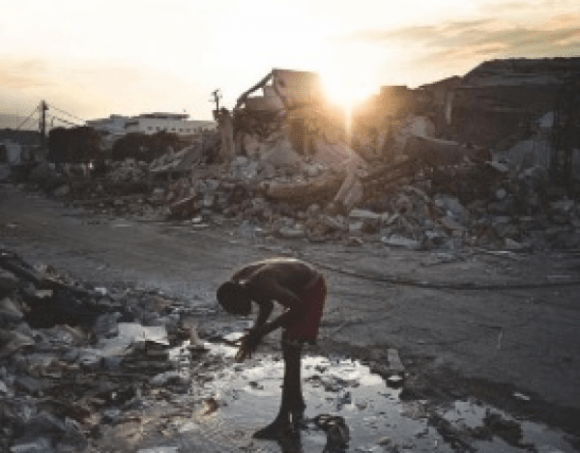
when the ground quakes

does the sky bother at all when the ground quakes
when the things built crash on the builders
and hopes fall deep into the crevices made by an angry earth?

does the sky bother at all?

one completely ravished,
the other, chirping and shining.
a source of both hope and disrespect.

perhaps the sky jumps into sudden action
filling the cracks with its fulness
and making a way for the dawn to reach
the new boundaries of the horizon.

however deep and devastating they may be.

djordan
Pine Tree

On reading Paul Farmer‘s Haiti: After the Earthquake, a Harvard doctor with 30 years of best-practice shaping and informed work in Haiti with Partners in Health, the recent hurricanes and earthquake, and the influx of not-best-practice charity that further weakens the infrastructure of an already colonialism-wrecked nation. Farmer recounts the resilience, strength and ingenuity of the Haitian people, and the imperative to work with them, not for them.

Tagged , , , , , ,

presence of absence | on holy saturday

I’m learning from those around me––those I’ve interacted with in church, in the hospital, in the community, in the classroom, not to mention those I live in community with––that brokenness and mess is everywhere, seeping into cracks we didn’t even know existed. With each client that comes in my office, or each friend that sits down to the table, there is this secret notion that no one else is wrestling with the grief, the guilt, the conflict, the doubt that she or he is.

And there is a kind of comfort that flashes across faces when they learn they are not the only one, but they are one of many.

It is only a flash, though. There is a certain amount of comfort that comes in knowing our misery shares company, but then we are stuck in misery with others.

But still stuck nonetheless.

And that is where some of the magic of the Saturday between Good Friday and Easter Sunday exists. Holy Saturday, Low Saturday, Easter’s Eve: It is that day where the black drapery still hangs over the cross and the Easter lilies, unless the church staff were too eager to prepare for the bright whiteness of Sunday morning.

The silence of the Saturday seems to be the place we find ourselves in most often. We have the luxury, now, of knowing that Good Friday leads to Easter Sunday, but we sit in between the two with our fingers crossed and our noses raw from rubbing them with tear-stained tissue.

And I believe, as I interact with these men in women in my office and in the community and in the churches…I believe that God honors our tight stomachs and heavy hearts on the Holy Saturdays of our lives and worlds. We must challenge the need to jump to Easter Sunday, and honor the grief and struggle on the day before the inauguration of all things new.

djordan
Pine Tree Dr.

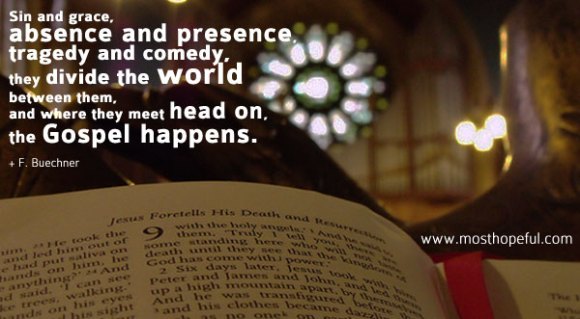
Switching on the lectern light and clearing his throat, the preacher speaks both the word of tragedy and the word of comedy because they are both of them the truth and because Jesus speaks them both, blessed be he. The preacher tells the truth by speaking of the visible absence of God because if he doesn’t see and own up to the absence of God in the world, then he is the only one there who doesn’t see it, and who is then going to take him seriously when he tries to make real what he claims also to see as the invisible presence of God in the world? Sin and grace, absence and presence, tragedy and comedy, they divide the world between them and where they meet head on, the Gospel happens. Let the preacher preach the Gospel of their preposterous meeting as the high, unbidden, hilarious things it is. 

+ Frederick Buechner, from Telling the Truth

Tagged , , , , , , ,

pain is no measure

I believe in a blessing I don’t understand
I’ve seen rain fall on wicked and the just
Rain is no measure of his faithfulness
He withholds no good thing from us
No good thing from us, no good thing from us

I believe in a peace that flows deeper than pain
That broken find healing in love
Pain is no measure of his faithfulness
He withholds no good thing from us
No good thing from us, no good thing from us

I will open my hands, will open my heart
I am nodding my head an emphatic yes
To all that You have for [us]

I believe in a fountain that will never dry
Though I’ve thirsted and didn’t have enough
Thirst is no measure of his faithfulness
He withholds no good thing from us
No good thing from us, no good thing from us

I will open my hands, will open my heart
I am nodding my head an emphatic yes
To all that You have for [us]

No good thing from us
He withholds no good thing from us

I will open my hands, will open my heart
I am nodding my head an emphatic yes
To all that You have for [us]

+ Sara Groves, “Open My Hands”
from  Invisible Empires

Tagged , , , , , , , ,

a little help from his friends | guest post by Rayna Bomar

rayna bomar guest posts

This is the first guest post here on mosthopeful.com, and I couldn’t be more convinced of its appropriateness. Hugh and Rayna Bomar have become friends of mine these last few years, and their ongoing journey of remembering their son Sam has had an impact in my own life. I hope you glean from Rayna’s words about what has helped and what has not helped as she has been on her own very personal journey with grief. 

In August 2009, as my son Sam started his senior year of high school, I happened upon an essay by a woman named Mimi Swartz entitled “Empty Nest: In a Week He’ll Be Gone – And I Can’t Stand It.”  Her son, also named Sam, was leaving for college a year before my Sam would leave, and I read her words to prepare for what, I thought, I would be experiencing the following August. And, the following August, I did share some of the life changes described by Swartz – dinner for three became dinner for two, my schedule no longer revolved around the school calendar, and the “mundane rituals of child rearing,” just as Swartz had predicted, were gone.  But my role as a mother changed for a reason not anticipated. My Sam didn’t leave for college. Instead, he died on May 4, 2010, ten days before graduation.  

There are many things that I could say about the past almost 23 months, but what I would like to do now is share some of the ways that others have helped us get through those months – and a few things that have hindered us. 

My husband Hugh and I quickly realized that all grief is personal. What you have experienced losing a loved one, even a child, is not the same as what I have experienced losing Sam. My experience is not the same as Hugh’s experience. Therefore, things that I mention that have helped (or hindered) us may not help (or hinder) you.  I am an expert only about my own grief.    

We have been most touched by the kindnesses that have been shown by Sam’s friends. We are in awe of the young men and women who are so naturally compassionate and who have put aside their own grief to help us with ours. They have taken us out to eat on Mothers’ Day and Fathers’ Day, visited on holidays, designed t-shirts and bumper stickers in Sam’s memory, mowed our yard, shared stories about Sam (what we love the most), written letters and sent cards, laughed with us and cried with us, helped with chores, preserved Sam’s spot in the high school parking lot, invited us to their celebrations- I could go on and on.  We are greeted with open arms and a hug. Sometimes we get more than one hug. They tell us that they love us. They share their lives with us and allow us to be part of their future. Their actions are drops of water on parched ground.  

What they don’t do is, perhaps, more important. They don’t tell us that it’s almost two years since the accident and it’s time to “move on.” They don’t give us any advice.  They understand that our world changed when Sam died and that we will never be the same. They don’t expect us to be the same because they will never be the same after losing their friend. They don’t try to “fix” us. They don’t make any demands on us. If we feel like a visit, that’s great. If we don’t, they understand, and they don’t take it personally.         

Maybe because of their relatively young ages (late teens to early twenties) they don’t have any preconceived ideas about how we should act or feel. Therefore, they don’t think they know what’s best for us, and they don’t try to impose their own feelings on us or try to dictate what is appropriate behavior.  

Instead of trying to make us be who they think we should be, they already know who we are. We are Sam’s parents, and we always will be. That’s good enough for them, and it’s good enough for us.

“Death ends a life, not a relationship.” Robert Benchley.

One of the upcoming ways you can join the Bomars in remembering Sam is by attending the 3rd annual Sam Bomar Night at the Jackson Generals. Half of each ticket pre-ordered with the promo code SamBomar goes to the Sam Bomar Scholarship Fund. Click HERE to learn more, and to buy tickets for the event on June 23.  

For other most hopeful posts on grief, loss, trauma and resilience, CLICK HERE.

Tagged , , , , , , , , , ,

on grief | a collection of work

Click any of the images below for past reflections on grief and trauma, loss and losing, and the kind of mix of hopelessness and hopefulness that always accompanies both. Here, again, is a favorite quote on grief:

“Real criticism begins in the capacity to grieve because that is the most visceral announcement that things are not right. Only in the empire are we pressed and urged and invited to pretend that things are all right – either in the dean’s office or in our marriage or in the hospital room. And as long as the empire can keep the pretense alive that things are all right, there will be no real grieving and no serious criticism.”

+ Walter Brueggeman, The Prophetic Imagination


Remember Me Commemorative Walk for Homicide-Loss Survivorsa time for everything under the sunheavy boots, i pinched myself, extremely loud and incredibly closejohn chapter 11, lazarus, jesus, mary, marthalazarus, mary, martha, jesus, death, grief, time, too lategrief, losing, loss, death, sudden death, violent deathgrieving in public, grief and the news, sadness, publicity, gossip

Tagged , , , , , , , , , , , , ,