losing and finding ourselves

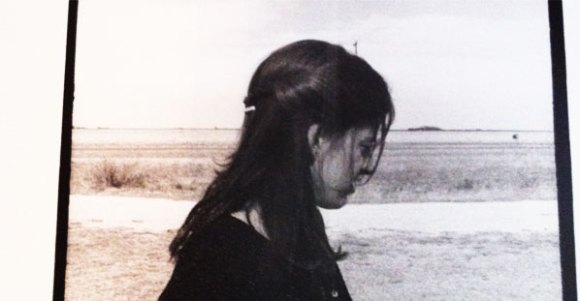
When in Louisville this March, I went to see an art exhibit of Goicolea’s work at the Museum Hotel 21C. The piece above is a photo of his work where a relative of the Cuban American artist has been drawn from a negative rendering of the old photo, then posted on a telephone poll that sits inside the gallery.

I’ve been haunted by the piece ever since, and have been trying to understand myself what is so compelling about it.

With an ancestor’s portrait posted as lost on a telephone poll, it seems as though there is something deeply honest about looking, as if for someone lost, to find out who we are, where we’ve come from and what we are made of. We know that the stories we can remember of our own lives have been incredibly impacting, and we know that our parents share similar stories which have shaped who they are as well, and on and on through a timeline of generations ahead of us, a timeline that will precede after us.

Everyone looking for and finding themselves.
Shaped by the stories of who we are and who those who came before us were.

And we claim the stories of heritage we want attached to us. Stories of hard work and family and ingenuity and generosity and imagination.

And we wrestle against the stories we don’t want attached to us. Stories of racism and illness and greed and selfishness and arrogance.

The folks who check in for help to the psychiatric inpatient unit have been teaching me this last month what it means to grasp both sets of stories as we search for who we are and who we can be in the world. We look at our own lives and the lives of those who have come before us, we take a deep and unjudging breath, and we embrace the stories of hard work and racism and family and illness and ingenuity and greed and generosity and selfishness and imagination and arrogance.

In losing hopes of curating our stories to manipulate who we wanted to be, we find ourselves in the wholeness of who we are.

And in so doing, we are held and found accountable by those who have struggled with stories before us.

***

The picture below is a triptych of Goicolea’s where he has brought together all the family images from generations past and present, and placed them next to each other in one print. Because of the dates of the compiled photographs, a grandmother might be sitting as a child in her own granddaughter’s lap, blurring the lines of space and time while fortifying the lines of influence.

djordan
Pine Tree

Tagged , , , , , , , , , , , , , , , , , ,

ten years | a guest post by ashley gill

ten years later

Ten years after the suicide of her sister, these words speak to the experiences of grief, healing and community by a sister over the ten years since her loss. You can read more of Ashley’s work by following her blog “There is no later, this is later.” Thanks, Ashley, for sharing your words. 

***

In the early morning of this day ten years ago, I slept in blissful ignorance. When my dad woke me up, I opened my eyes to see his, red, but dry. My blissful ignorance vanished as he spoke.

I can count on my two hands the days that have passed in the past ten years without thinking about my sister. When she sneezed, it sounded like she was yelling. When she walked, her right foot stuck out ever so slightly at the wrong angle. She hated board games, and changing plans. She drove a hideous car, the horn screaming from the red frame like a dying animal. She was great at being a sister. She was a good listener. She quickly admitted when she was wrong, and forgave even faster. She taught me how to love without even realizing it. She never owned a cell phone, never had a Facebook account; she is forever nineteen years old.

I’m not sixteen anymore. I feel like a completely different person. It still hurts to remember her, to think about her for too long. I am not writing this to dwell on the past or to make a shrine to someone I’ve lost. The reason for this post is to thank all the people that have been in my life for these past 10 years. I wish I could list you all by name, but it would take ages and I would of course probably forget more than one.

So I put you in groups.

My family. We talk. We talk about Meghan and we laugh about all the silly things she did. I have never once felt afraid or guilty about bringing up her name. When my parents lost their daughter, they did not forget about their other children. They loved us well. My brother stopped yelling at me. He let me sleep on a mattress in his room for the first week. My extended family never counted the cost. They traveled for miles, just to sit with us. They helped me get ready for my prom. They took pictures at my high school graduation. They sent me birthday cards. Years later, they acknowledge that it still hurts.

Meghan’s friends became a part of my family. They talked for hours on the phone. They listened to me recount all the memories, trying not to forget. I got to sing with them while we all cried. They love Mom and Dad like they are their own parents. They love my brother and me like we are their siblings.

In high school, I had two best friends. They never made me feel dumb for being sad at the wrong time. They threw me a surprise birthday party when I thought my birthday had forever been ruined. They tried to make me laugh, even when I felt guilty for smiling at anything. Through trips to Lubbock, a certain Italian food place, and countless other tiny things; they made what could have been the worst days of my life into some of the best. They continue to be my best friends.

Over the past years, I have made so many good friends who never met my sister. They have remembered her birthday, listened to my stories, asked questions about her, and asked to see her picture. They acknowledge and validate a part of my life they likely don’t understand.

My brother hasn’t always been known for having the best judgment. But he married this girl that is fantastic. It’s been a joy to have a sister again. Like a breath of fresh air, Klaire, my niece, was born in March, three years ago.

You have all been the bandages God has used to patch up a wound I never thought would heal. He has used your hugs, letters, phone calls, laughter, time, money and flowers to show me that He is good. He can create beauty from ashes. And He does. Every day.

Some of you don’t believe in Him the same way I do, but He’s used you just the same. This restoration of my heart is what He’s done for us all. He’s taken our shame and guilt and replaced it with Goodness. He is the Great Physician. Even though I’ve doubted Him, I’m reminded, today more than ever, that He is good and He heals.

Grief is the most difficult thing I have ever experienced. I miss my sister very much. I wish things could have happened differently. But I think she was healed too. Judging from the sixteen years that I knew her, I think Meghan would probably want to thank you for taking such good care of me.

You smell like a banana!

***

For more work on grief, loss, resilience and faith, click HERE. 

For Rayna Bomar’s guest post “A little help from his friends” click HERE

Tagged , , , , , , , , , , , , , ,

lick the elevator, pregnant at VBS | weekly mash | 04.21.2012

Here they are! From Vacation Bible School pregnancies to edible elevators, from neurology in Pre-K to CEOs in gang recovery programs, here are the articles, thoughts, essays and ideas that I’ve been thinking and stewing over this week. Enjoy, and let me know what you think about the articles!

Education and Apartheid in the USA | www.good.is

We are way past the civil rights era, right? And we say “What a shame” about Apartheid because we would never behave in such a way, right? Take a look at the details behind education for the poor in the USA.

CEO Rehabbed in Anti-Gang Program | www.fastcoexist.com

Homeboy Indsutries and Homegirl Industries in California is one of the few anti-gang groups making progress. To get out of the gang-life, there has to be something worth going into, like Homeboy Industries. See why ARM watches Homeboy as we plan for The HUB Club, and see how it helps meet gangbangers and CEOs.

Food or Medicine: Between a Rock and a Hard Place | The Global Journal

It’s one thing to argue about healthcare with terms we learned from magazine news shows; it’s another to think about having to choose between food or medicine. And then to know the choice is made by people every day, people very close to home, adds an element of at least valuing the conversation.

Bringing Kids’ Art to Life | www.denydesigns.com

Every kids’ dream come true… real-life versions of their very own drawings. Yes, please!

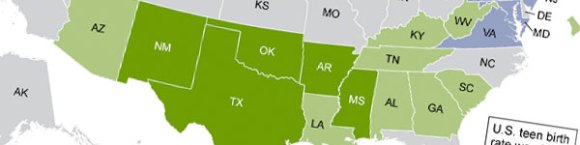
Teen Pregnancy Down Except for the Bible Belt | www.theatlanticcities.com

Across the nation, teen pregnancy is down, except for those states in the Bible Belt where to get pregnant as a teenager is a huge scarlet “P” for the rest of your life. What makes the difference, and why should the church be paying attention to its ways of being in the world?

Ever Licked an Elevator Advertisement? | www.foodrepublic.com

I don’t even know what to say. I’m equally intrigued by the grossness and the coolness of this London-based advertisement experiment. One thing to make time in an elevator with others just a little more awkward.

Making Education Brain Science | www.nytimes.com

Think little kids are only learning about blues and reds? Think again! The Blue School is teaching kids to think about HOW they think, teaching them how to observe their own thought, emotion, and learning processes…something most of us wait until far too late to do. Way coolness.

HONORABLE MENTIONS

National Archives (England’s) Release Colonial Papers including Obama’s Father, son of Revolutionary

Magnificent Maps: Cartography as Power, Propaganda, and Art

So what do you think?

djordan
Pine Tree

Tagged , , , , , , , , , , , , , , , ,

beyond sides of a story

Our temptation is, of course, to listen for the evidence and decide which side of the story we will choose to stand on. And our temptation then is, of course, to fight for where we have chosen to stand. And our temptation then is, of course, to stop listening because when fighting for the side of the story we have chosen, we fight with all our might because it has become the ground on which we are now standing.

But what happens if we consider moving beyond sides of a story? What if we have been fighting for the either or for the or when it was never an either or to begin with? What if our need for choosing sides comes more from a need to stop listening, because listening is harder than fighting. Persisting in curiosity is harder than moving into superiority.

I know when I speak, I am telling what I’ve seen. What I’ve smelled. What I’ve felt.

And when they speak, they are telling what they’ve seen. What they’ve smelled. What they’ve felt.

And if we experienced the crash of the story me from one bank, and them from the other, we may both tell the truth, and still tell a different story.

So is there a way to listen widely, getting so many sides of the story that we move beyond sides all together and rather begin to experience the fulness of the story we know we exist anyway? A fullness that breeds humility and compassion and generosity because we continue to listen and therefore take on the fulness and complexity of the story itself rather than landing on a side and being forced to start a fight.

It is, of course, the work of being a peacemaker. And the peacemakers are, of course, the children of God.

djordan
Pine Tree

Tagged , , , , , , , , , , , , , ,

when others tell their stories

It often takes only a few minutes into a counseling session for me to realize that I have no way of speaking solutions into the room. A story begins, a tear drops, and people began to share with me the kinds of things I would never be brave enough to speak out loud to another…or myself for that matter. And after only a little bit of training in graduate school, I learned that me offering advice isn’t the craft of therapy to begin with.

And it also doesn’t take long to realize the kind of disrespect or arrogance that my solution-speaking or advice-offering would actually be suggesting. It seems, when I think about it for a moment, that in no situation would I ever allow someone who has talked to me for thirty minutes, once a week, for a month, tell me what to do with my life or how to orient my grief or what to do in my marriage.

And yet the role of counselor or therapist or even pastor sometimes has those connotations attached.

So in a kind of powerlessness, when others begin their stories, begin to tell the truth about the life they have been living in and wrestling with and learning from since birth, my only option is to switch into the mode of curiosity. And in that curiosity, I become another human being in the room, asking questions that the person sitting across from me may never have asked before even to themselves.

And in the magic of the room, new things are learned. New things are learned for my own life and for the client’s life.

Good helping doesn’t come from being the answer-man, but rather from being the questioner, a facilitator of the insight that is buried within the person who has come in seeking counsel. And more often than not, as two human beings sit in the room listening to each other in spaces that don’t judge, don’t lie, don’t have other agendas… people find their ways.

There is a deep, dangerous humanity in offering to simply bear witness to the grief, pain, fear, horror, loss, confusion or despair of another. And in staring it in the face, we both become, together, a little more human.

djordan
Pine Tree Dr.

Tagged , , , , , , , , , , ,

to mormon church we go

“We chase them out with a rake!”

I remember as a child talking to a friend of mine at church who lived next door to the Mormon church in our town. We were children, granted, but I remember her saying one day when I asked her about Mormons that she chased them with a rake. There is no telling what actually happened, and there is no telling what stories people could tell about me. Neither is the point.

I am teaching “Poverty and the Church” this semester for the School of Social Work at our local University, and the issue of diversity is inherent in our conversations about poverty and the church. As an extra credit assignment, I asked my students to attend a church that was unlike their own, and write about their experience. One student, raised as a mormon but since evangelicalized, invited me to attend “Mormon Church” with her. So alas, Sunday Morning, it was off to Mormon Church.

Part of why I mention my conversations with a childhood friend is that I realized walking through the parking lot that morning that my fear was based on very, very little. I have a remedial understanding of Mormon belief, enough to know I can say, “No, Thank You” to people who ring my door bell at three thirty on Sunday afternoons.

***

As a side note, the power of fear to shape our experience of people is fascinating and terrifying. If we are taught to be afraid of someone, are we not more likely to be unjust, violent, discriminatory, and hateful? The danger is startling, but where I live there is still, sadly, a value to propagating fear of “the other,” no matter the ignorance required to do so.

***

So, I noticed as soon as I sat down that my clothing choice was incorrect. Every other male in the room had on a white button up collared shirt and a tie. I had on neither, and it was obvious. I was asked if I was a visitor…yes, what gives me away…and then asked my name. A minute later, my last name. I must admit, I panicked when asked for my last name. I was tempted to lie…I remember making up a name on the school bus one day when asked for my name, naming one of my dad’s law partners. “Jordan,” I said. “Donald Jordan.”

What strikes me most about the day, save my own uninformed fear and therefore ignorant judgment,  was the content of what followed in the sermon. The message was given, instead of by one person, by three different members of the congregation, two females and one male. I liked the thought of this, assuming that the congregation might have a great deal of insight and wisdom to share with the congregation. I then learned that the sermon topic had been assigned as had the reference for their thoughts. The sermon topic was “Sustaining your leadership,” and the references given for the speakers to use were not from scripture itself, but rather from past talks given by previous “apostles” from their previous meetings.

They went on to quote prior leadership saying that the health of the church depended on not questioning the leadership, unity based on not questioning leadership, true calling being made known to them from the leadership, and faithfulness being measured by their allegiance to the leadership.

Fascinating.

The ability of an organization to propagate itself by instilling the value of not asking questions, not holding leadership accountable, and even doing so by associating position with a certain amount of divinity…

Fascinating.

I left thankful for those who have taught me to ask good questions, to think carefully, and to follow the truth, even when it leads away from common accepted wisdom.

What was most startling is how I have learned to be afraid of a group of people I have never really met, and also how the things that ultimately bothered me most about this past Sunday morning were not unique to the Mormon church.

One of the “missionaries” who spoke, around my age or a little younger it seemed, said to the crowd in  a way that made me feel she was saying it to herself as much as anyone else, “I believe this is the true church. I have to. It’s like I heard someone say one time, ‘show me something better, and we will talk.'”

I thought, as I heard those words come off her tongue, “I don’t know much at all, but I know something better.”

djordan
Pine Tree

Tagged , , , , , , , , ,

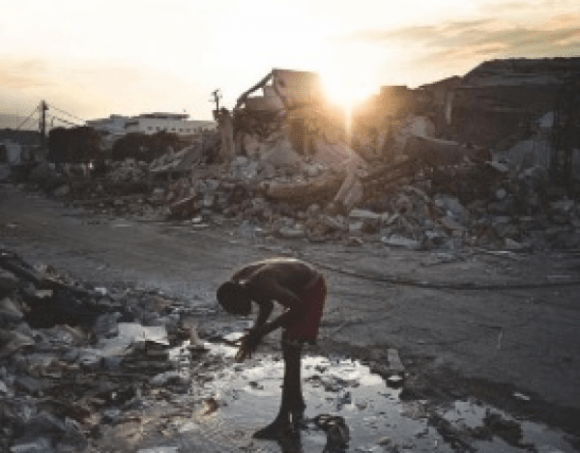
when the ground quakes

does the sky bother at all when the ground quakes
when the things built crash on the builders
and hopes fall deep into the crevices made by an angry earth?

does the sky bother at all?

one completely ravished,
the other, chirping and shining.
a source of both hope and disrespect.

perhaps the sky jumps into sudden action
filling the cracks with its fulness
and making a way for the dawn to reach
the new boundaries of the horizon.

however deep and devastating they may be.

djordan
Pine Tree

On reading Paul Farmer‘s Haiti: After the Earthquake, a Harvard doctor with 30 years of best-practice shaping and informed work in Haiti with Partners in Health, the recent hurricanes and earthquake, and the influx of not-best-practice charity that further weakens the infrastructure of an already colonialism-wrecked nation. Farmer recounts the resilience, strength and ingenuity of the Haitian people, and the imperative to work with them, not for them.

Tagged , , , , , ,

telling secrets

after you’ve been holding your breath

for a long time

you tell the truth.
you tell the truth into the fear.
you tell the truth into the sadness.
you tell the truth into the ear of a trusted other.
you tell the truth into the ear of a knowledgeable other.

and light floods in
and breath fills up your lungs
and hope crashes into the landscape

and the one you told
now able to tell

and light floods in for them
and breath fills up their lungs
and hope crashes into their landscape

together we discover our humanity
in telling secrets, in telling the truth.

only in community.
we are a community of secrets.

only in honesty.
we are a community capable of honesty.

and the truth sets us free. together.

djordan
Pine Tree

Tagged , , , , , , , , , , , , , ,

failure to imagine

I remember the first time I watched Amazing Grace. I felt immediately proud and cowardly, feeling both as I resonated with humanity at its best and worst. Wilberforce looked the status quo in the eyes, evil and injustice and profitable as it was, and challenged it. Of course, he was able to do so because he had the money and the power and the influence to ultimately play hard ball with the good old boys.

But the scene I remember from the film is one where sitting around a table, their inability to imagine how they could continue profitable businesses, orderly communities, and the current status quo made Wilberforce’s audience unable to move forward with the abolition of slavery. They were likely people who sought justice in other ways, but this hit too close to home, and their imaginations could not overshadow their greed and lust for power.

I was reading a review this week of Taylor’s new book, “A Slave in the Whitehouse,” (referenced here in this week’s MASH) where she described President Madison as one who worked for fair treatment (relatively speaking of course) for slaves in the country, but upon his death did not free a single one of his own. It was Taylor, the reviewer of the book, who stated, “Madison did not believe that white and black Americans could live side by side on terms of equality and amity. His failure to imagine a world more capacious and tolerant than his own helps explain a good deal of subsequent history, and America’s resistance to the very practice of equality that Madison otherwise did so much to foster.”

I think about Martin Luther King.
I think about Nelson Mandela.
I think about Mahatma Ghandi.
I think about the nameless men and women who follow their imaginations into a different kind of possibility for the future. Not just for and around issues of civil justice, but around issues of technology, healthcare, development, education.

They were no doubt met with others whose imaginations had been stifled, and therefore could not wrestle themselves away from comfort and power to risk them both for the sake of a more kingdom-like future.

And so my mind now turns to those schools, churches and organizations that foster imagination and second-guessing as a guiding principle. It is from these communities that we will see change happen. Of all the downfalls I am at risk of meeting, I hope that one of a failure of imagination isn’t the one that takes me down.

My friend Craig has said before, “Of all the ridiculous things God has called us to do, defending the status quo is not one of them.” And whatever is to break the status quo always begins with a strong imagination.

Pine Tree
djordan

Tagged , , , , , , , , , , ,