“it’s dark in here” | reflections on MLK Day

Most Hopeful's avatarmost hopeful

mlk-day-2013

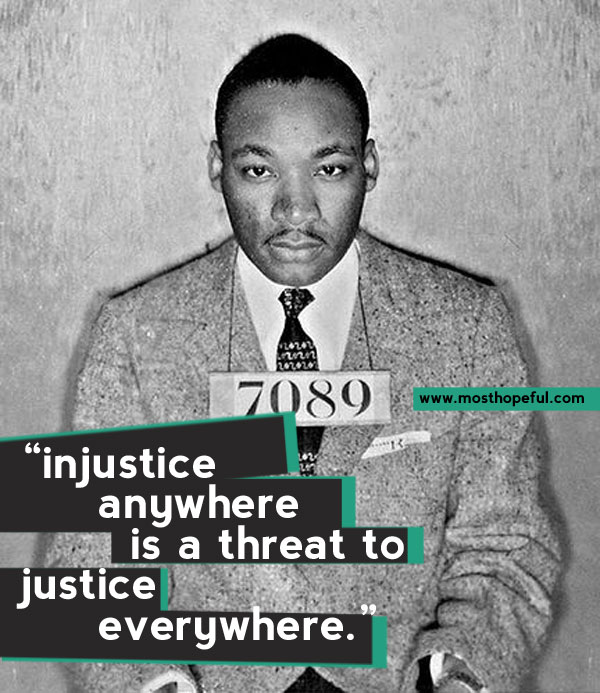
It’s no secret that racism is not okay.

Most people know it. A lot of people pretend like they agree with it. Some people fake it. Everyone deals with it.

But we all know that racism is not okay.

And so we think of ourselves as matured. As evolved. As just and honest and good and lovely.

But we are, all of us, racist, of course.

+++

I was walking through the mall a few weekends ago with a guy who used to be a college student in a small group of mine. We were there for me to run an errand, and this guy, a man who is soon to be a youth pastor in a church, made a comment that has been haunting me since that day.

“It’s dark in here.”

I looked around, looked up at the skylights, around at the stores and back at him.

“What?”

View original post 645 more words

all our problems

Screen Shot 2014-12-05 at 10.09.22 PM

They have been saying it for several weeks just before we are dismissed from the service on Sunday mornings. As we participate through the Kenyan liturgy, the children are invited to the front of the room, bumbling and running and sisterly fighting their ways to the front, up the steps, and to the center of the stage and everyone’s attention. They are guided, as the congregation is guided by them, to take their right arms and respond to the priest as he says:

leader: all our problems
kids/congregation/me: we send to the cross of Christ

As we all say together, led both by the children and the priest and also by this deep and gut-wrenching reality that we are staring problems in the face everyday that we don’t know what to do with, “we send to the cross of Christ,” we hold up our right arms as far out as we can reach and then throw them pointing or open-handed to the cross centered at the very front of the room.

The children giggle or try to hit each other or actually stare in amazement every now and then at the cross itself, or at their hands and their naive abilities to send things to Jesus and feel like they actually ever got there. I, on the other hand, find usually as my hand flies toward the cross in the front of the room that I get choked a little with the reality that the problems I’m carrying around are a little too big for me and mostly too heavy to actually send to the cross of Christ. As if I couldn’t get a good enough grip on them to throw them that far in the first place.

leader: all our difficulties
kids/congregation/me: we send to the cross of Christ

It’s amusing to me, as I look at those children up there throwing their arms toward the cross as they hurl their difficulties, to consider how simple some of their lives are. I’m not ignorant enough to think their lives are all simple, that some of them aren’t witnessing yelling and screaming and fighting, that some of them aren’t experiencing abuse and illness and secrets they think will kill them rather than be taken with them to their grave at some unreal and future time. Some are, no doubt, living amidst great difficulties. Many of them, however, are living in great comfort and safety and community that is true and rich and deep. But even for them that hurling of difficulties toward the cross feels almost like a prayer for their future selves, or for their sisters thousands of miles away or three miles away who are fighting to survive amidst great difficulties. They don’t know that their silly hurling of difficulties toward the cross of Christ is actually an offering of love and trust for one of their unmet, unknown peers. I move my hand gently toward the cross with them, but I can’t get words out of my mouth because I feel a little taken over by what is happening in the thin spaces these mornings.

leader: all the devil’s works
kids/congregation/me: we send to the cross of Christ

This one, of course, is a little scary because while we’d like to demonize someone else and name their works as those of the devil, we know deep down that some of our own works are marked by something other than the incarnational love of the king. So we know that to send the devil’s works, all of them, to the cross of Christ is actually to send a chunk of ourselves to die in uncertainty. We throw our perceived or desired success. We throw some of our pleasures and comforts that require the pain and heartache of others for us to afford them. We throw our reasons for why what affects us is more important that what affects the “others”. We throw our grudges and our bitterness and our stinginess and our insecurities and our greeds. It’s like we are taking off all of our clothes and throwing them up there to the cross of Christ. Then we find ourselves, if we dare throw all that up there, naked and embarrassed at what we actually look like now. I often can’t even get around to throwing my arm forward to send the devil’s works to the cross of Christ as the children are throwing it even more dramatically. Their innocent leading makes me feel a little more like a fraud if I were to join them.

leader: all our hopes
kids/congregation/me: we set on the risen Christ. 

The leader isn’t hurling anything forward to the cross anymore, and neither are the children. Their hands are up and usually open. Reaching out to the only place we know to reach with our fragile little arms to communicate where the kingdom has come in Christ’s resurrection, we reach up and out to the skies because we know there is more out there than we have ever understood. We know, too, that right here in the moment and in the space and in the wrestling brother and sister who’ve now been center stage too long to remember their mother’s threat of an after church mingling with no snacks if they misbehave, we are reaching out to something that we must have.

That hope we are reaching out for as if our lives and sanity and humanity depended on it.

We’ve been brave enough to speak out loud with our words and our bodies of our problems, our difficulties, and the devil’s works that we have co-opted and coauthored. Because of the courage of the kids and the costume of the priest, and because even our choking-up makes us know we must be telling a little more of the truth than usual, I’m able to lift up my right arm to the unknown skies, or the ceiling of this sad little building, and decide to set my hopes toward the impossible kingdom that I can’t stop thinking about, and the impossible king who has been causing impossible problems in our storylines since the very first story was ever set in motion.

all our problems
we send to the cross of Christ
all our difficulties
we send to the cross of Christ
all the devil’s works
we send to the cross of Christ
all our hopes
we set on the risen Christ. 

djordan
Pine Tree

Tagged , , , , , , , , , , , , ,

thickness of thin space

Screen Shot 2014-11-02 at 7.42.53 PM

Here I am in an empty church. In it, between the rows of pews, on the tile floor, under the silent cross, I walk along a boundary, a place in between heaven and earth. The Celts called it thin space….The church calendar calls into consciousness the existence of a world uninhabited by efficiency, a world filled with the excessiveness of saints, ashes, smoke, fire; it fills my heart with both dread and hope. It tells of journeys and mysteries, things “seen and unseen,” the world of the almost known. It dreams impossibilities: a sea divided in two, five thousand fed by a loaf and two fishes, a man raised from the dead. 

– Nora Gallagher
Things Seen and Unseen: A Year Lived in Faith

It seemed as though every few breaths had to be wrestled quietly to keep exhales from becoming tears. I don’t think tears of any kind of sadness, although some seem wrapped together with a letting go of things that no longer fit but were desperately and perfectly holy when they once did. Others pregnant with promises that are only clear today after all this time of begging for clarity. Others coated in laughter of flying monkeys and brave children.

After being on the road––or in the air––for nearly a month, I returned to the desks and sessions and meetings and paperwork and conference calls of the work week last Monday. With the promise of daylight savings time still a terribly long week away, I traveled back from exhilarating speaking and learning with stellar servants in Seattle and Memphis and the slow and holy days of the beach with lifelong and new friends, to the pounding of alarms in the still-dark mornings of my own still room.

The threat would be, of course, that the magic only happens when things are outside of the routine. Only with toes buried in the sand and waves ruining the back pages of novels do we cross into the thin spaces. Only with lecture halls and presentations and learning credits pending do we feel the rush of the practice and the theory. Only with the frantic boarding runs do we surmise that we are living something exciting.

But then, on a Monday morning as regular as any other, the shower makes us look a little more alive than we feel, the coffee makes us a little friendlier in a few short moments, and the first meeting, the first client, the first conference call reminds us that we love what we do and the people we get to do it with.

And the thin space becomes so thick we can taste it and name it and break it as if it were in itself that holy meal.

So today, a week later, with more travel on the edge of the next few days, I’m giving thanks for a week of clients, a week of paperwork, a week of surprise parties and the lies they require, a week of out of town guests and in town friends over drinks.

So today, a week later, I find myself at the altar, imagining that table that spreads all the way to family in Nicaragua and all the way to family in Cape Town, and all the way to family who have already moved a little closer to something better on the other side of time, and I was wrestling breaths in order to exhale without bursting into tears. Tears of letting go and holding on. Tears of the promise that I have no idea what I’m doing, but somehow I feel alive while I’m doing it and I feel loved getting to do it with such incredible people, and I feel honored doing in on behalf of those so often not welcomed at the table.

So today, a week later, I find myself at the altar recognizing that the thin space has become so thick at this particular moment in time, that I let it win and with the tears that hit the hands that hold the bread and the wine, I give thanks that he withholds no good thing from us.

Not a thing.

djordan
Pine Tree Dr.

Tagged , , , , , , , , , , , ,

on psalm 35 | what I want; what I want to ask for; what I need

psalm35a

What I want is to know you are for me,
which seems odd to ask;
that you over and in and of all things
might stand up for me and
fight for me and
stop attacks against me.

I know I need to hear from you,
though;
I need to hear that you are,
if not now then ultimately,
saving me and prepared to be saving me
from everything that fights against me
and inside me
and around me.

You see that I’ve been fighting for a while now?
You see that I’ve been asking for you for a while now?

I want to ask of you
I want a promise of you
that anyone
that any person
that any group
that any funder
that any fearer
who may be after me
who may be scared of me
anyone who gossips or finagles or whispers
in piety or privilege or petty or paranoia or peril or against me
would be put on the front page
under headlines of shame or confusion
under headlines of disaster or destruction.
I want to hope that whatever they hope happens to me
ultimately happens to them, but worse.
More public.
More noticed.
More shamed.

And I think<
were that to happen,
I might be happy, finally.
If those in other worlds of piety and paternalism,
if those in other worlds of arrogance and ambition,
might finally be put in their place,
I think I might,
then and then only,
sing a song of honest gratitude to you
giving thanks that things are well
and trusting finally that you are King
and trusting finally that I’m with those who win.
Trusting finally that I’m worth it;
that this is all worth it.
I would be such an incredible person
when they all get what they deserve.

I promise.

It feels granted, of course,
for me to wait for their demise.
Because when they struggled, I struggled.
Because when they defended, I defended.
Because when they were offended, I retreated.
Because when they were angry, I apologized.

And maybe I need to know
after all this time
that you are for me.

Because it feels like you
just watch.

Like you just do nothing.

I’m sorry for saying it, I guess,
that It feels, sometimes,
like I’m paying attention
and you just aren’t paying any attention.

How long do I have to ask for help?
How long do I have to wait for some kind of validation?

Do you refuse to help me?
Am I all wrong about all of this?
And I pushing away from what you are pushing toward?

I can’t believe it,
so if I’m all wrong,
fight me.

But if not,
will you stand up for me at least?
And if you won’t stand up for me at least,
will you let me know you’re for me?

I’ll give it back to you,
whatever that means.
whatever that costs.
I swear it.

I suppose, finally,
whether or not you decide to be for me,
I need to ask that you be for those,
no matter how big
no matter how small
no matter how wealthy
no matter how poor
no matter how crazyno matter how appropriate
no matter how irreverent
no matter how pious
no matter how marginalized
no matter how important
no matter how detested
no matter how esteemed
no matter how quiet
no matter how loud

I suppose, finally,
even though what I want to ask,
after all this nonsense and ridiculousness,
is that you be for me,
in a way that shows you are against them,

I need to ask less that you be for me
and more that you be for those
who seek
your peace
your shalom
your kingdom
your King.

And while I’m afraid to let you off the hook,
because I fear you might take advantage of it;
and while I’m losing some confidence in you,
because you aren’t doing what I’m hoping you will do

if I still tell myself the truth,
even then,
even if you don’t prove it to me,
or if I’m not convinced that you do ––
stand up for me that is ––
I have little choice
but to keep pushing forward
for your peace
for your shalom
for your kingdom
for our King.

I have seen and learned too much
to only stand with
the big
the wealthy
the appropriate
the pious
the esteemed
the loud.

I can’t stand with the men of standing.
They stand on those you are for.

So even if they win today,
kind of,
I’m working toward,
more than today:
all the days.
I’ll keep talking about
how you empower
peace, shalom, kingdom;
how you empower your King.
And for that,
no matter what I need to ask of you,
I’ll sing songs of hope and thanks about you.
And the crowds will,
finally,
sings songs of hope and thanks about you,
won’t they?

But seriously.

djordan
Pine Tree Dr.

image from The Ismar David Electronic Archive
Click here for Psalm 35 \ NRSV 
via BibleGateway

Tagged , , , , , , , , , ,

the era at hand

photo 2

At about a hundred miles an hour it came crashing into my chest this morning, moving up quickly to my throat where it stole my breath and then my eyes which began to pour. In the wind, behind sunglasses and under one of my grandfather’s many straw fishing hats, I was skimming quickly to our next drop in spot with three buddies as the sun was coming up over the gulf where we’ve been staying these last few days. The boat’s captain letting us know how far in to drop and what was likely on our line before it ever came into site was scouting out our next most likely location.

The four-word refrain came to mind. I followed it just under my breath to see what song it was connected to, and then, the crashing. First chest. Then throat. Then eyes.

sad fruitful broken true

I didn’t realize until this morning out there on the dramamine-calmed water that this is the first trip to the beach I’ve been on since losing both grandparents who taught me to love traveling here, feeding the birds, chasing the fish, eating out, cooking in, and laughing hard. As time passed, so did their health, but the beach would still happen. Moves from porch to den to restaurant  became slower and slower, but each still an important move worth taking the time to make.

This morning, out there on the water, still burning by the sun under his straw fishing hat, I realized that it has been the years and years of family and storytelling and value-passing that makes me fight, over and beyond fighting for meaningful work and meaningful impact, for meaningful friendship and meaningful experiences. To see and to feel and to taste the holiness in clinking glasses in my own home or half a world away. To honor and to savor the time spent with and the time spent where.

And in the hurricane of memories that stormed perfectly over and into me this morning, I was at once overwhelmingly grateful and overwhelmingly heartbroken. To have the privilege of three decades filled with enough love and honor and legacy to miss so deeply all at once left me exceedingly grateful and sad. The era of those kinds of gifts has passed. Forever. It’s almost too much to take in.

There is, however, the era at hand. It is in these days, then, that reveal the ways in which I choose to remember all these good things that have in no way been withheld from me. It is in this era that I will either wake up before the sun and meet my buddies to fish deep in the ocean, or I will only mourn the loss of the days that have already passed. To truly mourn, to truly grieve and to truly honor all that is lost must, in the truest of ways, involve making deep and rich meaning of all that is ahead.

And must acknowledge the ripe and possible realities of the present moment. Crashing in and all.

+++

The words I found after chasing the refrain are from the Sara Groves’ song This House are listed below:

it took me by surprise
this old house and these old feelings
walked round and looked inside
familiar walls and halls and ceilings

where I’d dream and plan
every moment of sunshine
this was my whole world
it was all I knew
like the hull of a seed
this old house cracked wide open
as I grew

hadn’t given it much thought
hadn’t been back here for a while
everything looks so small
seen through the memories of a child

who would dream and stare
from that second story window
that was my whole world
it was all I knew
like the hull the of a seed
this old house cracked wide open
and I flew

sad fruitful broken true

memories for miles and miles
summers falls winters and springs
Ruby you take it in
see he’s withheld no good thing

+++

djordan
723 Whiskey Bravo
Seagrove Beach, FL

Tagged , , , , , , , , , , , , , , , ,

a faint sound of something

Screen Shot 2014-10-21 at 12.23.02 PM

I could hear it
our shoes making a shoddy moon
on the fifteenth floor looking out over the city.

I can always hear the other
the sound of killing
shooting, the ringing of it
the sound of racism
silence, the subtlety of it
the sound of oppression
cash registers, the shininess of it
the sound of isolation
weeping, the breath-stealing nature of it

I can always hear the paranoia in the shadows of the other
I can always hear the anger in the panicky crisis
I can always hear the hopelessness in the news banner
flashing across the bottom of the screen

but there
moon-shaped shoes filled with
women and men now family and friend
the best and true of both
standing up and holding hands in prayer
as if holding hands kept us from blowing down
or blowing apart
or blowing away

thy kingdom come
thy will be done
on earth as it is in heaven

thy kingdom come
to the ringing
to the subtlety
to the shininess
to the breath-stealing

and make things whole
we asked.

And it was in that moment
over and above and beyond and inside and all around
I could hear the faint sound of something
a symphony of some kind
a little more melodious
a little more beautiful
a little more free

I could hear a faint sound of something
–a symphony of some kind–
and it sounded like hope.

djordan
Rosemary Beach

Tagged , , , , , , , , , , , , , ,

stained copper bartop

IMG_0194-0.JPG

The copper bar top engraved with stunning rings
stained, overlapping, spreading, uncleanable
resisting the wipe-away desired by those in power.
They speak of conversations
some flavored with fear and trepidation
some with lust and the shadow of caution
some with hubris and the needs of the small

but some speak of thick laughter and deep honesty
of finding similarity beyond surface of geography, of system, of class,
Bent rather similarity of heart, of experience, of longing, of hope

These rings stained into this copper bar top
may very well speak,
at least quietly or in a half-sure whisper,
to the promise of connectedness
in the work
in the struggle
in the pain
in the insecurity
in the embarrassment

and also to the promise of connectedness
in the work
in the triumph
in the resilience
in the honesty
In he camaraderie.

We find ourselves in the honesty
of another
of anothers
And we realize that while the
narratives are so often laden with the
arsenic of loss, of trauma, of despair,
of finales and of failings and of fallings,
they are also laden with the
lace of humanity, of hopefulness, of possibility
of collegiality and of curiosity and of connectedness.

So we take a moment,
between knowing deep belly laughter
and knowing deep gutted tears
to honor the reality that
we
are
not
alone.

So even the person sitting quietly with book and drink
looking down at the stained copper bar top knows
he is part of a conversation and a community
whose reach is as much in the present as it
has ever been in the past or will be in the future.

Cheers.

djordan
Seattle, WA

responsibility and recovery | an interview

RadioInterview1

A friend of mine who is currently working on his Social Work degree asked to interview me as a clinician and community advocate who work with a population wrestling with substance use and abuse for a course assignment he is working on. After being forced to pause during the business of work and reflect on his questions, I realized how valuable the exercise had been to me. I’ve decided to share it here, and invite your own comments for those of you working or living in the field. And to all my clients and colleagues in the work, this is a small testimony of your importance to my own development as a human being.

+++

Dear Donald, 
I have to do an interview with a person who works with substance abusers and since I know you work at Jackson’s Drug Treatment Court and with Pathways Youth Recovery services, I thought you may be a good person to get in contact with. So without further ado, here are the questions: 
1. Why did you choose this occupation? 

I feel like it chose me. Apparently, as a child when I was told I couldn’t help mom or dad do something, I would tell them “If helpers can’t help, they die.” While a little melodramatic even at that age, my heart is with being there when people discover something is possible they thought had already been ruled out or even something they had never thought of before. People dealing with substance abuse and addiction who are seeking recovery are the most honest, holy people I’ve ever met. I learn from them, and they learn (some of them) that there is more available for their lives than they could ever have imagined.

2. What are the unique strengths and challenges of this population?

I often feel, whether in small group IOP (Intensive Outpatient) therapy groups, one on one in outpatient counseling, or in AA / NA group-led self-help meetings, that people coming together, admitting their crap and the crap it has caused, refusing to respond to others in judgment because they are aware of their own need for support and peace, and honestly believing that every day is the beginning of another possibility. These are all strengths. That’s what makes A&D work a holy exercise; it puts the pretense that actual church services can often be to shame. Some of the challenges include, obviously, the incredible chemical, relational, emotional and neurological effects and consequences of addition, and the ways these affect people’s relationships with all the systems they will need to move into recovery. 

3. What do you think are the most effective interventions in working with this group?
Such a tricky question, here. There are TONS of interventions that are evidence-based and therefore effective. Some are indicated more so for certain groups. We used a highly cognitive-behavioral model at Pathways with you, and we use a different motivational interviewing and behavioral model at drug treatment court. I’ve used narrative practices against addiction in one on one therapy before in individual outpatient. A strong therapeutic rapport, good evidenced-based practice, and a judgment-free, dignity-filled therapeutic perception of the client are all major players. And of course, the choice always lies in the client’s hands as to whether any intervention is ultimately effective. Not to shrug my clinical shoulders and wash my clinical hands so much as to honor the reality of the client’s own ability and acknowledge that her success in recovery belongs to her and the system of support that she has created.
4. Do you have any thoughts about what the future will bring for the group? 
Not sure what this question means. My work on the federal and state levels with SAMHSA and TDMHSAS reveals that there is a strong push that continues to be difficult to highlight co-occuring disorders, and to merge the substance abuse and mental health worlds into an effective, connective system of care. This leads to questions of collaboration between multiple agencies, staying with tension and conflict regarding competing agency and group agendas, and how to make decisions about models and interventions and policies in ways that best serve both client and organization. And “best serve organization” always reflects in part how services can be funded and how services that are initially funded by grants can ultimately be sustainable and interwoven into the fabric of the pre-existing system of care. 
5. What has been your most rewarding experience working with this population?​
I learn about myself, my own growth, my own shortcomings and desires to hide them, my own responses to rejection, isolation, stigma, piety, and despair as well as the others’ responses affect me in turn. I always tell group members during one of their initial group sessions, “There’s no difference between this group and ‘those people out there.’ Some have become brave enough to tell the truth about their shortcomings and hopes, and others have yet to find a way to tell the truth. Welcome to the table.” In turn, I am at risk of not being welcomed to the table by the group. They are generous enough to let me in and share incredibly personal things with the table. That’s courage. That’s honesty. That’s holding onto and being honest about, as Parker Palmer would say, the tragic gap between the way things are and the way things can be…and the willingness to stay there long enough for our hearts to break open and new solutions to pour out from it. I am in church every time I’m in group; the good, the bad and the ugly of church. 
6. What has been the hardest part of working with this populace?
Taking responsibility for someone else’s recovery, holding out false hope by getting ahead or withholding needed hope because I don’t yet believe I have no idea what the participants are capable of. There’s always the risk of heartbreak, or heart-crushing perhaps. But it’s the risk that makes people finding their whole lives again possible…and always worth the risk of a crushed heart. It has to be. 
7. Do you think that you will continue to serve this population in the future?
Definitely. 
8. What is some advice you would give to people who are going to work with this population? 
You aren’t saving anybody. People don’t need saving, they need finding. We can help ask the questions that allow individuals to be found. It’s not an “us” and “them,” and stay clear of any professional or individual who ever communicates in a way that sets them on a higher plane than those they serve. The biggest risk is entering the work thinking we are above or over or ahead of those we serve. All are changed in the work, so if you aren’t willing to take the same risks you are asking your clients to take, don’t start to begin with. And, ultimately, the success of those you work with is out of your hands; your excellence and hard work and perseverance and ultimate respect for others is completely in your hands. Don’t blur the lines…for your own sake and for the sake of your clients. 
9. Would you say that this population is a population that is heavily discriminated against?
Yes, but so is every population in one way or another. They don’t need pity or sadness, they need the same kind of encouragement that there is hope for something else just like all of us need. They are on an uphill climb, though, as people associate addition with choice alone, so it becomes a moral issue the way other diseases or not. So not only does this population have to work to regain trust in order to secure work, housing, and relationship, but they have to constantly battle the stigma of being ‘bad people.’ The church should lead in chaining this tone, but AA and NA are doing a much better job at it presently. Luckily, or divinely, the church is all in AA as well. 
10. How has what you learned from your clients affected your practice?
I feel like questions 1-9 address this question. Hope this helps. It is always good for me to stop and reflect; thanks for asking.
+++
djordan
Madison Ave
Memphis, TN
Tagged , , , , , , , , , , , , , , , , , , , ,

crossing the street to find your way home | thoughts on “the hundred-foot journey”

Screen Shot 2014-08-18 at 9.54.05 PM

Our greatest fear, of course, is that we might be viewed as in some way similar to the “them” to our “us”. We’ve worked desperately for centuries now at defining clearly and bloodily who we are with and with whom we are not. Who we are like and who we are not like. And when the “us” and “them” becomes less theoretical and more the new next-door neighbor, less conversation and more colleague, less hypothetical and more here-and-now, we find our heart-pounding pulse and back-of-the-neck skin overrun with the fast-beating terror that there is no longer enough space between us and them.

In terror and anxiety, thus in our most not-yet moments, we move on anxieties and insist certain actions that involve thinking, moving and working in ways which keep the lines clear, humans separated, and enemies inhumane are needed. We have to keep the peace by keeping the road as clear barrier between our home and theirs, and the hundred-foot journey in between.  

But once in a while, perhaps because we have a kind of holy blood in us because we are human, we can’t help ourselves. We cross the street, take one-hundred steps, (counted in fury and scheming at one point and now counted in calm humility and prayerfulness), and appear at the front door of the other, the non-separate, the human beings across the street. The front door of his home, bearing witness to his family and their dreams, their hopes, their stories, their legacies, their fears, their burdens and their dirty spots. We appear at the front door, newly-terrified and deeply-anxious, but already too far across the street, already there, already one-hundred steps too many in to turn around.

So we meet our neighbors. We learn their names. We hear their stories. We sing their songs. We sit at their tables and we eat their meals. 

And absent-minded of our terror and anxiety, we realize that in traveling the distance we have found our neighbors, in making the journey we have found our place, and in crossing the street we have made our way home. 

We pray that our new neighbors would move in, and that we would cross the street to find ourselves. As we are bold to pray for terrifying things because we’ve been taught to do it, teach us what it means to come home in your kingdom. 

djordan
Pine Tree

Don’t miss The Hundred-Foot Journey on the big screen. If you miss it, you’ll regret it…and so will your neighborhood. 

Tagged , , , , , , , , , ,