Tag Archives: God

some days we open our eyes


Some days we open our eyes

and can tell immediately that we are filled with wonder and excitement.
Other days, we open our eyes
and call tell immediately that we are fill with grumpiness and boredom.
And yet the task is at hand
regardless of the way we see the day at hand
in our rolling-over, getting up state.
And you are the maker of all things new,
and we are a vessel of all things new,
Whether we wake up in the mood or not .
Be our coffee.
Be our tea.
Be our reason to start wide-eyed.
And be our reason,
when all is said and done,
to sleep soundly
knowing that all is not well, and all will be well.
djordan
Pine Tree


Tagged , , , , , , , ,

the loudness of silence | one year of www.mosthopeful.com


I was sitting with a good friend a few nights ago over a last minute dinner. We’d made jokes already about who was late (me, as always) and about what it was going to cost me (dinner, even though it never does).

At some point in the meal, after we’d been laughing and harassing and deciding all kinds of things, I realized that we had grown very quiet. But it’s the kind of realizing that it’s gotten quiet after it’s been quiet a while and yet I hadn’t realized no one was talking.

(There’s the other kind of silence, you know, when all parties are dying to speak but no one can think of a thing to say, either because they are bored senseless or the moment has grown too thick for words. This night was neither of those kinds of silences.)

I looked up at my buddy and knew in that moment that the last year for both of us––although in very different ways––had been both hellish and life-giving. We had endured all kinds of things, and moved unsurely but necessarily to the other side of what was lost, and began looking toward what will be found.

We are both still looking, of course, as everyone who is telling the truth about anything at all will admit that he is still looking for what will be found.

But in that moment when I realized no one was talking, but all was well, I realized how much I appreciate this kind of silence. It’s a kind of silence that is no longer pregnant with impending misery and loss and sadness, but has been there when misery and loss and sadness have been there. It’s a kind of silence that is no longer awkward and wishing for words, but has pushed through to where nothing needs to be said, and nothing else has to be made known. It’s a kind of silence that speaks to the fact that while there’s not much to talk about, that means there’s not much to talk about––which means that of all the things the space between me and my buddy has had to hold onto and make sense of, tonight it need only make sense of good food and good laughter and good memories of time when we have carried heavy silences together.

It’s a loudness of silence that makes me thankful for the last year. A year that looked like the end of all things, but ended up being the beginning of all things new.

New hopes for what God is doing through his church in the world.
New hopes for what God is doing through his people in their
businesses, offices, homes, churches, classrooms, streets, neighborhoods, banks, schools,

New hopes while though we feel unsure, unable, unwilling, unfeeling, unhelpful
a year later
after trying
praying
listening
pretending

we still feel, above all, most hopeful.

Most hopeful about the future.
Most hopeful about the stories that will be told about the past.
Most hopeful about what God is doing in the world.
Most hopeful about how God will bring his church to life to join him.
Most hopeful for the way the stories of pain and sadness will resolve.
Most hopeful about the way the stories of excitement and anticipation will continue.
Most hopeful about the coming of God’s great kingdom.

Here’s to one year of mosthopeful.com, and all that has it represents of things lost, learned, and loved.

We cannot walk alone.

djordan
Pine Tree Dr.

CLICK HERE TO SEE THE FIRST POST ON WWW.MOSTHOPEFUL.COM, posted one year ago today. 

Tagged , , , , , , , , , , , , ,

from the archives | loss as loss, not as lesson


In reflecting on the upcoming one-year anniversary of mosthopeful.com on August 23, I’m throwing some of the posts that readers have looked at the most back into the mix. Thanks for allowing me the space. It’s been a most humbling experience.

Below is the most viewed post from the blog over the last year, the first year of the blog. Thanks to the friends, families, and clients who have helped me grow in understanding and practice as it involves those grieving, and for helping me learn that we are all learning how to live in a world that is not yet whole.

+++

View the original post and comments from March 12, 2012


loss as loss, not as lesson


Loss as loss, not as lesson

Maybe it springs from our own deep need to protect ourselves when we know we cannot.

When a tragedy happens of some kind, especially the loss of a son or friend to a kind of accidental death, it is our nature to jump to working at meaning-making. When someone is lost to old age, or even long-term illness, there are many bedside conversations that make space for meaning to be made.

I am sorry for this.
I want you to know this.
I wish we had this.
I want us to do this.

You mean this to me.
You taught me this.
You are loved.

But when an accident happens, or a sudden death, or a suicide, or a crime…
There is no time for words to fill the space.
No hands touching hands.
No way to know they know.

And so we end up stuck on this side of the sleep, trying our damnedest to make sense of the whole thing. We look into every question we could possibly ask to make meaning, and there is none to be found. Often those closest to the loss are stuck spinning in the losing itself, until they can solve it, keep it from having ever happened, get those last words in.

Which of course, proves meaningless as well.

And then there are the onlookers among us, tucking our children in at night, kissing our spouse, patting our buddies on the back, and wondering what we would ever do if we were to lose them.

That’s when we find ourselves making the loss a lesson, as if that makes it worth happening. As if it protects us from it happening to us or those we love. We begin to talk about how “it has taught us …”

And there is an illusion to our nature of doing this that suggests there is meaning as long as we learn something from it. If we make a tragic loss a lesson, it won’t be meaningless anymore.

But I don’t want my dead son, spouse, buddy to be a lesson; I want them to be my son, spouse, buddy. We want lives to be meaningful, not deaths. We want to say their names and images of life, not tragedy, to be conjured up. And when they are gone, especially when I didn’t have time to make meaning with them, I want to grieve. And I want them to be remembered for what their lives taught others, not their meaningless, untimely, horribly tragic death.

The meaning is in remembering who they were.
The grief is in losing them to begin with.

The loss is a loss.
Meaningless.
Void.
Empty.
It is not things as they should be.
It is before all things are made new.

There is, however, meaning in remembering.
And grief is not our enemy, but a sign that we have hearts full of love and woven with connection.
In our caring for the greiving, may we, like our God, be close to those whose hearts are breaking.

Breaking hearts are not a lesson; they are breaking hearts.
And they, in themselves, are worth all the world.

djordan
Pine Tree Dr.


Tagged , , , , , , , , , , , , , ,

from the archives | a time for everything


In reflecting on the upcoming one-year anniversary of mosthopeful.com on August 23, I’m throwing some of the posts that readers have looked at the most back into the mix. Thanks for allowing me the space. It’s been a most humbling experience. This post is especially important to me, as it was a moment of honoring the pain and struggle of the year before, and then celebrating––in advance––what waited in the year ahead.

There were conversations that evening about how we would learn from the ridiculous pains and struggles of the year, and move toward the kingdom with new insight, and new scars, into the future.

A few weeks after that party (talked about below), I was sitting with in Stellenbosch with some of my favorite people in all the world, and I began talking with a friend from London, living and working in Cape Town, about how victories and happy memories are honored with parties thrown and anniversaries given, but the painful experiences and struggles are only valued once we come up with “reasons” for why they happened.

She mentioned, feet in the chilly water at a campsite in Stellenbosch, that we ought honor the painful landmarks in our history as well as the ones we naturally celebrate. The party thrown at the beginning of this year was an opportunity to celebrate and to mourn what had been, and to look with great expectation toward the future, knowing that God is working through his people in his world toward the kingdom.

So, another top-viewed post from the archives…

+++

View the original post and comments from January 8, 2012
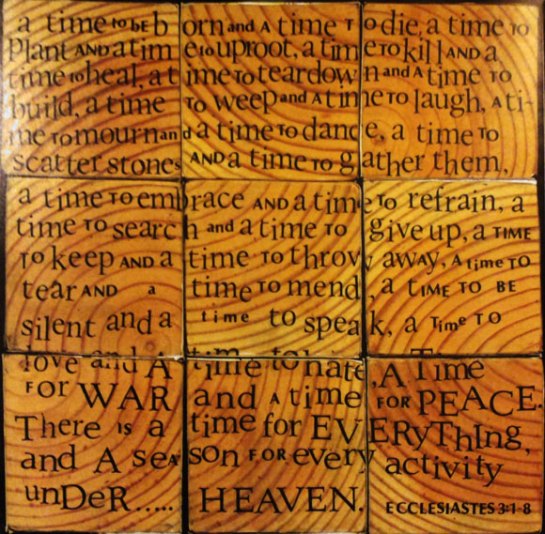
 

a time for everything


It is with great joy that I enter 2012.

2011 was filled with pain, loss, struggle, sadness, anxiety, and anger.

The year overall was one of seeing the best of circumstances end up as the worst of possible outcomes.

And yet through each season and struggle, there has been tearful laughter, growing community, deeper honesty, brave introspection, and tenuous hope.

And it all feels a little closer to the truth. A little closer to telling the truth.

To others.

To myself.

To the part of all of us that tries to close our eyes to what we know the painful truth is sometimes.

There are times when everything in me wants to arrange my circumstances in ways that hope for the best; those same times, if I were being honest with myself and those around me, I would instead be anticipating the worst. Before this year, I think I’ve tried to push everything, no matter the truth, into a single season.

As if allowing ONLY a season for birth, and then trying to translate death into birth in order to make sense of it.

As if allowing ONLY a season for building, and then trying to add on to things that needed only to be torn all the way down.

As if allowing ONLY a season for embracing, and then awkwardly trying to embrace when I should have refrained from doing so.

As if allowing ONLY a season for speaking out, and then trying to explain why I couldn’t be silent if I had wanted to.

The pain of 2011 has made important room for fall and winter. There is a need and space for dying, for tearing down, for refraining from embrace, for remaining silent. A season for these things.

And in the spaces made from telling the truth about our winters, spring comes on the heels. The ground is made soft, the legs become limber, the imagination becomes ready, and things begin to take root, people begin to dance and build again.

And so here’s to the new year, filled with possibilities for both celebration and mourning. Life and death. Dancing and weeping. Building and tearing down.

And an insistence on the holiness of both––on telling the truth about both–to ourselves and others.

For everything there is season.

djordan
Pine Tree Dr.

 

Tagged , , , , , , , , , , , , , , , ,

from the archives | when there’s nothing else to do


In reflecting on the upcoming one-year anniversary of mosthopeful.com on August 23, I’m throwing some of the posts that readers have looked at the most back into the mix. Thanks for allowing me the space. It’s been a most humbling experience.

+++

View original post from May 2, 2012

when there’s nothing else to do


We were standing in a huddle, sixty people maybe, I can’t do numbers. The room is a room I spent many evenings in as a teenager, the church building of friends. We have misbehaved in that room, giggled, sung, prayed, pretended to pray, cried, married, listened, pretended to listen.

Tonight, no longer teenagers but many with children of our own, our parents not as young as they used to be, other new and old faces, tonight we huddled together in that room.

Prayer was being offered about one issue for one family tonight, but from the little I know of others’ lives in the room, I know that the room itself was heavy with issues that seem impossible to figure out or fix. And there we were, heavy, huddled.

Our hands feel best when we are fixing something, and our minds feel most productive when we are figuring something out, but there are many times––in fact it would probably be most times if we told the truth to ourselves––that our hands don’t know how to fix it and our minds can’t figure anything out.

We know too, however, that our hearts are telling us things are heavy and unsure and something must be done to help us move closer to the kind of shalom our brittle little hearts were made for in the first place. We don’t know what to do, but we know that something is not right.

And so we huddle together and do the only thing we know to do to give purpose to our hands and minds.

We pray.

We own up to the fact that we can’t figure out how to fix it, and we don’t know what to even think about it. We own up to the fact that our hearts can’t lie even if they wanted to when they are breaking open.

And prayer, in a huddle of people who have been there with us and seen us at our best and worst, becomes the only thing we can do.

So we pray. And we confess that we have joined the long defeat regardless of any promise of the outcome. We confess that our goal is obedience of seeking what is best for our own and our community and our children, but the goal seems out of reach, too massive, too complicated.

But something in us, perhaps the glimmer of the kingdom in us that shines when everything feels dark, something says that when nothing can be done and nothing can be said the only thing, by God, to do and say is to huddle together and pray that the kingdom would come on earth as it is in heaven.

And we resign to the fact that the huddle and the prayer and the messy people who are forming both are who and what we have been given as we hurt and hope and long together for the shalom our brittle little  hearts were made for in the first place.

djordan
Pine Tree

RELATED POSTS | The Long Defeat | It’s Been a While | Time for Everything


Tagged , , , , , , , , , ,

reminder of a better way


We are a people of privilege and entitlement.
We are among the haves––
we have education,
connections,
power,
and wealth.
Too often we are indulgent and self-sufficient consumers.
We speak of our achievements and accomplishments.
Sometimes we offer God liturgies of disregard,
litanies of selves made too big.
But we hear faint reminders of
a better way.

+ W. Brueggeman, “Well Arranged Lives”
from Prayers for a Privileged People


MORE FROM BRUEGGEMAN
In remembering and in hoping
Catch us up into reality
on most days, a hard mix


Tagged , , , , , , , , , , , , , , , , , , ,

compared with the task | on luke 4

the sharp contrast of common ambition
compared with the task of announcing the kingdom:

I’ll give you a feast;
I’m here to tell the poor their day has come.
I’ll give you authority and prestige and power;
I’m here to talk about letting the jailbirds loose.
I’ll prove you can do whatever you want and still be safe;
I’m here to announce the time has come
for those on the bottom,
for those who are poor,
for those who are blind,
for those who have been victimized,
for those who have victimized,
it is the time for God to make them his favorites.

The sharp contrast of common intention
compared with the task of announcing the kingdom:

he rolled the scroll back up and sat down.
“Today, you are watching it happen…”

djordan
Pine Tree

Tagged , , , , , , , , , , , , , , , , , , , , ,

divine proxy | intro to a series

The notion is not a new one, but it appears to be one seldom discussed explicitly, unless I am missing the entire conversation altogether (please let me know if I am). I want to spend a few posts on the idea of divine proxy. I hit the concept in “Congregation as Expert; a New Way Forward” during the “Culture and Crises” lecture series. It’s something that lurks behind practitioners in the helping fields, especially those practitioners who are Christians, as we falsely imagine that we are the changing force in the lives of our clients.  It’s something that lurks in church offices and behind the desks and efforts of those who try to help and change situations being faced by others.

Today, the idea itself could use explanation, however brief.

Divine proxy is the idea that when someone is speaking from authority, whether professional or religious, whether self given, institutionally given, or transcendently given, they are then interacted with, heard or perceived as becoming the official voice of the source of the authority.

So, …

a therapist who speaks on matters of relationships can become the final authority on a specific relationship.

a pastor who speaks on matters of moral or spiritual issues can become the actual voice of God on specific matters with individual people.

So, …

if a therapist has a misguided view, or is offering a personal, cultural or biased view on someone else’s specific relational situation, the someone heeds the advice as fact, and acts accordingly whether or not everything in them says otherwise and the result is damaging and more disabling. Or maybe they do heed advice even though they feel otherwise, and it is helpful and healing and the person comes to know that to be true later. Or, the person finally hears what deep down he or she knew all along about the situation, and they are set free because the professional speaking offers a more authoritative voice than the person views his or her own voice as being.

If a pastor has a misguided view, or is offering a personal, cultural, or biased view on someone else’s specific moral or spiritual issues, the someone heeds the view as fact––from God rather than from the individual––and acts accordingly whether or not everything in her or him says otherwise and the result is damaging and more disabling. Or maybe the advice is heeded even though the individual feels otherwise, and it is helpful and healing and the person comes to know that to be true later. Or, the person finally hears what deep down he or she knew all along about the situation, and finally freedom is experienced because a pastor speaking offers a more authoritative voice than the person views his or her own voice as being.

We can quickly see how the influence of authority gives incredible weight, whether someone turns a back and walks away from the perceived authority and the authority represented forever, or someone follows the authority because it is seen as direct from the authority source, and therefore should be heeded.

While it may sound pointless or semantic, the issue quickly becomes incredibly personal and incredibly immediate. I think about people who experience great healing because a pastor sees the presence of divine proxy, and takes great caution to express anger and action toward injustice and evil.  I think about the latest story coming out of a megachurch about a spiritual abuse and misogyny that is only headed because the pastor has an unquestioned direct link to God, and questioning is called disloyalty to him…and God. I think about other church experiences where people continued to go home to abusive homes because the pastor says the wife should act more like Jesus to make the husband come around.

So it’s not pointless, and it’s not semantic, and it’s worth the time to consider, even if it’s only mine. So, the first time for a series on mosthopeful.com. We’ll see what happens.

Next up: divine proxy | stories of the phenomenon

djordan
Pine Tree

Tagged , , , , , , , , , , , , , , , , , , , , , , , , , ,

all of us are homesick for it

If we only had eyes to see and ears to hear and wits to understand,
we would know that the Kingdom of God in the sense of
holiness, goodness, beauty
is as close as breathing and is
crying out to born both within ourselves and within the world;
we would know that the Kingdom of God is
what we all of us hunger for above all other things
even when we don’t know its name or
realize that it’s what we’re starving to death for.

The Kingdom of God is where our
best dreams come from and
our truest prayers.
We glimpse it at those moments
when we find ourselves being
better than we are and wiser than we know.
We catch sight of it when at
some moment of crisis a strength seems to come to us
that is greater than our own strength.

The Kingdom of God is where we belong.
It is home, and whether we realize it or not,
I think we are all of us homesick for it.

Frederick Buechner

Tagged , , , , , , , , , , , , , ,

it all starts with good questions

I feel like I’ve been bombarded this week by people who see the world from completely different perspectives than I, but who share the same heart for justice and development and kingdom-living.

Incredibly encouraging.

The questions of whether or not we work toward and in light of and in hope of the kingdom come have grown tiring. Of course we do…it is what keeps us up at night and wakes us in the morning. The questions of whether we are in pursuit of the American Dream or in pursuit of a kingdom dream are old news. Boring. We press on for things on earth as in heaven, as we were taught.

So the joy comes in asking the good questions: what does this mean? What does it look like to practice medicine, business, design, landscaping, writing, teaching, mothering, fathering, gardening, skiing, listening, acting, singing…what does it look like to do all things in light of the kingdom.

How are our businesses different? How are our commitments different? How are our churches, our families, our finances, our career goals different?

How are the stories we tell, and the stories we crave different?

It has been an encouraging week, whether in the homeless shelter or the country club, imagining with others what it means to participate in God’s making all things new.

And it all starts with good questions
and good prayers.

Our Father in heaven, 
Hallowed be your name.
Your kingdom come,
Your will be done
on earth as it is in heaven.
Give us today our bread for the day,
and forgive us for the ways we have failed others
in the same way we forgive the ways others have failed us. 
Lead us not into temptation, but deliver us from evil.
For yours is the kingdom, the power, the glory
forever.

djordan
Pine Tree

Tagged , , , , , , , , , , ,