Category Archives: social work

the ways of the king and the kingdom

Screen Shot 2013-09-03 at 8.44.48 PM

He’s stressed about work and life and pressure
and as we pray for each other
he uses the words
“on the chopping block.”

I’m waking up in the middle of the night
thinking about what has to be done, finished, started, explained, reminded
trying to remember more than I stress that the work is good work
and the ends do not depend on my ability to think up the means
because the rules of the kingdom of heaven
don’t follow the rules

but I hold my breath
and I clench my teeth
and I hunker down
over computer
over printer
over keyboard
over paperwork

hoping that all works out
so that we can do the work we hope to do
because God knows even on our worst days we know
that those we serve deserve it.

The trick, though
is that on our worst days
we forget that it is the kingdom they long for
we forget that it is the king they are waiting for
and we take on the pressure of the kingdom and the king
when the only pressure waiting for us is
the pressure of getting caught up in
the ways of the king and his kingdom

So as I wake in the middle of the night
with him in mind
neck on chopping block
and with me in mind
sanity on chopping block,
I do my best to remember
that the kingdom comes.
period.
and my prayer is to be caught up in
the ways of the king and his kingdom.

djordan
Pine Tree

Tagged , , , , , , , ,

to drop the number

9.jpg.CROP.article920-large

Based on the first few minutes, it seemed like Schizophrenia joined my client during our initial session. I had already been told that she wasn’t comfortable having the door to the office closed, that she stared extra carefully at everything in the room, and that “something isn’t quite right.”

I find her across the parking lot smoking a cigarette during the few minutes between when she had been seen for initial paperwork, and when I called for her to come in for an initial assessment and conversation. Perhaps, I thought as I walked slowly across the parking lot working hard to come across safely and respectfully, she gets anxious in waiting rooms with many other people, so a cigarette provides a space of solace while waiting for whoever has more power than her in the next meeting she will sit through.

My name’s Donald, and if it’s okay with you, I’m privileged to be the clinician who gets to talk to you today.

Nod. Cigarette thrown in the bushes. Handshake. Steady stare into my eyes.

“Nice to meet you, Sir.”

Call me Donald.

We get into my office, and after pleasantries and explanations, she is gracious enough to sit through an hour of the kinds of personal questions I would walk out on were someone else to meet me and begin asking me within a few minutes.

Pages after pages of computer-driven questions that are shaped in the form of inquiries about the client but ultimately are answering questions for insurance companies, attorneys, liability assessment tools, and commissioners from all kinds of offices were completed.

“How are we doing so far? Is this okay for you? Are these questions bothering you? Are you okay still being here?”

Nod. Steady stare into my eyes.

We finished all the initial questions.
Mid forties now, and in and out of prison since the age of 18.
Out of lockup for six months, and scared to death that she will get sent back.
Sexually and physically abused by family members around the age of six and seven.
At the mercy now of probation officers, poorly-run treatment center directors, and the goodwill of others, like me, who she’s been told she has to talk to before she can be “better.”

I go through my spiel that has become quite common, and more true each time I say it, about the respect I have for women and men who make it through prison and work their damnedest to stay out of prison.

“I need to be free. I can’t go back. To go back is to die, and I don’t want to die.”

And after the entire conversation, it’s her turn to sign the freaky little plastic pad with the awkward little plastic pen that shows up on the computer as a weird version of a signature.

One more blow to whatever identity she has left to fight for.

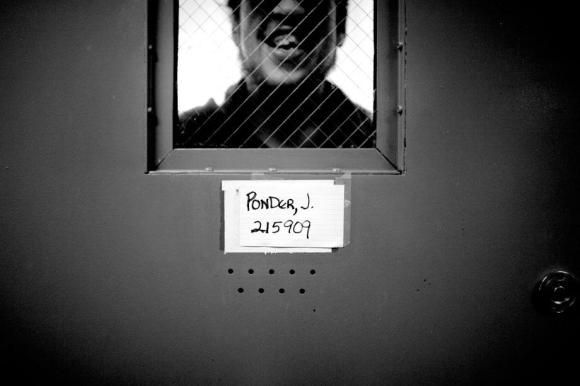
I watch the screen as she watches the electronic signature pad. She writes her last name, the first letter of her first, and then a five digit number.

“What’s that number?”

That’s my number. That’s who I am. It has to be with my signature.

Inmate number, now stuck to a signature.

I looked her in the eyes, shook her hand, and stared longer than feels normal.

“When we are done meeting, my hope for you is that you don’t think to sign that inmate number to your name anymore.”

“Why’s that? It’s my number.”

Our work in the days ahead will be an uphill climb that deals with responsibility and childhood abuse and complex trauma and depression and anxiety and agoraphobia. But if I have any respect for her, our work will include a deep and thick reminder that she is not identified and will not leave her mark in ways that reflect her inmate number.

If she is capable of more that I can think or imagine, and more than she can think or imagine, than she is, right now whether she agrees to it or not, more than a number.

She has a name. And that’s that.
And to find her true name, we have to learn to drop the number.

djordan
Pine Tree Dr.

Image from this article on Slate.com: “Trapped: The Mentally Ill in Prison.”

Tagged , , , , , , , , , , , , ,

protest at the table

1072136_10151796624279459_1667779541_o

Even though I’ve heard it repeated, the story is told regularly and goes like this:

Donald, roughly 3-5 years old sitting at the kitchen table during family dinner. I see a booster seat need based on my age.
Mom: Donald, you have to eat your brussel sprouts before you can get up from the table.
Donald: I don’t like them.
Mom: Well, you’re going to have to eat them before you get up from the table. I don’t think you’ve ever tried them before.
Donald: I don’t like them. I’m not going to eat them.
Dad: You will sit right there until you eat them. Conversation over.
While usually allowed to disagree, the “conversation over” card means be quiet or else. To speak is bad news.

The story apparently plays out that I sit at the table, refusing to eat my brussel sprouts, (I imaging a cigarette in mouth and newspaper in hand, but it’s likely that I went between whining and being way to cool to make eye contact for the next SEVERAL HOURS. I ultimately refused to eat the brussel sprouts (a food I now love), and sat at the table, triumphant, got a spanking, triumphant, and went to bed, crying…..and triumphant.

+++

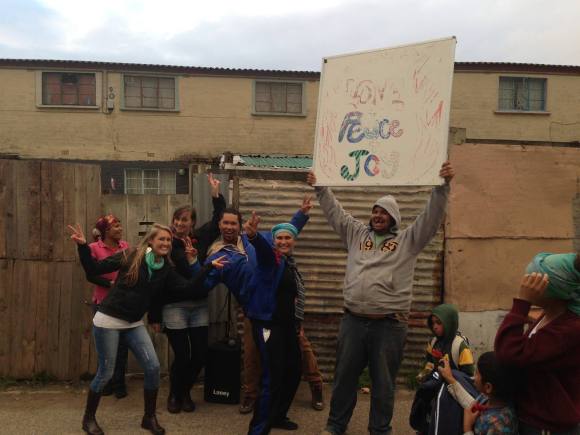
I have friends, some considered by me as close as family, who live and work in the ordinary ways of nonprofit work in Cape Town, South Africa. Their stories seems incredible, but it mimics the news reports here in Jackson, the news reports in Chicago, and the news reports all over the globe. In the community that Fusion finds themselves in, Manenberg, in Cape Town, SA , there have multiple shootings resulting in multiple deaths lately. A community mourns, and the church wonders what is next.

I’m sure churches there, like churches here, continue to worry about issues of childcare and women in leadership and politics and budgets and music styles and whatever else occupies time. And still, Christians there, like Christians here, are finding themselves standing in the spaces where lives have been lost, injustice smells like dried blood and spent gunpowder, and are wondering what it means to follow Christ.

+++

And there’s something valuable in ways that transcend time and space about protesting at the table.
Friends in Manenberg serve soup on the very same pavement and dirt spaces where lives have been lost and chalk outlines could have washed out by now. The value of a meal shared together overcomes the injustice and lack of shalom that leads to violence in the streets in Manenberg, and in Jackson, and in Nicaragua, and around the globe.

And so a group of believers end up deciding that while the believe in the hard facts of guns and gunfire and bullets and death and blood and chalk outlines, they believe something about the table to be healing and to be hope calling and hope inducing, so they serve soup in the very spaces where lives have been lost.

And they proclaim that Christ is king and kingdom comes. Ultimately. Always.

+++

I sat at the communion rail today, accepting the sacraments of his body and blood, both knowing what they mean and at the same time accepting that I have no idea what I’m actually doing. I look across the others at the communion rail. I look across the others in the room. Drama fills the air. Frustration fills the space.

But the space at the table is a space of shared protest, promise, and therefore hope.

All is not well, but all will be well.
The world goes not well, but the kingdom comes.
It comes in Manenberg, South Africa. Soup is served in the spaces where lives have been lost.
It comes in Jackson, Tennessee. Peace is accepted in the spaces where insecurities breed.
It comes in our hearts. The future is claimed for kingdom come while the present is unclear as to how it gets here.

His kingdom come
His will be done
On earth as in heaven.

Who knows how.
We pray not knowing how to pray.
And the table becomes a place of protest.
And kingdom comes.

djordan
Pine Tree Dr.

Tagged , , , , , , , , , , , , , , ,

gracefully critical

gracefully-critical

Recently on vacation, the most stressful part of planning for the trip was not packing, arranging the house details, getting work squared away; the most stressful preparation was choosing which books to take when I knew I would have a week of incredible views, delicious food, and nothing to rush for other than finding a place to sit and read.

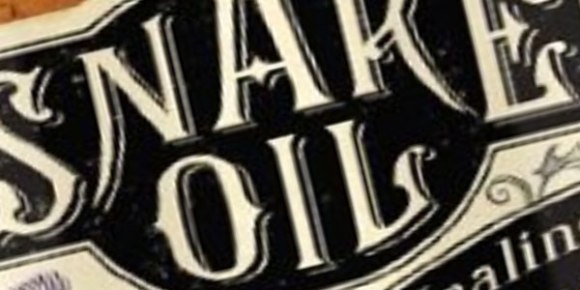
I had been saving Becca Steven’s new book, Snake Oil: The Art of Healing and Truth Telling, for the trip and it definitely did not let me down.

The book’s author, an Episcopal priest on Vanderbilt’s campus, founded Magdalene, a residential program for women who have survived lives of prostitution, trafficking, addiction and life on the streets, in 1997. From this work and the reality that getting clean and off the streets isn’t enough to support a new and whole life, she and the community around her began Thistle Farms, a social enterprise run from top to bottom by members of the Magdalene community, and involves making oils, candles, paper and more from the highway-found, stubbornly resilient and ultimately delicate thistle. As the women work in vats of oils and in meetings of scent-testing or tubs of paper-making, they are both creating an income, adding quality products to the market and community, and telling a story of healing and hope through the thistle.

Already a fan of Stevens after hearing her speak a few years ago, and following the work and even more so the spirit of the work at Magdalene and Thistle Farms, I’ve learned much about the nitty-gritty of what it means when Stevens says, “It takes a community to put a woman on the street, and it will take a community to bring her home.”

In our work at Area Relief here in Jackson, it’s that push for working to see the delicate beauty in what others have overlooked as weeds that is at the core of who we are. We aren’t great at it, as we often look at ourselves as much as those around us, as wasted and useless. But once we begin to work in the grace and hopefulness that whispers of the kingdom add to any story, we begin to find that we are becoming a part of healing community, seeing others healed as well as ourselves.

What struck me the most when reading Steven’s book was her uncanny ability to be gracefully critical. It is no butterfly and sunshine story of human trafficking, abuse, molestation, drug addiction, fundraising, second-guessing, and ultimately losing many battles to drugs and sex and objectification. It is no easy work no matter how ethereal our ways of speaking. There are power players to be called out, habits to be carefully questioned, ways of operating to completely burned up. And yet Stevens manages to tell the truth about all these issues in ways that lead the reader to want to be more hopeful, more loving, more compassionate, more trusting, more free in the promise of kingdom come.

The hard work of seeking first the kingdom is not child’s play, and yet we’ve been charged to work at it as a child. Truth-telling and healing all at the same. Silence in the face of injustice is not God-honoring, but neither is pessimistic cynicism. Stevens’ work is a strong and beautiful reminder that the kingdom comes through the action following graceful criticism.

And the kingdom does come.

djordan
Juneau, AK

To order the book, CLICK HERE.
To learn about Thistle Farms, CLICK HERE.

Tagged , , , , , , , , , , , , , , , , , , , , , ,

he loves the justice

Screen Shot 2013-07-09 at 8.19.53 PM

I got an email yesterday afternoon from a friend and coworker in Nicaragua. She is fighting for justice in a case of child abuse, and has seen this thing from the very beginning to where it currently stands. We’ve been praying together via email and Skype conversation. We’ve been spreading the word and asking others to pray who hold the child and the situation close to their hearts and minds.

We pray, of course, when we don’t know what the hell to do.

She arranged for many bodies to be seated in the courtroom when the case was heard to make it clear that we are watching, the eyes of many from around the world are watching, and we seek justice. And we demand it.

I received an email from her yesterday afternoon that brought me to tears.

We correspond often, and I speak horrible Spanish and she speaks incredible English, but one can only imagine the wrestle of trying to make sure we understand what is being said and what is not being said.

Her email, however, made it perfectly clear. In a kind of correct English from the words of a highly-educated Nicaraguan spoken in a way a native English speaker never would have spoken, I have been repeating her phrase both in my mind and out loud since.

We’ve been waiting, you see, for news from the trial. Will those who’ve committed abuse against children be held accountable? Will reasonable measures be taken to ensure that they are no longer able to perpetrate violence against other women and children?

Her email had this phrase buried in with many other words, but it is this phrase in particular that has been on my mind ever since.

“Thank you for praying. Our God he hears our prayer. And he loves the justice.”

Words from an attorney, among many other things, who is working tirelessly toward kingdom come on the ground in Nicaragua where justice doesn’t have the luxury of being a theological issue; where the luxury of whether or not or even how to talk about the kingdom of heaven is not a conversation, but rather a life and death issue. Words from her speak so clearly about the heart of God in the middle of seeking the kingdom where all points to hopelessness and loss.

“Thank you for praying. Our God he hears our prayer. And he loves the justice.”

The perpetrator of violence was found guilty in the courtroom that morning.
The story is not over and the work is not done, but the anthem of his people remains:
Our God, he loves the justice.

djordan
Salt Lake City, Utah

Tagged , , , , , , , , , , , , , , , , , , ,

when kicking the printer

kicking the printer

between signing papers
returning emails
standing at the printer
checking the voicemail
stamping the letter
kicking the printer
staring in the workroom fridge at everyone else’s food

we are actually doing a kind of magical work
we are actually making a difference in the world
we are actually building something true
we are actually unearthing something honest
we are actually seeking signs of the kingdom

but if we aren’t paying attention
and if we aren’t watching well
and if we aren’t listening earnestly
and if we aren’t walking humbly

we mistake the
papers and
emails and
printers and
letters

for details.
and we think we are
missing out on the real work
for the details.

but kicking the printer counts as real work.
it counts as a part of seeking signs of the kingdom.

Help us pay attention.
Help us watch well.
Help us listen earnestly.
Help us walk humbly.

Even as we kick the printer.

djordan
108 S Church

Tagged , , , , , , , , , , ,

when it’s worth saying

Screen Shot 2013-07-01 at 8.34.07 PM

She held her hands over her mouth
most of the time she talked,
which I’ve been trained to know means
she’s not sure about what she’s saying
and she isn’t sure it’s worth someone else hearing

I find out soon enough
that her pastor tells her she can’t get divorced
even after she knows she’s gotten
an STD from him
a reputation from him
a history and an internalized notion of not being enough for him

but she can’t get divorced from him
so my only hope
and maybe her only hope is
to help her feel strong enough
to know she is strong enough
to stand up to him and maybe
to stand up to her pastor

to say that she thinks
just maybe
even though all of her life has suggested otherwise
that she is worth standing up for herself
and that she is worth having someone else stand up for her. ‘

poverty and power and religion and resources
blur the lines between
what God desires for his people
and what his people end up living through.

and it is, in fact, his people who are called
to put up a fight.
And we, then, cover our mouths as well
because we aren’t sure about what we’re saying
and if it’s worth someone else hearing.

djordan
Summar Dr.

Tagged , , , , , , , , , , , , ,

in the eyes

Screen Shot 2013-05-21 at 6.01.35 PM

in the eyes
the way we make it clear
what we think about you
whether we speak kindly or not

in the tone
the way we make it known
if we think we are lucky to know you or
if we think you are lucky to have found us

in the words
the way we make it obvious
why we are wasting time on you at all
or why we desperately need to know more of the world that
you know
you have survived
you have crawled through
you have climbed over
you have made beautiful
you have dignified

the reality that we manage the resources
that often stand between you and the respect you were born deserving
can and do often mislead us
to think that we could
if we wanted
speak unkindly with our eyes
suggest superiority with our tone and
communicate arrogance with our words
because we think that you need us

while all the while, the kingdom belongs to you.
God of those we attempt to marginalize, for our sakes, forgive us.
Lord hear our prayer.

djordan
108 S Church

These words come after yet another encouraging meeting where staff sit together to work and pray through what it means to remember that we are servants doing the work of Christ, knowing that in doing Christ’s work as he would do it, every interaction we have should reveal more of the dignity and worth inherent in every person. We don’t do it well all the time, or maybe rarely do it we do it well, but it is our heart at ARM to do so. 

Tagged , , , , , , , , , , , , ,

mother’s day proclamation

woman in the kitchen

In the culturally Christian environment of the south where the rules of who women should be and what they should do, mixed as strongly with who they should not be and what they should not do, I am reminded today of the women and mom’s in my own world who have lived into the fulness of themselves for the sake of the world. Those who seek to follow Christ have just as much lived into themselves for the sake of the kingdom come. In areas of health, justice, faith, education, art, academia, research, motherhood, women are pushing what it means into the heart of what it actually does mean.

So on this mother’s day, as reminded by this recent article, here’s to the women who are changing the world as they were made and meant to do, not quietly living into a solemn story someone else told them they had to act in. And to my own mom, thanks for teaching me to ask the questions.

Below is the “Mother’s Day Proclamation” written by Julia Ward Howe in in 1870, pushing women to pacifism and resistance.

Arise then…women of this day!
Arise, all women who have hearts! Whether your baptism be of water or of tears!
Say firmly…
“Disarm! Disarm!
The sword of murder is not the balance of justice.”
Blood does not wipe our dishonor,
Nor violence indicate possession.
As men have often forsaken the plough and the anvil
At the summons of war,
Let women now leave all that may be left of home
For a great and earnest day of counsel.
Let them meet first, as women, to bewail and commemorate the dead.
Let them solemnly take counsel with each other as to the means
Whereby the great human family can live in peace…
Each bearing after his own time the sacred impress, not of Caesar, But of God –

For the article by Diana Butler Bass on the history of Mother’s Day as a day celebrating radical mothers, CLICK HERE.
For an article posted today on women seeking to pray through the violence of tradition, CLICK HERE.
Or for a more light-hearted open letter to Moms by Kid President, CLICK HERE.

djordan
Pine Tree


Tagged , , , , , , , , , , , ,