Category Archives: what they are teaching me

it all starts with good questions

I feel like I’ve been bombarded this week by people who see the world from completely different perspectives than I, but who share the same heart for justice and development and kingdom-living.

Incredibly encouraging.

The questions of whether or not we work toward and in light of and in hope of the kingdom come have grown tiring. Of course we do…it is what keeps us up at night and wakes us in the morning. The questions of whether we are in pursuit of the American Dream or in pursuit of a kingdom dream are old news. Boring. We press on for things on earth as in heaven, as we were taught.

So the joy comes in asking the good questions: what does this mean? What does it look like to practice medicine, business, design, landscaping, writing, teaching, mothering, fathering, gardening, skiing, listening, acting, singing…what does it look like to do all things in light of the kingdom.

How are our businesses different? How are our commitments different? How are our churches, our families, our finances, our career goals different?

How are the stories we tell, and the stories we crave different?

It has been an encouraging week, whether in the homeless shelter or the country club, imagining with others what it means to participate in God’s making all things new.

And it all starts with good questions
and good prayers.

Our Father in heaven, 
Hallowed be your name.
Your kingdom come,
Your will be done
on earth as it is in heaven.
Give us today our bread for the day,
and forgive us for the ways we have failed others
in the same way we forgive the ways others have failed us. 
Lead us not into temptation, but deliver us from evil.
For yours is the kingdom, the power, the glory
forever.

djordan
Pine Tree

Tagged , , , , , , , , , , ,

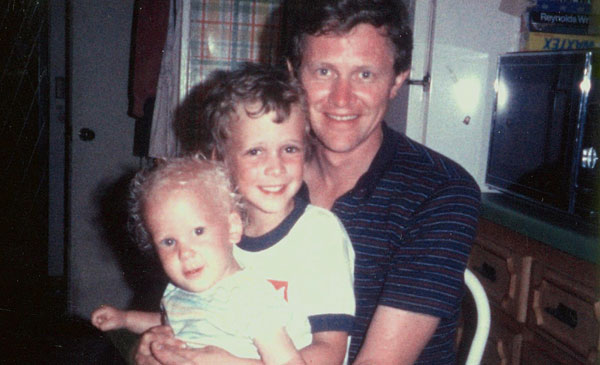
to dad on father’s day

All in this year, Dad hit sixty years old, resigns in a few weeks from practicing law for the last thirty years, and starts a (semi) new career as professor. It’s all of these things together that remind me again how much I have to celebrate about my pops.

I’ve only known Dad’s career as that of a lawyer. When I was born, he was just beginning the practice after going back to law school at the age of thirty after running the “Card Shop” which was the old Greg’s Hallmark in the mall. The decision he made thirty years ago changed the life that my brother and I both led in multiple ways, none of which were difficult.

Day after day I work with people who have lost their fathers, hated their fathers, been abused by their fathers, been left by their fathers, been distanced from their fathers, or been tormented by the lives of their fathers. The ways that these choices bleed into self-image, confidence, disposition, and relationships are undeniable.

Also undeniable are the ways that a father’s ambitions and goals influence the steps and thoughts of his children. Pursuit of power, ambition, wealth, status, image, often are found successful, but leave a great wake of cost in the lives of those trailing behind in either diapers or adolescent pimples.

And so, this year for Father’s Day, I celebrate the fact that I have no sad stories to tell about my dad, and I thank him––and Mom––for it.

I remember as a child of about five or six, Dad dressed up as a judge, Jamey as an attorney, and my split roles as both sheriff and son (costume being only that of removing the cowboy hat). We put Mom on trial for Mother’s Day with the crime that of “Being a good mother.” She was convicted, and sentenced to Mother’s Day cake and hugs by her boys.

Dad taught us great respect of what women, working or not, and mothers, and grandmothers stood for, accomplished, offered to their businesses and homes, and ultimately of how much they were worth. I never saw him demean, belittle, roll his eyes, or even yell at Mom. They disagreed, as they should, but even their disagreements modeled ways of respect, patience and kindness.

Thanks, Dad.

I remember only two major arguments with Dad over the years; both were in late adolescence. And while the subject matter isn’t important, the far that the arguments were about things that mattered greatly is. I don’t remember petty disagreements. I don’t remember my point of view or disagreement being met with anything but ongoing questions and pushing of insight. I do, however remember apologies. I don’t remember what the arguments were about, but I remember, and my brother says the same, that Dad would always, always, apologize when he thought he had been unfair or unkind. It was commonplace after a small argument to hear a gentle knock on the door followed by a soft, “come in.”

Dad taught us that the strength of a man is not in stubbornness, arrogance, strength, ambition, or “not letting them see you sweat.” We were taught, by example more than words, that strength is found in humility, truth-telling, apology, integrity and gentleness.

Thanks, Dad.

I remember Dad saying to “think of your education as a way of life, not something to finish to get to life.” I also remember him saying, “Don’t choose a job where you work for the weekends.” I’ve heard of him changing careers once for this reason, and now at sixty, he does it again. His excitement for entering this new field, and the seriousness with which he is taking it on, and the courage to make a move thirty years later have not gone unnoticed my either my brother or me.

Dad taught us to value learning, trying, becoming and doing. He offered us stability and safety so that we could try anything. He took up guitar in his fifties because he saw a sixteen year old girl playing at a Clapton festival. The regular images I remember of Dad playing air guitar behind the couch have turned into Dad playing an actual guitar, and his example now of entering a brave new world have not gone unnoticed.

Thanks, Dad.

I can’t hit all the things…we were taught to value experiences and people over things. We were taught that generosity is the only appropriate response to wealth and possessions. We were taught that the world is bigger than our circle of friends, and so our circle of friends should be broadened to include the world. We were taught that new ideas were reason for great excitement and careful discernment, not fear and stoning. We were taught that to be a man was to honor all women, stand up for other men, live generously, choose carefully, and act thoughtfully.

As a child, I must admit, I was bothered by how different my parents were. How we didn’t make decisions and spend money and value things like many others did.

As a young adult, I couldn’t be more grateful. The more I learn about what it means to seek first the kingdom, and to live in kingdom ways, I’ve had no better example, and I now have no excuse.

Thanks, Dad. Happy Father’s Day.

djordan
Pine Tree

Tagged , , , , , , , , , , , , ,

“Thank you for your prayers, we are tired of war” | a guest post by Caroline Powell

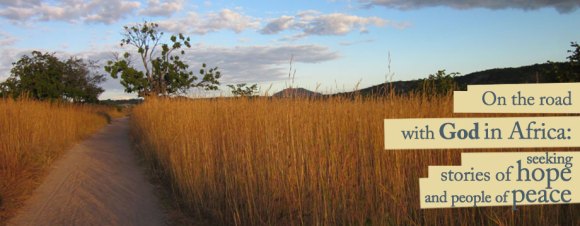
Caroline Powell is a dear friend of mine and native of Cape Town, South Africa. She works with The Warehouse, also dear friends of mine seeking to see the church be a transformative presence in the community in issues of poverty, injustice and division. Caroline has been sent on sabbatical by The Warehouse, in Caroline’s words, to seek kingdom “stories of hope and people of peace.”I’ve been following her blog these last several weeks, and this post is one I’ve enjoyed the most.

Join Caroline on her sabbatical journey at www.thelongwindingroad.me, and in the meantime, thank her for joining the guest voices here at mosthopeful.com. Her words are always words with which to spend considerable time and generous thought. Thank you Caroline. 

“Thank you for your prayers, we are tired of war” | a tribute to the DRC

When I was planning this trip, one of the first places I desired to visit was the town of Goma, on the Democratic Republic of Congo (DRC) side of the western border between DRC and Rwanda. There were several reasons for this. In Cape Town, I study with and enjoy the friendship and encouragement of several Congolese people, through connections at college, church and my work at The Warehouse. I have been fascinated with and deeply troubled by the story of this part of Africa for some time. I have met some very inspiring residents of Goma through Amahoro-Africa who run awe-inspiring initiatives through their churches in their town, and I longed to see first hand what they are involved with on a daily basis.

Getting there and fulfilling this dream has been a different story but one that has invited me into a deeper sense of love and committed prayer for this nation. Advised by Joel from Goma, that I must  have a visa before trying to visit the DRC, I went about filling in application forms and getting invitations letters from my friends in Goma. Once this was done, and all was sent off to the embassy in Pretoria, the waiting game started. I was convinced that visiting this region was to be part of the plan for my trip and especially felt that I would love to go there to encourage my friends by receiving their hospitality – visiting them despite the fact that at times, there are more people leaving the DRC than coming to visit for a holiday. I prayed about it and felt that, while I would take no unnecessary risks at all, if it was a time of peace, I would strive to spend a portion of my trip there.

At about the same time as I was planning for my visit, rebel warlords in the region were planning their next move and just as my passport was arriving in Pretoria for processing, war was breaking out in the very region I was hoping to visit. My passport got stuck at the embassy for too long, as they were in crisis mode due to the conflict and it became clear that this was not to be part of my journey. I called the visa agency and asked them to send my passport home to me. I wrote to my friends, thanking them for the great effort they had gone to in writing invitation letters, scanning signatures and planning to host me. With a deep sadness in my heart I explained that I would not be visiting. With a hope that they did not sound like empty words, I said that I would be praying for them.

A kind reply came back to me, sharing sentiments that they hoped there would be a chance in the future. It was signed off: “Thank you for your prayers, we are tired of war”

Very few words on a computer screen have affected me as deeply as this simple, sad greeting. In much the same way as I might say “I am tired of being cold” at the end of a long winter in Cape Town, they stared back at me. A stated fact. We are tired of war. A fact that I cannot imagine for my own context and yet a fact for countless numbers of people on our planet.

I have just returned from visiting the town of Gisenyi on the border of the DRC. I had arranged to meet my friend Joel on the Rwandan side of the border that is shared between Gisenyi and Goma, and as I travelled from Kigali towards Lake Kivu, the lake that shares is shores with the two cities, the man seated next to me on the bus pointed out a large tented settlement. “Transit Camp” he told me. We were passing one of the many refugee camps that exist, sometimes temporarily, but often permanently in this part of the world. I have made friends in the past few weeks with people who grew up for many years of their childhood in a camp much like this.

Joel met me at “Grand Barrier”, a not so grand piece of road that makes the enormous difference between living in a land at war and a land in times of peace. This same piece of road operated in the opposite direction during the 1994 Rwandan genocide as thousands of people fled their homeland. Then, the transit camps were on the others side. Today, for me, it is a cul-de-sac on my long and winding road. A country that I can only dream of visiting. Homes, less than a kilometer away with rooms and beds where in more peaceful times, I would have visited and slept. Joel took me on a walking and moto tour of his town from the safe side of the border. The two towns are separated by a stone wall at most in some places, even less in others. They are reportedly the two closest border towns in the world. He showed me the region where his family home was destroyed along with thousands of others during the eruption of Ndiragongo in 2002. I took a photo of him with this still active volcano in the backdrop. He pointed toward where he now lives with his family. We walked and talked- of church, recycling, youth ministry, war, upcoming life events and hope. And then he returned home and I went back to Auberge de Gisenyi and watched some of the Queen’s Diamond Jubilee celebrations on TV in French.

It is my hope that this essay, as insignificant as it is in the grand scheme of things, will serve as a tribute to the Democratic Republic of Congo and her courageous people. There are too many wars like this one in the world for us to pray individually and with understanding for each one, but sometimes, as the case is with me in this season, God brings one thing to your attention, and all you CAN do, is pray. DRC, I pray for hope, peace, courage and patience for you. I pray too, that one day I will be able to enjoy your hospitality on your soil, not just from over a stone wall.

Amen.

Tagged , , , , , , , , , , , , , , , ,

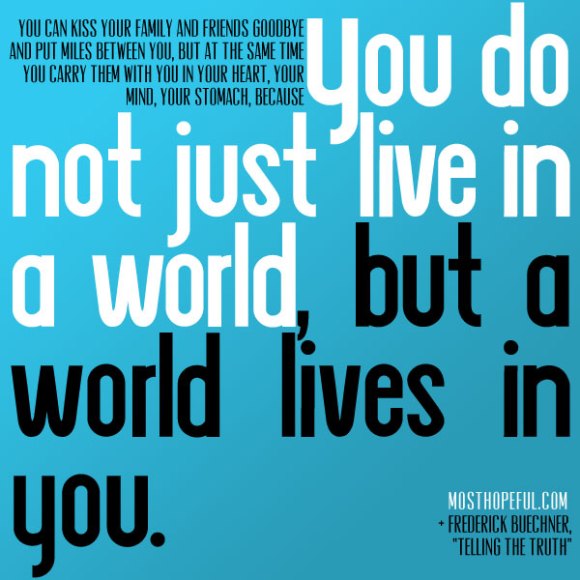
a world lives in you

It’s surprising, really
the way it rattles the ribcage
and then leaps into the lungs.
missing.
missing and needing.
especially on days like today
the missing and needing arrive
when face to face again.
the miles and miles made it easier
to forget the ways they make up my world
to forget that it was them who began to teach me
who I was
who I was not
what the world could be
what the world actually was
how the kingdom insists on bursting through
how the kingdom waits to be released.

but today, this morning
on the edge of the literal sunrise
on the bumpy, muddy roads
on the way to school
when seeing your faces
and hearing your giggles
and feeling your faces
the way we feel faces when it has been so long

I was reminded that you are a part of me as I carry you inside me

and the only words are thank you
thank you to the kiddos who keep growing
growing in their shrinking sandals
growing in their brilliant brains
growing in my heart as they expand my world
expanding the spaces inside me that
had closed in a little too tightly.

And all is well once again.
And the world grows bigger once again.
And the kingdom protests once again.

djordan
León, Nicaragua

Tagged , , , , , , , , , , , , , , , , ,

like fish laid out on the grass | Fahrenheit 451

She made us read it our junior and senior years of high school, Mrs. Kee did. Fahrenheit 451 was one of many other classics that were required of our reading, so we read them like we were supposed to and came up with whatever answers we thought would get us the grade we needed.

And then the book went on the shelves afterward like all the old classics did. This classic from circa 1950, and already forgotten by 2002…much less by 2012.

But ten years later, noticed on those center sections in the bookstores where we pretend we know what we are looking for, I spotted it among the list of high school summer reading. And with Mrs. Kee on my mind these last several months for some reason, I bought the book and read it the whole road trip there and back.

“…hold onto one thought: You’re not important. You’re not anything. Some day the load we’re carrying with us may help someone. But even when we had the books on hand, a long time ago, we didn’t use what we got out of them. We went right on insulting the dead. We went right on spitting in the graves of all the poor ones who died before us…” 

My biggest notion the entire time I reread this high school assignment was how ignorant we all were as we were asked to read this incredibly important work. And even still, ten years later as I began hearing about “recommended reading lists” and “don’t read lists” and “ask these questions” and “here are your answers” and “too much information will just confuse them” and “only one percent could ever  understand” and “just give them something to hang their hats on” being phrases tossed about as if common leadership protocol, the reason Mrs. Kee assigned the book in the first place became all the more important.

And so did picking it up again ten years later.

The book describes a world of the future, written in the 1950s lest we forget, where entire walls of living rooms were taken up with TV screens and “reality” programming. Earbud headphones were commonplace and firemen burned down houses with intellectual contraband instead of putting out fires.

And a ragtag group huddled in the woods, whose ideas had put them on the street, who reminded each other…

“…hold onto one thought: You’re not important. You’re not anything. Some day the load we’re carrying with us may help someone. But even when we had the books on hand, a long time ago, we didn’t use what we got out of them…”

I think remembering this book, buried deep in the places we bury most of what we value when we are young––where we bury what it is about encouraging dissent, opinions, opposing views, challenges, diversity, thoughtfulness and disagreement––it is in remembering that the importance of continuing to evaluate the voices we have decided have no value, have no right, are better shut out…it is in noticing what those voices are and what we are afraid of in them that I can follow Bradbury’s words.

And Mrs. Kee’s words.

And the words of those who have come before us, and who have learned before us, the danger is silencing those who speak in opposition of us.

It is in the dialogue that the truth is always found.

djordan
Pine Tree

RELATED POSTS | Extremely Loud and Incredibly Close | Real Life Fiction | Narrowing the Voices

Tagged , , , , , , , , , , , , , , , , , , ,

to the graduates with great expectations

My thoughts today are with yesterday’s graduates for some reason. And not just yesterday’s from college, but those who graduated last weekend from high school as well. These are students I’ve become friends with whether through church, through teaching, through internships or through other friends. You have spent your time working or laughing at my house, working and laughing around the world, and working and laughing in the classroom. We have met for late-night meetings, early morning meetings, lunch meetings, last-minute meetings.

And you fill me with great expectations!

More so than I remember other groups in the past, you are a group who is asking good questions to bad answers, and who are reading beyond the first page of other people’s thoughts and lives and situations. You are eagerly looking into what else it means for you to be a Christian in the world besides living a certain-kind-of-looking life in the middle of an otherwise chase for the American Dream. You are hesitant to gate yourselves in, block yourselves off, and cover your eyes and ears from the world in which you have been placed. You will argue and laugh with one another in the same breath. You will take off on a whim to aid one another. You will stand up to yourselves when one of you is standing on top of another.

And you fill me with great expectations!

Now that you’ve graduated, you will be challenged to move quickly into certain kinds of worlds.

You will be challenged to quickly move into worlds where money and perception and privilege and status quo are fought for, killed for, lied for, settled for.

You will be challenged to quickly move into world where it’s better off not trying and not being disappointed than seeking justice while, of course, being burned in the process as he told us we would be.

You will be challenged to quickly move into worlds where it is, of course, the best thing to do to challenge the status quo, the powers-that-be, the way it’s always been, but reminded that now is not the time, this is not the place, and not if you know what’s good for you and the future of your career.

You will be challenged to quickly move into worlds where you do not associate with that kind of person in those kinds of places with those kinds of thoughts because it’s something of which to be very afraid.

You will be challenged to quickly move into worlds where you read the first page, find a word or name that scares you because you are not familiar with it, and therefore are urged to close your eyes and ears and repeat what you have been told before.

But you fill me with great expectations!

Whether in the classroom, at dinner, in church or at work, I have already seen you move.

I’ve already seen you care nothing about money and perception and privilege and status quo; I’ve even seen you be willing to do lay down your life so that someone else can have something more.

I’ve already seen you choose to join the long defeat because you have decided that it is better to do justice, love mercy and walk humbly in obedience rather than fight for great ambitions or personal success.

I’ve already seen you suggest that now must be the time to pursue justice while challenging the powers-that-be and the status quo, because you know that it is never the right time for those on top to work for the best interests with and for those on the bottom.

I’ve already seen you enter into deep and honest relationships with the wrong kinds of people in the wrong kinds of places, and I’ve already seen God honor your choices by making you and them more like himself in the process.

I’ve already seen you read widely and thoughtfully, ask broad and dangerous questions, and engage in thoughtful and humble dialogue for the sake of seeking the truth. I’ve already seen a God––who needs not be protected––honor your search as you together discover him newly.

Because of what you have already shown yourselves to be, how you have already shown yourselves to move and breath in the world, I am filled with a new kind of courage as to where you will take us, where we will go together, what we will ask together, what we will learn together and what we will see God do together as we seek first his kingdom on earth as it is in heaven.

You make me incredibly proud, and fill me with great expectations.
Well done.

djordan
Pine Tree

Tagged , , , , , , , , , , ,

the magic of a place | Pine Tree

I’ve just returned from a four-hour party that is still making its way into the evening. It was a welcoming party for a new neighbor on my street, Pine Tree Dr.

I live in the home of my great, great aunts. They were the sisters of my great-grandfather whom I never met. They were born in the first decade of the twentieth century, and lived as graduates of Vanderbilt, single women who taught students from high school to University in the town I now live and teach in.  I live in their home much changed since they were here; there is new paint, a new floor plan, newly-purposed rooms, but still their home nonetheless.

As I walked home tonight from my neighbors’ house around the corner, the magic of this place struck me again. I remember several years ago when I thought I was moving; I would turn out the lights in this Pine Tree house room by room, struck with a certain kind of grief and loss at every flick. It’s the building, yes, but not completely.

I love the home, no doubt. I love the old wooden, creaking floors and chandeliers. I love the plaster walls and sturdy fireplaces. I love the interesting nooks and odd architecture.

But what I love more is what tonight made perfectly clear. I sat around a swimming pool with friends and neighbors I went to middle school with, and friends and neighbors that my grandparents went to middle school with. I’m proud to say that I’m Donald Laycook’s grandson, the Etheridge’s great, great-nephew. I like that my neighbors know parts of my own history better than I myself do.

There’s an interesting honor and value in knowing that as our motley crew sat around the swimming pool eating and laughing this evening––the party lingers on with my neighbors who are older than I even now as I write this––is joined together less by job, income, or history, and more by a shared value of a place. we sit in places that those who came before us sat and enjoyed evenings by candlelight. A value of this particular Pine Tree Drive that is home to childhoods, early adulthood, retirement, loss, grief, joy, childbirth, dating, graduation, and the future of God knows what.

So I walked back home this evening grateful that I know my neighbors’ names, grateful that my neighbors can tell me about my grandparents, grateful that we recognize each other in coffee shops and business meetings, and grateful that we share a legacy as old as my lost grandfather and as young as my middle school classmates.

There’s a magic to this place, a place that is clearly home. A street that is clearly home.

djordan
Pine Tree

Tagged , , , , , , , , , , , ,

reversing the questions

I find myself often asking questions to clients that I know I need to be asking myself. Much of the art of clinical work has little to do with giving answers or telling people what they need to know, as these things are never beneficial when I am struggling with something.

The art seems instead to be in asking the questions, out loud, that we are unable to ask ourselves when we are holding on with dear life to whatever it is that is holding on to us so tightly. And in all the ways that my clients are generous enough with me to offer the space for me to put a new question in the air, it is in that same moment that I hear that question being asked out loud.

Often, like it was today, the words float in space and I recognize that I am hearing the question posed for the very first time as I ask it to the person sitting across from me…

“Why do you think you need the last word?”

“Why do you think it is so important that they understand what you are saying?”

“Why do you think they heard it one way when you intended something very different?”

“Why do you think that became so unbearable for you? What about it is really so impossible?”

‘Why do you think those words from that person meant so much to you?”

“Why do you think you worry about this particular possibility so much?”

“What is it about you that makes this in particular worth so much?”

The bravery my clients show in speaking their realities into the air offers me the opportunity to hear, usually for the first time, the questions that I have not yet been brave enough to ask myself. And so as they share in their own vulnerability, I am able to take a more honest look at whatever is buried in my quiet interior. I am able to ask myself a question that I didn’t even know I needed to ask.

Paired with the gift this has become is the frightening reality that at whatever moment I think I know enough to tell a client what they should know or need to do…in that moment I am missing the opportunity to learn from them what I need to be asking myself.

Their humility and bravery, and generosity with their humanity, are teaching me a great deal about what it means to be a human being in the world.

djordan
Pine Tree

RELATED POSTS | What they are teaching me | What they are teaching me 2 

Tagged , , , , , , , , , , , ,

when they disagree

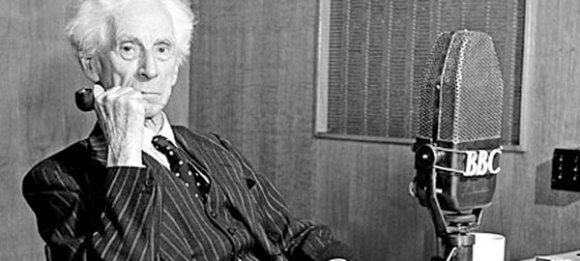
Bertrand Russell, BBC Radio station with pipe in hand

One of the things that has become a favorite of teaching has been when students disagree with me. This semester has seen a class filled with diversity in age, income, race, and worldview. It has made conversations thicker and richer because no one in the room can get away with saying something while assuming everyone both sees it the same way and agrees with our conclusion.

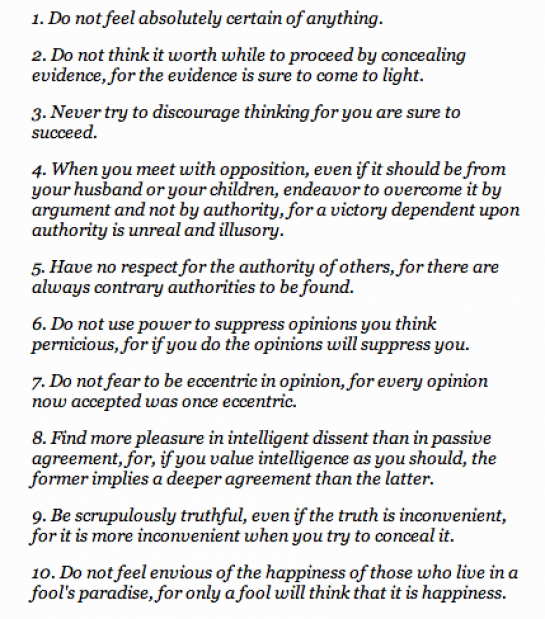
I’ve seen the nature of the class feeling and creating a culture of safety in dialogue grow all of us into wiser practitioners and students of those around us. They have been a gift, and I thought of our class when I read these notes from Bertrand Russell in last week’s braingpickings.org weekly email. Considering Russell’s stance on religion, and also considering sending practitioners into the world who are Christians, it feels that more important than even knowing certain things is knowing how to think through certain things, how to disagree, how to ask questions, and how to engage.

I hope you find these as interesting as I did, in light of Russell’s zeitgeist and the one in which we find ourselves.

djordan
Pine Tree

RELATED POSTS | The Best First Class Ever | We Can Assume | Failure to Imagine | The Risk of Narrowing the Voices

Tagged , , , , , , , , , , , , , ,

when there’s nothing else to do

We were standing in a huddle, sixty people maybe, I can’t do numbers. The room is a room I spent many evenings in as a teenager, the church building of friends. We have misbehaved in that room, giggled, sung, prayed, pretended to pray, cried, married, listened, pretended to listen.

Tonight, no longer teenagers but many with children of our own, our parents not as young as they used to be, other new and old faces, tonight we huddled together in that room.

Prayer was being offered about one issue for one family tonight, but from the little I know of others’ lives in the room, I know that the room itself was heavy with issues that seem impossible to figure out or fix. And there we were, heavy, huddled.

Our hands feel best when we are fixing something, and our minds feel most productive when we are figuring something out, but there are many times––in fact it would probably be most times if we told the truth to ourselves––that our hands don’t know how to fix it and our minds can’t figure anything out.

We know too, however, that our hearts are telling us things are heavy and unsure and something must be done to help us move closer to the kind of shalom our brittle little hearts were made for in the first place. We don’t know what to do, but we know that something is not right.

And so we huddle together and do the only thing we know to do to give purpose to our hands and minds.

We pray.

We own up to the fact that we can’t figure out how to fix it, and we don’t know what to even think about it. We own up to the fact that our hearts can’t lie even if they wanted to when they are breaking open.

And prayer, in a huddle of people who have been there with us and seen us at our best and worst, becomes the only thing we can do.

So we pray. And we confess that we have joined the long defeat regardless of any promise of the outcome. We confess that our goal is obedience of seeking what is best for our own and our community and our children, but the goal seems out of reach, too massive, too complicated.

But something in us, perhaps the glimmer of the kingdom in us that shines when everything feels dark, something says that when nothing can be done and nothing can be said the only thing, by God, to do and say is to huddle together and pray that the kingdom would come on earth as it is in heaven.

And we resign to the fact that the huddle and the prayer and the messy people who are forming both are who and what we have been given as we hurt and hope and long together for the shalom our brittle little  hearts were made for in the first place.

djordan
Pine Tree

RELATED POSTS | The Long Defeat | It’s Been a While | Time for Everything

Tagged , , , , , , , , , , , , , ,