Tag Archives: Christianity

compared with the task | on luke 4

the sharp contrast of common ambition
compared with the task of announcing the kingdom:

I’ll give you a feast;
I’m here to tell the poor their day has come.
I’ll give you authority and prestige and power;
I’m here to talk about letting the jailbirds loose.
I’ll prove you can do whatever you want and still be safe;
I’m here to announce the time has come
for those on the bottom,
for those who are poor,
for those who are blind,
for those who have been victimized,
for those who have victimized,
it is the time for God to make them his favorites.

The sharp contrast of common intention
compared with the task of announcing the kingdom:

he rolled the scroll back up and sat down.
“Today, you are watching it happen…”

djordan
Pine Tree

Tagged , , , , , , , , , , , , , , , , , , , , ,

divine proxy | intro to a series

The notion is not a new one, but it appears to be one seldom discussed explicitly, unless I am missing the entire conversation altogether (please let me know if I am). I want to spend a few posts on the idea of divine proxy. I hit the concept in “Congregation as Expert; a New Way Forward” during the “Culture and Crises” lecture series. It’s something that lurks behind practitioners in the helping fields, especially those practitioners who are Christians, as we falsely imagine that we are the changing force in the lives of our clients.  It’s something that lurks in church offices and behind the desks and efforts of those who try to help and change situations being faced by others.

Today, the idea itself could use explanation, however brief.

Divine proxy is the idea that when someone is speaking from authority, whether professional or religious, whether self given, institutionally given, or transcendently given, they are then interacted with, heard or perceived as becoming the official voice of the source of the authority.

So, …

a therapist who speaks on matters of relationships can become the final authority on a specific relationship.

a pastor who speaks on matters of moral or spiritual issues can become the actual voice of God on specific matters with individual people.

So, …

if a therapist has a misguided view, or is offering a personal, cultural or biased view on someone else’s specific relational situation, the someone heeds the advice as fact, and acts accordingly whether or not everything in them says otherwise and the result is damaging and more disabling. Or maybe they do heed advice even though they feel otherwise, and it is helpful and healing and the person comes to know that to be true later. Or, the person finally hears what deep down he or she knew all along about the situation, and they are set free because the professional speaking offers a more authoritative voice than the person views his or her own voice as being.

If a pastor has a misguided view, or is offering a personal, cultural, or biased view on someone else’s specific moral or spiritual issues, the someone heeds the view as fact––from God rather than from the individual––and acts accordingly whether or not everything in her or him says otherwise and the result is damaging and more disabling. Or maybe the advice is heeded even though the individual feels otherwise, and it is helpful and healing and the person comes to know that to be true later. Or, the person finally hears what deep down he or she knew all along about the situation, and finally freedom is experienced because a pastor speaking offers a more authoritative voice than the person views his or her own voice as being.

We can quickly see how the influence of authority gives incredible weight, whether someone turns a back and walks away from the perceived authority and the authority represented forever, or someone follows the authority because it is seen as direct from the authority source, and therefore should be heeded.

While it may sound pointless or semantic, the issue quickly becomes incredibly personal and incredibly immediate. I think about people who experience great healing because a pastor sees the presence of divine proxy, and takes great caution to express anger and action toward injustice and evil.  I think about the latest story coming out of a megachurch about a spiritual abuse and misogyny that is only headed because the pastor has an unquestioned direct link to God, and questioning is called disloyalty to him…and God. I think about other church experiences where people continued to go home to abusive homes because the pastor says the wife should act more like Jesus to make the husband come around.

So it’s not pointless, and it’s not semantic, and it’s worth the time to consider, even if it’s only mine. So, the first time for a series on mosthopeful.com. We’ll see what happens.

Next up: divine proxy | stories of the phenomenon

djordan
Pine Tree

Tagged , , , , , , , , , , , , , , , , , , , , , , , , , ,

all of us are homesick for it

If we only had eyes to see and ears to hear and wits to understand,
we would know that the Kingdom of God in the sense of
holiness, goodness, beauty
is as close as breathing and is
crying out to born both within ourselves and within the world;
we would know that the Kingdom of God is
what we all of us hunger for above all other things
even when we don’t know its name or
realize that it’s what we’re starving to death for.

The Kingdom of God is where our
best dreams come from and
our truest prayers.
We glimpse it at those moments
when we find ourselves being
better than we are and wiser than we know.
We catch sight of it when at
some moment of crisis a strength seems to come to us
that is greater than our own strength.

The Kingdom of God is where we belong.
It is home, and whether we realize it or not,
I think we are all of us homesick for it.

Frederick Buechner

Tagged , , , , , , , , , , , , , ,

it all starts with good questions

I feel like I’ve been bombarded this week by people who see the world from completely different perspectives than I, but who share the same heart for justice and development and kingdom-living.

Incredibly encouraging.

The questions of whether or not we work toward and in light of and in hope of the kingdom come have grown tiring. Of course we do…it is what keeps us up at night and wakes us in the morning. The questions of whether we are in pursuit of the American Dream or in pursuit of a kingdom dream are old news. Boring. We press on for things on earth as in heaven, as we were taught.

So the joy comes in asking the good questions: what does this mean? What does it look like to practice medicine, business, design, landscaping, writing, teaching, mothering, fathering, gardening, skiing, listening, acting, singing…what does it look like to do all things in light of the kingdom.

How are our businesses different? How are our commitments different? How are our churches, our families, our finances, our career goals different?

How are the stories we tell, and the stories we crave different?

It has been an encouraging week, whether in the homeless shelter or the country club, imagining with others what it means to participate in God’s making all things new.

And it all starts with good questions
and good prayers.

Our Father in heaven, 
Hallowed be your name.
Your kingdom come,
Your will be done
on earth as it is in heaven.
Give us today our bread for the day,
and forgive us for the ways we have failed others
in the same way we forgive the ways others have failed us. 
Lead us not into temptation, but deliver us from evil.
For yours is the kingdom, the power, the glory
forever.

djordan
Pine Tree

Tagged , , , , , , , , , , ,

when they disagree

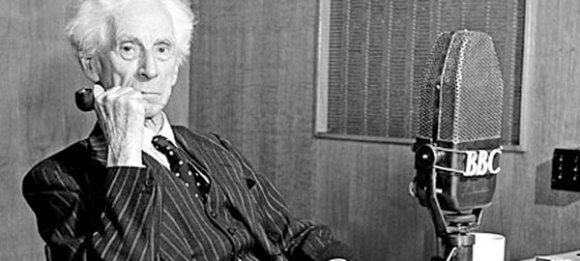
Bertrand Russell, BBC Radio station with pipe in hand

One of the things that has become a favorite of teaching has been when students disagree with me. This semester has seen a class filled with diversity in age, income, race, and worldview. It has made conversations thicker and richer because no one in the room can get away with saying something while assuming everyone both sees it the same way and agrees with our conclusion.

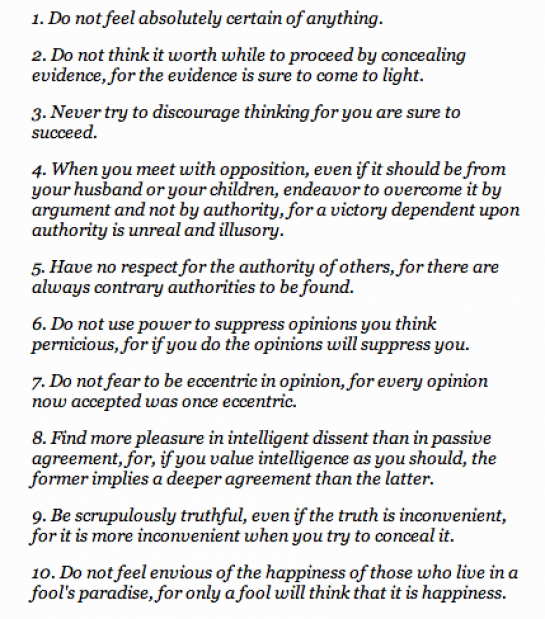
I’ve seen the nature of the class feeling and creating a culture of safety in dialogue grow all of us into wiser practitioners and students of those around us. They have been a gift, and I thought of our class when I read these notes from Bertrand Russell in last week’s braingpickings.org weekly email. Considering Russell’s stance on religion, and also considering sending practitioners into the world who are Christians, it feels that more important than even knowing certain things is knowing how to think through certain things, how to disagree, how to ask questions, and how to engage.

I hope you find these as interesting as I did, in light of Russell’s zeitgeist and the one in which we find ourselves.

djordan
Pine Tree

RELATED POSTS | The Best First Class Ever | We Can Assume | Failure to Imagine | The Risk of Narrowing the Voices

Tagged , , , , , , , , , , , , , ,

when there’s nothing else to do

We were standing in a huddle, sixty people maybe, I can’t do numbers. The room is a room I spent many evenings in as a teenager, the church building of friends. We have misbehaved in that room, giggled, sung, prayed, pretended to pray, cried, married, listened, pretended to listen.

Tonight, no longer teenagers but many with children of our own, our parents not as young as they used to be, other new and old faces, tonight we huddled together in that room.

Prayer was being offered about one issue for one family tonight, but from the little I know of others’ lives in the room, I know that the room itself was heavy with issues that seem impossible to figure out or fix. And there we were, heavy, huddled.

Our hands feel best when we are fixing something, and our minds feel most productive when we are figuring something out, but there are many times––in fact it would probably be most times if we told the truth to ourselves––that our hands don’t know how to fix it and our minds can’t figure anything out.

We know too, however, that our hearts are telling us things are heavy and unsure and something must be done to help us move closer to the kind of shalom our brittle little hearts were made for in the first place. We don’t know what to do, but we know that something is not right.

And so we huddle together and do the only thing we know to do to give purpose to our hands and minds.

We pray.

We own up to the fact that we can’t figure out how to fix it, and we don’t know what to even think about it. We own up to the fact that our hearts can’t lie even if they wanted to when they are breaking open.

And prayer, in a huddle of people who have been there with us and seen us at our best and worst, becomes the only thing we can do.

So we pray. And we confess that we have joined the long defeat regardless of any promise of the outcome. We confess that our goal is obedience of seeking what is best for our own and our community and our children, but the goal seems out of reach, too massive, too complicated.

But something in us, perhaps the glimmer of the kingdom in us that shines when everything feels dark, something says that when nothing can be done and nothing can be said the only thing, by God, to do and say is to huddle together and pray that the kingdom would come on earth as it is in heaven.

And we resign to the fact that the huddle and the prayer and the messy people who are forming both are who and what we have been given as we hurt and hope and long together for the shalom our brittle little  hearts were made for in the first place.

djordan
Pine Tree

RELATED POSTS | The Long Defeat | It’s Been a While | Time for Everything

Tagged , , , , , , , , , , , , , ,

the risk of narrowing the voices

asking questions, freedom, safety, church, power

Choosing a paint color is one thing; seeking the truth is another.

One of my favorite lines of Madeleine L’Engle’s is, not in quotations because I can’t remember where it was, that God does not need our protection, and welcomes as many questions as we can dream up.

And I’ve noticed in the meantime that we are at risk not only of taking other people’s answers for truth, but also of taking other people’s advice on what the questions are to be asking in the first place. When our questions are guided, we are of course lead to certain answers from certain narrowed voices.

When we narrow the voices, we weaken our ability to discern at all. In thinking throughout history of all the situations and all those power and all those in the church, even, who have been led in obedience because they trust that someone else is doing the discerning, it is horrifying. We mistake proclaimed expertise for due diligence, and we are left unthinkingly joining in protection of the status quo.

Stifled questions means stifled dialogue, and it is in dialogue that progress is born and we get a little closer to the truth we are all of us after. Dialogue requires broad voices rather than a single voice, and there is perhaps no doubt in the promise that where two or more are gathered, there is something more true and holy present and happening.

I’ve been reading, this time by choice, the book that we long ago read in high school by mandate: Fahrenheit 451. I remembered thinking at the time that how ridiculous the notion was that people would be told what to read and what not to read, and that reading and thinking off of an approved list could result in death.

Book burning followed driven by those in charge, under the guise of protecting humanity from dangerous thought. Children then came up into families never knowing the art of book reading, thinking, questioning, debating, creating and imagining.

I thought it foolish then, but it doesn’t seem so foolish now. In fear of discerning many voices, we seek to narrow them down to the ones we know, or the ones we have been told to agree with: the approved book list. To read past the first page of another voice becomes treacherous and intimidating, because we wont know what to do with another line of thought. And so, as encouraged, we don’t think anymore. We ask the questions we’ve been told to ask and take the answers we’ve been given.

If we idolize those speaking or writing, or simply take their words, we aren’t able to listen to multiple voices because we have challenged the ability for the spirit to work in community, and given authority to some single voice.

With broad voices, however, we learn the art of listening and asking, hearing and being heard. With broad voices we learn how experience shapes understanding, and how injustice and power breed certain lines of thought. We learn where we are blind, and where we are gifted. With broad voices, we think enough to welcome for dinner a Boo Radley or a Hester Prynne. With broad voices,  the combination of these truly human acts yields compassion and humility.

I’ve been in meetings where a million voices made it impossible to choose a paint color, and it has indeed been a nightmare.

I’ve also been in meetings where power is used to beg discussion, criticism, thoughtfulness, ideas, questions, dreams and disagreement…none of which should be mistaken for disunity…and it has been a beautiful and community-affirming endeavor.

There’s a difference between choosing a paint color and seeking the truth.

And what have we to fear if it’s the truth we’re after together.

djordan
Pine Tree

OTHER RELATED POSTS | BECAUSE YOU DID NOT ASK, FEAR OF THE WEAK AMONG US

Tagged , , , , , , , , , , , , , , , , , , , , , , , ,

Letters to a future church and creepy Russian playgrounds | weekly mash | 04.28.2012

From creepy russian playground photos to explicative illustrations of the human body circa 1959, from the 10 companies that own everything to the letters written by the future of the church, here’s the weekly mash for the week leading up to April 28. It’s filled with the stories, essays, and ideas that I’ve been mulling over this week. Enjoy!

10 companies that control everything | INFOGRAPHIC | huffingtonpost.com

Ten Major Corporations that own every company we get everything from

“It may be obvious that Corn Flakes and Frosted Flakes are both made by Kellogg’s, but did you know that Hot Pockets and L’Oreal share a parent company in Nestlé?” And six companies own 90% of media outlets. Fair and balanced indeed. 🙂

Russia’s Creepiest Playgrounds | PHOTOS | flavorwire.com

I do agree that something has been lost since the days playgrounds were made of rested metal ladders and sideways trash cans with the bottom cut out. But this is a different level of creepy old playground all together.

Letters to a Future Church | patheos.com

Letters to a future church

An excerpt from InterVaristy’s new book, “Letters to a Future Church,” reads like this: “But are we people of the kingdom? That is the question at the heart of this crisis, and as we struggle together to answer it, I am convinced that we don’t need bigger buildings or fancier sound equipment, better pastors or more parishioners, newer ministries or deeper pockets. What we need are bigger banquet tables.” I find comfort in these words for the  future of the church. For a church for my children…and the children in the poorest parts of our community.

The Human Body Circa 1959 | VINTAGE ILLUSTRATION | brainpickings.org

The Human Body circa 1959 brain pickings brainpickings.org

Glad that medicine values moving forward in understanding and practice. But these are most definitely AWESOME illustrations from 1959….

55 Free Philosophy Courses | openculture.com

The ones I have slated to listen to first are audio files given by Foucault the year that I was born.

THE MASH ALSO MENTIONS

+ How the USDA maps Food Deserts | scientificamerican.com

+ Why TED-ED is living up to the hype | good.is

+ The Story of Money is Not a Straight Line | sethgodin.typepad.com

+ 5 Literal Postures that Foster Creativity | spring.org.uk

CLICK HERE FOR PREVIOUS EDITIONS OF THE WEEKLY MASH

Tagged , , , , , , , , , , , , , , , , ,

calling out in the darkness

I sat this morning watching a video (below) that highlights the last five years of a homeless ministry that houses and feeds the homeless in churches every night of the winter months. My mind went back to one evening about six years ago spent with Jonathan Stewart and Wes Gristy; we had been making and serving sandwich dinners on Friday evenings in a parking lot downtown, and our question had become “are there homeless in our community?”

In following that question and other rumors that accompanied it, we met at the church late one evening, made a pot of decaf coffee, and headed to the amphitheater where we had heard those who were homeless stayed.

I remember conversations about exit plans, what we would talk about, how we would find them. We parked facing the main road, flashlights in hand, and started walking through the damp ground toward the amphitheater calling out in the darkness.

“Are you there?”
“We won’t hurt you.”
“We aren’t the cops.”
“We have coffee.”

There was, of course, no one there.

Six years later, with churches across the community working together to host those who are homeless in their buildings night after night, what seems most certain now is that we were, indeed, calling out in the darkness.

We are, those of us fortunate enough to have grown up in church, blessed with a great deal of treasured heritage, and at the same time plagued by a deep spiritual paternalism that we can’t see until we are staring our ignorance straight in the face.

Were I to ask “Are the homeless christians?” the answer would no doubt be, “not necessarily.”
Were I to ask “Are the homeless not christians?” the answer would no doubt be, “not necessarily.”

But were I to have asked “Why do we serve the homeless?” the answer might have likely been “to show them Jesus.”

We are still often calling out in the darkness.

Six years later, I can say that I have learned more about who Jesus is and what he has done from the Christian men who are homeless in our community. Their homelessness is not a result of their not-Christian-ness. And they were not necessarily waiting around for me to show them Jesus.

They are often showing Christ to me, as even Jesus made clear that when we interacted with them we were interacting with him.

But we say we serve to show them Jesus, so we do little looking to see him in them.

But that is changing with those who are willing to open their eyes and see that when we have experienced relationship with those in need, we have experienced relationship with Christ.

Here’s to a future of continuing to open our eyes more and more, and continuing to call out in the darkness less and less.

Theirs is the kingdom, of course.

djordan
South Church St.


OTHER RELATED POSTS | the fear of the weak among us | we can assume | crack our great ambitions

Tagged , , , , , , , , , , , , , , , , , , , , ,

beyond sides of a story

Our temptation is, of course, to listen for the evidence and decide which side of the story we will choose to stand on. And our temptation then is, of course, to fight for where we have chosen to stand. And our temptation then is, of course, to stop listening because when fighting for the side of the story we have chosen, we fight with all our might because it has become the ground on which we are now standing.

But what happens if we consider moving beyond sides of a story? What if we have been fighting for the either or for the or when it was never an either or to begin with? What if our need for choosing sides comes more from a need to stop listening, because listening is harder than fighting. Persisting in curiosity is harder than moving into superiority.

I know when I speak, I am telling what I’ve seen. What I’ve smelled. What I’ve felt.

And when they speak, they are telling what they’ve seen. What they’ve smelled. What they’ve felt.

And if we experienced the crash of the story me from one bank, and them from the other, we may both tell the truth, and still tell a different story.

So is there a way to listen widely, getting so many sides of the story that we move beyond sides all together and rather begin to experience the fulness of the story we know we exist anyway? A fullness that breeds humility and compassion and generosity because we continue to listen and therefore take on the fulness and complexity of the story itself rather than landing on a side and being forced to start a fight.

It is, of course, the work of being a peacemaker. And the peacemakers are, of course, the children of God.

djordan
Pine Tree

Tagged , , , , , , , , , , , , , ,