Tag Archives: Religion and Spirituality

reminder of a better way


We are a people of privilege and entitlement.
We are among the haves––
we have education,
connections,
power,
and wealth.
Too often we are indulgent and self-sufficient consumers.
We speak of our achievements and accomplishments.
Sometimes we offer God liturgies of disregard,
litanies of selves made too big.
But we hear faint reminders of
a better way.

+ W. Brueggeman, “Well Arranged Lives”
from Prayers for a Privileged People


MORE FROM BRUEGGEMAN
In remembering and in hoping
Catch us up into reality
on most days, a hard mix


Tagged , , , , , , , , , , , , , , , , , , ,

compared with the task | on luke 4

the sharp contrast of common ambition
compared with the task of announcing the kingdom:

I’ll give you a feast;
I’m here to tell the poor their day has come.
I’ll give you authority and prestige and power;
I’m here to talk about letting the jailbirds loose.
I’ll prove you can do whatever you want and still be safe;
I’m here to announce the time has come
for those on the bottom,
for those who are poor,
for those who are blind,
for those who have been victimized,
for those who have victimized,
it is the time for God to make them his favorites.

The sharp contrast of common intention
compared with the task of announcing the kingdom:

he rolled the scroll back up and sat down.
“Today, you are watching it happen…”

djordan
Pine Tree

Tagged , , , , , , , , , , , , , , , , , , , , ,

all of us are homesick for it

If we only had eyes to see and ears to hear and wits to understand,
we would know that the Kingdom of God in the sense of
holiness, goodness, beauty
is as close as breathing and is
crying out to born both within ourselves and within the world;
we would know that the Kingdom of God is
what we all of us hunger for above all other things
even when we don’t know its name or
realize that it’s what we’re starving to death for.

The Kingdom of God is where our
best dreams come from and
our truest prayers.
We glimpse it at those moments
when we find ourselves being
better than we are and wiser than we know.
We catch sight of it when at
some moment of crisis a strength seems to come to us
that is greater than our own strength.

The Kingdom of God is where we belong.
It is home, and whether we realize it or not,
I think we are all of us homesick for it.

Frederick Buechner

Tagged , , , , , , , , , , , , , ,

it all starts with good questions

I feel like I’ve been bombarded this week by people who see the world from completely different perspectives than I, but who share the same heart for justice and development and kingdom-living.

Incredibly encouraging.

The questions of whether or not we work toward and in light of and in hope of the kingdom come have grown tiring. Of course we do…it is what keeps us up at night and wakes us in the morning. The questions of whether we are in pursuit of the American Dream or in pursuit of a kingdom dream are old news. Boring. We press on for things on earth as in heaven, as we were taught.

So the joy comes in asking the good questions: what does this mean? What does it look like to practice medicine, business, design, landscaping, writing, teaching, mothering, fathering, gardening, skiing, listening, acting, singing…what does it look like to do all things in light of the kingdom.

How are our businesses different? How are our commitments different? How are our churches, our families, our finances, our career goals different?

How are the stories we tell, and the stories we crave different?

It has been an encouraging week, whether in the homeless shelter or the country club, imagining with others what it means to participate in God’s making all things new.

And it all starts with good questions
and good prayers.

Our Father in heaven, 
Hallowed be your name.
Your kingdom come,
Your will be done
on earth as it is in heaven.
Give us today our bread for the day,
and forgive us for the ways we have failed others
in the same way we forgive the ways others have failed us. 
Lead us not into temptation, but deliver us from evil.
For yours is the kingdom, the power, the glory
forever.

djordan
Pine Tree

Tagged , , , , , , , , , , ,

reversing the questions

I find myself often asking questions to clients that I know I need to be asking myself. Much of the art of clinical work has little to do with giving answers or telling people what they need to know, as these things are never beneficial when I am struggling with something.

The art seems instead to be in asking the questions, out loud, that we are unable to ask ourselves when we are holding on with dear life to whatever it is that is holding on to us so tightly. And in all the ways that my clients are generous enough with me to offer the space for me to put a new question in the air, it is in that same moment that I hear that question being asked out loud.

Often, like it was today, the words float in space and I recognize that I am hearing the question posed for the very first time as I ask it to the person sitting across from me…

“Why do you think you need the last word?”

“Why do you think it is so important that they understand what you are saying?”

“Why do you think they heard it one way when you intended something very different?”

“Why do you think that became so unbearable for you? What about it is really so impossible?”

‘Why do you think those words from that person meant so much to you?”

“Why do you think you worry about this particular possibility so much?”

“What is it about you that makes this in particular worth so much?”

The bravery my clients show in speaking their realities into the air offers me the opportunity to hear, usually for the first time, the questions that I have not yet been brave enough to ask myself. And so as they share in their own vulnerability, I am able to take a more honest look at whatever is buried in my quiet interior. I am able to ask myself a question that I didn’t even know I needed to ask.

Paired with the gift this has become is the frightening reality that at whatever moment I think I know enough to tell a client what they should know or need to do…in that moment I am missing the opportunity to learn from them what I need to be asking myself.

Their humility and bravery, and generosity with their humanity, are teaching me a great deal about what it means to be a human being in the world.

djordan
Pine Tree

RELATED POSTS | What they are teaching me | What they are teaching me 2 

Tagged , , , , , , , , , , , ,

when they disagree

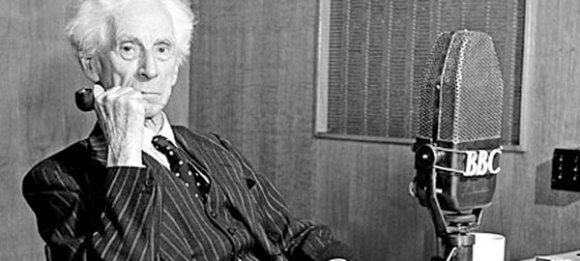
Bertrand Russell, BBC Radio station with pipe in hand

One of the things that has become a favorite of teaching has been when students disagree with me. This semester has seen a class filled with diversity in age, income, race, and worldview. It has made conversations thicker and richer because no one in the room can get away with saying something while assuming everyone both sees it the same way and agrees with our conclusion.

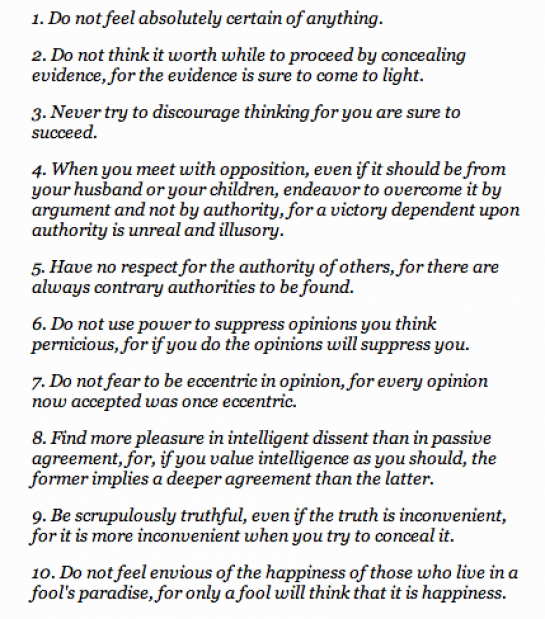
I’ve seen the nature of the class feeling and creating a culture of safety in dialogue grow all of us into wiser practitioners and students of those around us. They have been a gift, and I thought of our class when I read these notes from Bertrand Russell in last week’s braingpickings.org weekly email. Considering Russell’s stance on religion, and also considering sending practitioners into the world who are Christians, it feels that more important than even knowing certain things is knowing how to think through certain things, how to disagree, how to ask questions, and how to engage.

I hope you find these as interesting as I did, in light of Russell’s zeitgeist and the one in which we find ourselves.

djordan
Pine Tree

RELATED POSTS | The Best First Class Ever | We Can Assume | Failure to Imagine | The Risk of Narrowing the Voices

Tagged , , , , , , , , , , , , , ,

when there’s nothing else to do

We were standing in a huddle, sixty people maybe, I can’t do numbers. The room is a room I spent many evenings in as a teenager, the church building of friends. We have misbehaved in that room, giggled, sung, prayed, pretended to pray, cried, married, listened, pretended to listen.

Tonight, no longer teenagers but many with children of our own, our parents not as young as they used to be, other new and old faces, tonight we huddled together in that room.

Prayer was being offered about one issue for one family tonight, but from the little I know of others’ lives in the room, I know that the room itself was heavy with issues that seem impossible to figure out or fix. And there we were, heavy, huddled.

Our hands feel best when we are fixing something, and our minds feel most productive when we are figuring something out, but there are many times––in fact it would probably be most times if we told the truth to ourselves––that our hands don’t know how to fix it and our minds can’t figure anything out.

We know too, however, that our hearts are telling us things are heavy and unsure and something must be done to help us move closer to the kind of shalom our brittle little hearts were made for in the first place. We don’t know what to do, but we know that something is not right.

And so we huddle together and do the only thing we know to do to give purpose to our hands and minds.

We pray.

We own up to the fact that we can’t figure out how to fix it, and we don’t know what to even think about it. We own up to the fact that our hearts can’t lie even if they wanted to when they are breaking open.

And prayer, in a huddle of people who have been there with us and seen us at our best and worst, becomes the only thing we can do.

So we pray. And we confess that we have joined the long defeat regardless of any promise of the outcome. We confess that our goal is obedience of seeking what is best for our own and our community and our children, but the goal seems out of reach, too massive, too complicated.

But something in us, perhaps the glimmer of the kingdom in us that shines when everything feels dark, something says that when nothing can be done and nothing can be said the only thing, by God, to do and say is to huddle together and pray that the kingdom would come on earth as it is in heaven.

And we resign to the fact that the huddle and the prayer and the messy people who are forming both are who and what we have been given as we hurt and hope and long together for the shalom our brittle little  hearts were made for in the first place.

djordan
Pine Tree

RELATED POSTS | The Long Defeat | It’s Been a While | Time for Everything

Tagged , , , , , , , , , , , , , ,

calling out in the darkness

I sat this morning watching a video (below) that highlights the last five years of a homeless ministry that houses and feeds the homeless in churches every night of the winter months. My mind went back to one evening about six years ago spent with Jonathan Stewart and Wes Gristy; we had been making and serving sandwich dinners on Friday evenings in a parking lot downtown, and our question had become “are there homeless in our community?”

In following that question and other rumors that accompanied it, we met at the church late one evening, made a pot of decaf coffee, and headed to the amphitheater where we had heard those who were homeless stayed.

I remember conversations about exit plans, what we would talk about, how we would find them. We parked facing the main road, flashlights in hand, and started walking through the damp ground toward the amphitheater calling out in the darkness.

“Are you there?”
“We won’t hurt you.”
“We aren’t the cops.”
“We have coffee.”

There was, of course, no one there.

Six years later, with churches across the community working together to host those who are homeless in their buildings night after night, what seems most certain now is that we were, indeed, calling out in the darkness.

We are, those of us fortunate enough to have grown up in church, blessed with a great deal of treasured heritage, and at the same time plagued by a deep spiritual paternalism that we can’t see until we are staring our ignorance straight in the face.

Were I to ask “Are the homeless christians?” the answer would no doubt be, “not necessarily.”
Were I to ask “Are the homeless not christians?” the answer would no doubt be, “not necessarily.”

But were I to have asked “Why do we serve the homeless?” the answer might have likely been “to show them Jesus.”

We are still often calling out in the darkness.

Six years later, I can say that I have learned more about who Jesus is and what he has done from the Christian men who are homeless in our community. Their homelessness is not a result of their not-Christian-ness. And they were not necessarily waiting around for me to show them Jesus.

They are often showing Christ to me, as even Jesus made clear that when we interacted with them we were interacting with him.

But we say we serve to show them Jesus, so we do little looking to see him in them.

But that is changing with those who are willing to open their eyes and see that when we have experienced relationship with those in need, we have experienced relationship with Christ.

Here’s to a future of continuing to open our eyes more and more, and continuing to call out in the darkness less and less.

Theirs is the kingdom, of course.

djordan
South Church St.


OTHER RELATED POSTS | the fear of the weak among us | we can assume | crack our great ambitions

Tagged , , , , , , , , , , , , , , , , , , , , ,

beyond sides of a story

Our temptation is, of course, to listen for the evidence and decide which side of the story we will choose to stand on. And our temptation then is, of course, to fight for where we have chosen to stand. And our temptation then is, of course, to stop listening because when fighting for the side of the story we have chosen, we fight with all our might because it has become the ground on which we are now standing.

But what happens if we consider moving beyond sides of a story? What if we have been fighting for the either or for the or when it was never an either or to begin with? What if our need for choosing sides comes more from a need to stop listening, because listening is harder than fighting. Persisting in curiosity is harder than moving into superiority.

I know when I speak, I am telling what I’ve seen. What I’ve smelled. What I’ve felt.

And when they speak, they are telling what they’ve seen. What they’ve smelled. What they’ve felt.

And if we experienced the crash of the story me from one bank, and them from the other, we may both tell the truth, and still tell a different story.

So is there a way to listen widely, getting so many sides of the story that we move beyond sides all together and rather begin to experience the fulness of the story we know we exist anyway? A fullness that breeds humility and compassion and generosity because we continue to listen and therefore take on the fulness and complexity of the story itself rather than landing on a side and being forced to start a fight.

It is, of course, the work of being a peacemaker. And the peacemakers are, of course, the children of God.

djordan
Pine Tree

Tagged , , , , , , , , , , , , , ,

to mormon church we go

“We chase them out with a rake!”

I remember as a child talking to a friend of mine at church who lived next door to the Mormon church in our town. We were children, granted, but I remember her saying one day when I asked her about Mormons that she chased them with a rake. There is no telling what actually happened, and there is no telling what stories people could tell about me. Neither is the point.

I am teaching “Poverty and the Church” this semester for the School of Social Work at our local University, and the issue of diversity is inherent in our conversations about poverty and the church. As an extra credit assignment, I asked my students to attend a church that was unlike their own, and write about their experience. One student, raised as a mormon but since evangelicalized, invited me to attend “Mormon Church” with her. So alas, Sunday Morning, it was off to Mormon Church.

Part of why I mention my conversations with a childhood friend is that I realized walking through the parking lot that morning that my fear was based on very, very little. I have a remedial understanding of Mormon belief, enough to know I can say, “No, Thank You” to people who ring my door bell at three thirty on Sunday afternoons.

***

As a side note, the power of fear to shape our experience of people is fascinating and terrifying. If we are taught to be afraid of someone, are we not more likely to be unjust, violent, discriminatory, and hateful? The danger is startling, but where I live there is still, sadly, a value to propagating fear of “the other,” no matter the ignorance required to do so.

***

So, I noticed as soon as I sat down that my clothing choice was incorrect. Every other male in the room had on a white button up collared shirt and a tie. I had on neither, and it was obvious. I was asked if I was a visitor…yes, what gives me away…and then asked my name. A minute later, my last name. I must admit, I panicked when asked for my last name. I was tempted to lie…I remember making up a name on the school bus one day when asked for my name, naming one of my dad’s law partners. “Jordan,” I said. “Donald Jordan.”

What strikes me most about the day, save my own uninformed fear and therefore ignorant judgment,  was the content of what followed in the sermon. The message was given, instead of by one person, by three different members of the congregation, two females and one male. I liked the thought of this, assuming that the congregation might have a great deal of insight and wisdom to share with the congregation. I then learned that the sermon topic had been assigned as had the reference for their thoughts. The sermon topic was “Sustaining your leadership,” and the references given for the speakers to use were not from scripture itself, but rather from past talks given by previous “apostles” from their previous meetings.

They went on to quote prior leadership saying that the health of the church depended on not questioning the leadership, unity based on not questioning leadership, true calling being made known to them from the leadership, and faithfulness being measured by their allegiance to the leadership.

Fascinating.

The ability of an organization to propagate itself by instilling the value of not asking questions, not holding leadership accountable, and even doing so by associating position with a certain amount of divinity…

Fascinating.

I left thankful for those who have taught me to ask good questions, to think carefully, and to follow the truth, even when it leads away from common accepted wisdom.

What was most startling is how I have learned to be afraid of a group of people I have never really met, and also how the things that ultimately bothered me most about this past Sunday morning were not unique to the Mormon church.

One of the “missionaries” who spoke, around my age or a little younger it seemed, said to the crowd in  a way that made me feel she was saying it to herself as much as anyone else, “I believe this is the true church. I have to. It’s like I heard someone say one time, ‘show me something better, and we will talk.'”

I thought, as I heard those words come off her tongue, “I don’t know much at all, but I know something better.”

djordan
Pine Tree

Tagged , , , , , , , , ,