Category Archives: grief and trauma

Screen Shot 2013-10-23 at 8.12.22 AM

You are tired,
(I think)
Of the always puzzle of living and doing;
And so am I.

///

You have played,
(I think)
And broke the toys you were fondest of,
And are a little tired now;
Tired of things that break, and—
Just tired.
So am I.

– e.e. cummings –

the always puzzle of living and doing

Tagged , , , , , , , , ,

i ironed every shirt today

photo

I ironed every shirt I ever actually wear today. I stood in the den ironing and hanging one after another on the pull up bar connected to the door frame.

I’ve noticed my own ironing habit over the last twelve months. It’s often after a long day at the office where people allow me the chance to journey with them through their personal, familial and communal junk as we work to find what good can be uncovered in its midst. While some days it’s an archeological journey worth photo-ops, full of good findings and the perfect blue skies to offer backdrop to their discoveries, many days end after journeying together where we don’t actually find anything.

We may have found better questions, or better ways to let go of bad questions, or better standards by which to gauge ourselves and others, but we end without any picture-perfect discoveries. We end without the pain and the mess being over. We end, after having given it all we know to give and finding that there wasn’t light at the end of the tunnel. Not yet, at least. Not today.

I often come home on those days, pull out the ironing board, and start working on a task that I know will begin and end well in one try. It helps me suspend hope, if just until the sun rises again, that some things get settled, some things end up making sense, and some things work out before the sun goes down.

Today was not a day of counseling, but a culmination of multiple days of reminders that many good people holding out great faith can’t make the pain stop and the heartache end. We can’t hope our way to the phone call giving us the news we were begging for. Today began with the news of loss. The loss of a man whose personality and gestures were in themselves reminders that there is another world buried under this one that creation itself can hardly wait to see break through. The loss of a man who made it clear, even on the day of his murder, that there is something rumbling underneath the cracking present age that speaks of a kingdom of light and a community of icons of God himself.

And we can hardly wait either, you know. We can hardly wait especially on days like today where we know what is good, but we don’t know how to get there and we feel powerless to bring it here. So we iron ourselves into some kind of sanity, so we can see something finished and something in order like all of our button-up shirts hanging on pull-up bars.

But night falls and morning rises, and we realize that as much as we would like to settle ourselves with tasks that we can see from beginning to end, neatly pleated and orderly hung, we also realize that our hearts are only truly alive in the tasks that leave us with great heartbreak, for now. And so, while they are too big to carry, we can’t help but doing our best to pick them up again. And, in the words of the pastor calling us to move toward the kingdom, it’s in picking up the things that are too heavy to carry that we realize we are actually on our way home.

djordan
Pine Tree

RELATED POSTS
when it finally has no end
my hands are tied
the ground remains
the long defeat
when there’s nothing else to do
the sum of our hoping

Tagged , , , , , , , , , , , , , , , ,

my hands are tied

Screen Shot 2013-09-16 at 10.06.56 PM


I looked down at his wrists, bound together with metal handcuffs as he moved his body toward the front of the police car obeying the silent index finger of the police officer. He had not made eye contact with me yet, and I felt myself staring at the handcuffs themselves.

I realized in that moment, looking down at his handcuffs, that I felt like my hands were tied as well. I then also quickly realized that I have never been handcuffed. Ever. I don’t know what metal against my wrists feels like. I don’t know what obeying the silent finger of a police officer feels like.

+++

We’ve been working for the last two years to get this program off the ground. Through research and relationship it has become obvious that once you are on the down and out, short of a miracle you will never be able to get back on your feet again, much less work, pay your own bills, and be spoken to and interacted with as someone who is not defined as “down and out.” Through this same research, we’ve come to discover that it’s only through job creation and long-term support that there is any hope of moving toward self-sustainability. Not the kind that means we don’t live in community, but that kind that means we are able to live in ways scripture refers to as working, building our own houses, and resting in them.

We have been partnering and depending on churches across our small, Bible-belt, semi-rural community for the last seven years to house men who are homeless in our shelter-less city in their churches, eating dinner with them, watching movies with them, laughing and crying with them, and learning each other’s names with them. Seven years later, we are all changed from this interaction.

And from these new relationships, a case management center and daytime hospitality center has been created, an eight-bed safe haven for homeless men has been taken on, and in the last few months, a transitional work program has begun. Two years in the making, we are now able to create jobs for the men of our homeless and housing services to be able to do good work for a paycheck.

Problems aren’t solved, but it’s a start.

With the transitional work program, we’ve created enough work over the last few months to now have multiple lawn care contracts across the community, including one contract with the city government itself. The men themselves as well as the staff who work with them are at it hard nearly six days a week.

Progress is made, it feels. Work is being created, income is being generated, and the “down and out” are able to move a little closer to a kingdom vision of what it means to have the chance to work and be paid for your work, and to then pay for your own needs.

+++

Tonight, as I’m trying to run in the office doors of our small nonprofit to work on last minute details for our big fundraiser later this week…the fundraiser that will help support these work creation programs for the homeless in our community… I park in the lot to see the very police officer who is now directing the actions of a grown man by the silent pointing of a finger.

I find out, after brief conversation with the police officer, that one of the guests of the homeless day center has stolen a leaf blower from the trailer carrying the equipment for the transitional work program for other homeless guests.

“That leaf blower is evidence, and we can lock him up for a few months at least,” he says, then phoning in his partner who is holding the man a few blocks over, telling him to bring the man and the leaf blower to the office. My mind begins reeling through Michelle Alexander’s “The New Jim Crow.” My memory conjures up the words of another man in my counseling practice earlier today dealing with a lifetime of abuse and neglect, then drug use and criminal activity, then prison, and now the words “I can’t go back to prison. I can’t go back to prison.” My gut screams at me suggesting that we all should have known it would be a homeless man who stole the lawn equipment being used to create jobs for homeless men.

But my eyes go to those handcuffs, and my fragile little white, well-educated, privileged wrists that have never felt the pressure of metal, and I think to myself, “I feel like my hands are tied.”

And I hear the words come out of my mouth, “We don’t want to arrest him. We don’t want to press charges. We won’t, officer. I’m sorry.”

I want to look the man in handcuffs in the eyes and tell him again that there are people out here trying our damndest to help him. I want to wave my index finger and make it very clear that when he steals from us, of all people, it makes us mad as hell. I want to both send him to jail and also to invite him over for dinner. I want to cuss him out and let him cuss me out because I have no idea what his world has been like. I want to scream at him and cry with him. I feel like I can see what is not right about all of this, but that I have no idea how to begin making it right.

I see the other police officer almost roll his eyes at me, fill out a trespassing form, and leave soon enough. I feel like I’ve let the cop down. I know this man will likely steal again, and that will be seen as my fault for not pressing charges now. I try to look the other police officer in the eyes, but his eyes never come up to meet mine.

I feel like I’ve let the homeless man down. I see his skin pulled tightly across the muscles in his neck, and I wonder about his drug use, I wonder what it was like to grow up a black man in the 70s at the beginning of the “drug war.” I wonder what change we might see if we spent what it costs to incarcerate a man for three months for stealing a leaf-blower on counseling, rehabilitation and community development services. I try to look him in his eyes, but they are down on the roof of the police car.

As he’s been finger-directed.

I wonder what we are doing all of this for, any of this for, when even at our best it feels like all of our hands are tied.

Soon after I see the remaining police officer unlock the handcuffs, I stick my hand out. I call our homeless guest by his first name, and he raises his hand to shake my own: a gift. He raises his eyes to meet mine: humbling reminder of our desperate humanity.

“We want the very best for you” I hear come out of my mouth. I hope it’s true as I hear myself say it.

But my hands feel tied.

Come, Lord Jesus. Make us whole, and set us free. All of us.

djordan
108 S Church

Tagged , , , , , , , , , , , , , , , , , ,

to drop the number

9.jpg.CROP.article920-large

Based on the first few minutes, it seemed like Schizophrenia joined my client during our initial session. I had already been told that she wasn’t comfortable having the door to the office closed, that she stared extra carefully at everything in the room, and that “something isn’t quite right.”

I find her across the parking lot smoking a cigarette during the few minutes between when she had been seen for initial paperwork, and when I called for her to come in for an initial assessment and conversation. Perhaps, I thought as I walked slowly across the parking lot working hard to come across safely and respectfully, she gets anxious in waiting rooms with many other people, so a cigarette provides a space of solace while waiting for whoever has more power than her in the next meeting she will sit through.

My name’s Donald, and if it’s okay with you, I’m privileged to be the clinician who gets to talk to you today.

Nod. Cigarette thrown in the bushes. Handshake. Steady stare into my eyes.

“Nice to meet you, Sir.”

Call me Donald.

We get into my office, and after pleasantries and explanations, she is gracious enough to sit through an hour of the kinds of personal questions I would walk out on were someone else to meet me and begin asking me within a few minutes.

Pages after pages of computer-driven questions that are shaped in the form of inquiries about the client but ultimately are answering questions for insurance companies, attorneys, liability assessment tools, and commissioners from all kinds of offices were completed.

“How are we doing so far? Is this okay for you? Are these questions bothering you? Are you okay still being here?”

Nod. Steady stare into my eyes.

We finished all the initial questions.
Mid forties now, and in and out of prison since the age of 18.
Out of lockup for six months, and scared to death that she will get sent back.
Sexually and physically abused by family members around the age of six and seven.
At the mercy now of probation officers, poorly-run treatment center directors, and the goodwill of others, like me, who she’s been told she has to talk to before she can be “better.”

I go through my spiel that has become quite common, and more true each time I say it, about the respect I have for women and men who make it through prison and work their damnedest to stay out of prison.

“I need to be free. I can’t go back. To go back is to die, and I don’t want to die.”

And after the entire conversation, it’s her turn to sign the freaky little plastic pad with the awkward little plastic pen that shows up on the computer as a weird version of a signature.

One more blow to whatever identity she has left to fight for.

I watch the screen as she watches the electronic signature pad. She writes her last name, the first letter of her first, and then a five digit number.

“What’s that number?”

That’s my number. That’s who I am. It has to be with my signature.

Inmate number, now stuck to a signature.

I looked her in the eyes, shook her hand, and stared longer than feels normal.

“When we are done meeting, my hope for you is that you don’t think to sign that inmate number to your name anymore.”

“Why’s that? It’s my number.”

Our work in the days ahead will be an uphill climb that deals with responsibility and childhood abuse and complex trauma and depression and anxiety and agoraphobia. But if I have any respect for her, our work will include a deep and thick reminder that she is not identified and will not leave her mark in ways that reflect her inmate number.

If she is capable of more that I can think or imagine, and more than she can think or imagine, than she is, right now whether she agrees to it or not, more than a number.

She has a name. And that’s that.
And to find her true name, we have to learn to drop the number.

djordan
Pine Tree Dr.

Image from this article on Slate.com: “Trapped: The Mentally Ill in Prison.”

Tagged , , , , , , , , , , , , ,

protest at the table

1072136_10151796624279459_1667779541_o

Even though I’ve heard it repeated, the story is told regularly and goes like this:

Donald, roughly 3-5 years old sitting at the kitchen table during family dinner. I see a booster seat need based on my age.
Mom: Donald, you have to eat your brussel sprouts before you can get up from the table.
Donald: I don’t like them.
Mom: Well, you’re going to have to eat them before you get up from the table. I don’t think you’ve ever tried them before.
Donald: I don’t like them. I’m not going to eat them.
Dad: You will sit right there until you eat them. Conversation over.
While usually allowed to disagree, the “conversation over” card means be quiet or else. To speak is bad news.

The story apparently plays out that I sit at the table, refusing to eat my brussel sprouts, (I imaging a cigarette in mouth and newspaper in hand, but it’s likely that I went between whining and being way to cool to make eye contact for the next SEVERAL HOURS. I ultimately refused to eat the brussel sprouts (a food I now love), and sat at the table, triumphant, got a spanking, triumphant, and went to bed, crying…..and triumphant.

+++

I have friends, some considered by me as close as family, who live and work in the ordinary ways of nonprofit work in Cape Town, South Africa. Their stories seems incredible, but it mimics the news reports here in Jackson, the news reports in Chicago, and the news reports all over the globe. In the community that Fusion finds themselves in, Manenberg, in Cape Town, SA , there have multiple shootings resulting in multiple deaths lately. A community mourns, and the church wonders what is next.

I’m sure churches there, like churches here, continue to worry about issues of childcare and women in leadership and politics and budgets and music styles and whatever else occupies time. And still, Christians there, like Christians here, are finding themselves standing in the spaces where lives have been lost, injustice smells like dried blood and spent gunpowder, and are wondering what it means to follow Christ.

+++

And there’s something valuable in ways that transcend time and space about protesting at the table.
Friends in Manenberg serve soup on the very same pavement and dirt spaces where lives have been lost and chalk outlines could have washed out by now. The value of a meal shared together overcomes the injustice and lack of shalom that leads to violence in the streets in Manenberg, and in Jackson, and in Nicaragua, and around the globe.

And so a group of believers end up deciding that while the believe in the hard facts of guns and gunfire and bullets and death and blood and chalk outlines, they believe something about the table to be healing and to be hope calling and hope inducing, so they serve soup in the very spaces where lives have been lost.

And they proclaim that Christ is king and kingdom comes. Ultimately. Always.

+++

I sat at the communion rail today, accepting the sacraments of his body and blood, both knowing what they mean and at the same time accepting that I have no idea what I’m actually doing. I look across the others at the communion rail. I look across the others in the room. Drama fills the air. Frustration fills the space.

But the space at the table is a space of shared protest, promise, and therefore hope.

All is not well, but all will be well.
The world goes not well, but the kingdom comes.
It comes in Manenberg, South Africa. Soup is served in the spaces where lives have been lost.
It comes in Jackson, Tennessee. Peace is accepted in the spaces where insecurities breed.
It comes in our hearts. The future is claimed for kingdom come while the present is unclear as to how it gets here.

His kingdom come
His will be done
On earth as in heaven.

Who knows how.
We pray not knowing how to pray.
And the table becomes a place of protest.
And kingdom comes.

djordan
Pine Tree Dr.

Tagged , , , , , , , , , , , , , , ,

gracefully critical

gracefully-critical

Recently on vacation, the most stressful part of planning for the trip was not packing, arranging the house details, getting work squared away; the most stressful preparation was choosing which books to take when I knew I would have a week of incredible views, delicious food, and nothing to rush for other than finding a place to sit and read.

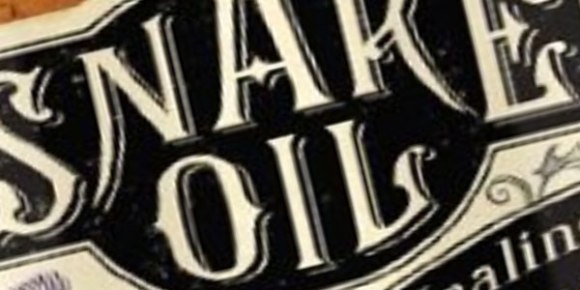
I had been saving Becca Steven’s new book, Snake Oil: The Art of Healing and Truth Telling, for the trip and it definitely did not let me down.

The book’s author, an Episcopal priest on Vanderbilt’s campus, founded Magdalene, a residential program for women who have survived lives of prostitution, trafficking, addiction and life on the streets, in 1997. From this work and the reality that getting clean and off the streets isn’t enough to support a new and whole life, she and the community around her began Thistle Farms, a social enterprise run from top to bottom by members of the Magdalene community, and involves making oils, candles, paper and more from the highway-found, stubbornly resilient and ultimately delicate thistle. As the women work in vats of oils and in meetings of scent-testing or tubs of paper-making, they are both creating an income, adding quality products to the market and community, and telling a story of healing and hope through the thistle.

Already a fan of Stevens after hearing her speak a few years ago, and following the work and even more so the spirit of the work at Magdalene and Thistle Farms, I’ve learned much about the nitty-gritty of what it means when Stevens says, “It takes a community to put a woman on the street, and it will take a community to bring her home.”

In our work at Area Relief here in Jackson, it’s that push for working to see the delicate beauty in what others have overlooked as weeds that is at the core of who we are. We aren’t great at it, as we often look at ourselves as much as those around us, as wasted and useless. But once we begin to work in the grace and hopefulness that whispers of the kingdom add to any story, we begin to find that we are becoming a part of healing community, seeing others healed as well as ourselves.

What struck me the most when reading Steven’s book was her uncanny ability to be gracefully critical. It is no butterfly and sunshine story of human trafficking, abuse, molestation, drug addiction, fundraising, second-guessing, and ultimately losing many battles to drugs and sex and objectification. It is no easy work no matter how ethereal our ways of speaking. There are power players to be called out, habits to be carefully questioned, ways of operating to completely burned up. And yet Stevens manages to tell the truth about all these issues in ways that lead the reader to want to be more hopeful, more loving, more compassionate, more trusting, more free in the promise of kingdom come.

The hard work of seeking first the kingdom is not child’s play, and yet we’ve been charged to work at it as a child. Truth-telling and healing all at the same. Silence in the face of injustice is not God-honoring, but neither is pessimistic cynicism. Stevens’ work is a strong and beautiful reminder that the kingdom comes through the action following graceful criticism.

And the kingdom does come.

djordan
Juneau, AK

To order the book, CLICK HERE.
To learn about Thistle Farms, CLICK HERE.

Tagged , , , , , , , , , , , , , , , , , , , , , ,

things regarded as dead

Screen Shot 2013-04-01 at 8.45.26 AM

I woke up Easter morning to find an email from a friend that only read:

“Today may you start seeing God’s resurrection of things regarded as dead.”

One week later, I’m not sure in what ways I’m starting to see the resurrection of things regarded as dead.

I let a lady check out in front of me today at the store, and she replied that chivalry might not be dead.

Another lady at another store had to ask me a million different questions and try to sell me on a million different offers during the checkout process. I thought nothing of it all until she leaned over the register and said, “thanks, at least, for being nice about all this, young man.”

I went to the funeral today of a good friend’s father who got sudden news of serious cancer, and within weeks, goodbyes were said and tearful thanks given for the notion that the end of life might not actually be an end at all. As much as it still hurts like hell, of course.

And so I wonder, one week after Easter, what it means to begin seeing God’s resurrection of things regarded as dead.

Chivalry.
Kindness.
The lost life of a father.

What about hope that good can overcome evil?
That generosity can overcome greedy anxiety?
That humility beats out power and success and ambition?
That justice can break its way into dark injustices?
That forgiveness is stronger than any force of revenge and retaliation.
That families can come together, no matter how they’ve wrestled apart.
That marriages can make it.
That children can make it to adulthood.
That adults can remember the joy of childhood.
That abundance can make its way to those living in great scarcity.
Abundance and scarcity of money, identity, understanding and freedom.

We don’t build our church buildings next to our graveyards anymore, and we’ve likely forgotten altogether the resurrection we’ve been counting on as a ragtag group of women and men and liars and lovers all these years.

We’ve also likely forgotten that things we’ve already written off and sealed up and buried deep as dead impossibilities are waiting, one week after Easter as much as easter morning itself, for the resurrection.

Hope, generosity, justice, families, marriages, children, adults, abundance, scarcity and equality, identity, understanding and freedom.

Chivalry isn’t dead.

Neither is the hope, and therefore the prayer, that God’s kingdom come, and his will be done, on the earth this week after Easter Sunday, as it is in heaven.

djordan
Pine Tree

Tagged , , , , , , , , , , ,

in the dark

SONY DSC

If you say you’ve never had to make an emergency bathroom break, I think you’re probably lying.

Tonight, leaving a service at church and on my way to dinner, I called my mom and asked if I could swing by and use the restroom before running right back out the door. She agreed.

I found myself making way to the guest bathroom, late enough in the evening even in our new savings of daylight time for it to be dark outside. Down the steps into the library and around the corner into the guest bedroom, I remembered while walking that there are no lights on the ceiling, so there were no switches to turn on to light the path.

As much as has changed in the last ten years that I have not lived in that home, I found myself walking surely while completely in the dark. The house has changed, my parents have changed, and I no doubt have changed. But in a moment of emergency, I walked and maneuvered out of habit and memory. I made my way down steps and around furniture and corners completely in dark, hands not even out feeling for what I already knew was there.

When turning into the bathroom, I reached my hand around the corner and onto the wall, thoughtlessly, immediately touching the dimmer switch as I have hundreds of times before. The light came on. Emergency over. On my way to dinner.

Driving to dinner it occurred to me that in those moments where we face emergencies and uncertainties, we know exactly what to do. We do it surely even though we often find ourselves completely in the dark. We take the steps we remember taking when we could see what we were doing, and somehow, by the ridiculous grace of God, those same steps work when we can’t see at all what we are doing. We walk and maneuver out of habit and memory, without even stretching out our hands to see if we know where we are going.

And we make it, finally, to the dinner table after all is said and done with. And were it not for the habits from easier times, times when we could see clearly and weren’t in a rush, the habits which have been buried deep inside of us somewhere, we would have been stranded in the dark.

djordan
Pine Tree

Tagged , , , , , , , , ,

all the implications

Screen Shot 2013-02-22 at 11.15.58 AM

This video has been on my brain since I first saw in when it came out a few days ago on February 19.

Yes, it’s about bullying, but it’s about a great deal more.

It’s about the impact of little things.
It’s about our own assumptions under which we bury others.
It’s about how art is redemptive and makes beauty of tragedy.
It’s about shared stories that crash into shared reality after being hidden for so long.
It’s about all the implications of all the things we find ourselves doing, thinking, saying, being,
both horrendously good and remarkably evil.
It’s about the bothness in all of us.
Our Cain and our Abel.
It’s about telling the truth.

This is good. You wont regret the time.

djordan
Summar Dr.

Tagged , , , , , , , , , , , , , , , , , ,

minding the gap

mind-the-gap

We confess, O God, that we like to see things solved.
We confess, O God, that we bear your name and insist on solving.

We admit, O God, that we are called to be the ones who tell the truth
of all the mess and pain and brokenness in the world
on this side of kingdom come.
We admit, O God, that we are called to be the ones who tell the truth
of all the redemption and justice and beauty already in the world now
and fully in the world on the other side of kingdom come.
We ask, O God, that you would give us the courage to tell the truth
and to be the people who stand in the middle of the tragic gap
knowing that while the world does not go well,
kingdom is in our midst, and kingdom comes.
We ask, O God, that you would make us brave enough to stand
unsolved, unfixed, in the middle of the brokenness and the beauty
honestly declaring both.
Amen.

djordan
Pine Tree Dr.

Tagged , , , , , , , , , , , ,