from the archives | when there’s nothing else to do


In reflecting on the upcoming one-year anniversary of mosthopeful.com on August 23, I’m throwing some of the posts that readers have looked at the most back into the mix. Thanks for allowing me the space. It’s been a most humbling experience.

+++

View original post from May 2, 2012

when there’s nothing else to do

 

We were standing in a huddle, sixty people maybe, I can’t do numbers. The room is a room I spent many evenings in as a teenager, the church building of friends. We have misbehaved in that room, giggled, sung, prayed, pretended to pray, cried, married, listened, pretended to listen.

Tonight, no longer teenagers but many with children of our own, our parents not as young as they used to be, other new and old faces, tonight we huddled together in that room.

Prayer was being offered about one issue for one family tonight, but from the little I know of others’ lives in the room, I know that the room itself was heavy with issues that seem impossible to figure out or fix. And there we were, heavy, huddled.

Our hands feel best when we are fixing something, and our minds feel most productive when we are figuring something out, but there are many times––in fact it would probably be most times if we told the truth to ourselves––that our hands don’t know how to fix it and our minds can’t figure anything out.

We know too, however, that our hearts are telling us things are heavy and unsure and something must be done to help us move closer to the kind of shalom our brittle little hearts were made for in the first place. We don’t know what to do, but we know that something is not right.

And so we huddle together and do the only thing we know to do to give purpose to our hands and minds.

We pray.

We own up to the fact that we can’t figure out how to fix it, and we don’t know what to even think about it. We own up to the fact that our hearts can’t lie even if they wanted to when they are breaking open.

And prayer, in a huddle of people who have been there with us and seen us at our best and worst, becomes the only thing we can do.

So we pray. And we confess that we have joined the long defeat regardless of any promise of the outcome. We confess that our goal is obedience of seeking what is best for our own and our community and our children, but the goal seems out of reach, too massive, too complicated.

But something in us, perhaps the glimmer of the kingdom in us that shines when everything feels dark, something says that when nothing can be done and nothing can be said the only thing, by God, to do and say is to huddle together and pray that the kingdom would come on earth as it is in heaven.

And we resign to the fact that the huddle and the prayer and the messy people who are forming both are who and what we have been given as we hurt and hope and long together for the shalom our brittle little  hearts were made for in the first place.

djordan
Pine Tree

RELATED POSTS | The Long Defeat | It’s Been a While | Time for Everything


Tagged , , , , , , , , , ,

from the archives: closing the book

In reflecting on the upcoming one-year anniversary of mosthopeful.com on August 23, I’m throwing some of the posts that readers have looked at the most back into the mix. Thanks for allowing me the space. It’s been a most humbling experience.

+++

View original post from January 17, 2012

closing the book | Extremely Loud and Incredibly Close

I cannot remember the last time I’ve fallen so deeply into a novel. I’ve said for many years that I’m not grown up enough to read fiction, so I mostly stick with memoirs and textbooks.

After finishing Foer’s “Extremely Loud and Incredibly Close,” I’m sticking to my guns and saying I’m not grown up enough for fiction,

but that it is surely time for me to start growing up.

A better summary can be found HERE, but in a single swipe of great injustice, I’ll try: it’s a story of a young boy whose father was killed in the 9/11 attacks. It is his parallel journeys through finding a lock that a mysterious key of his father’s opens, and through a child’s honest and sharp grief of losing a father on “the worst day ever.” I often found myself with tears about to break, just after a laugh would suddenly erupt. I felt more human while reading than I’ve felt in a very long time.

What I noticed the most were the dozen times that I would find myself shielding my eyes from the upcoming lines, often closing the book in the middle of a conversation, an argument in motion, a story in telling, a memory in recollection.

I knew I wasn’t ready for it.

I knew I couldn’t bear to go on. Yet.

So I shut the book; I looked around to wonder why no one else was as worried about the impending outcome as me. And then finally, after the not-knowing would outweigh the not-wanting-to-know, I would flip the book back open, hold my breath, and …

***

I read books and journal articles constantly about clinical and community work because I want to do justice with the beyond-generous people who offer me their beyond-personal stories as we look to do hopeful and honest work together in therapy.

But I’ve never closed a text on grief and grieving because I couldn’t bare to read what came next. My heart doesn’t bleed out onto the pages of an article about responses of communities to children who lost parents on September 11. A text can name and normalize complex emotions, but the voice in a well-written novel can make me feel it.

Make me feel it so much that I have to close the story and catch my breath.

And you can close the book and catch your breath until you know that you must find out what happens in a novel. And precisely in those closed-book moments, I think we are being honest with ourselves, and the teller of the story––and ourselves when we are the teller of the story––honest in that we simply can’t bare it anymore, and we must take a breather if we are to remain human. The thickness of our humanity is often more than even we can tell or hear or feel about.

Textbooks make it clean. Novels make it raw. Living voices make it true.

So we have to do whatever it takes to finish hearing the stories.

The stories of poverty.

Of abuse.

Of abused power.

Of arrogant leadership.

Of selfless givingship.

Of painful loss.

Of ridiculous loss.

Of silent suffering.

Of resilient sufferers.

Of global conflict.

Of über-local conflict.

Of the conversations and stories of the flesh-and-blood people who are acting in those roles as antagonist and protagonist and an(pro)tagonist.

If it takes closing the book for a few moments to catch our breath before we say, “Go on. If you have to tell, I have to know…”

***

I’m a better person for feeling what the book invited me to feel. I’m sure I’ll keep reading textbooks and articles, but it’s time for me to grow up into a deeper humanity and brave the world of fiction for all that it can help me see and feel. For all that it can help me hear. And then listen to.

It feels necessary as part of living and leaning into the kingdom.

Even if it takes closing the book multiple times over to catch my breath before losing it again.

djordan
Cape Town, South Africa

RELATED POSTS | Fahrenheit 451 and Mrs. Kee | Narrowing the Voices

Tagged , , , , , , , , , , , , , ,

approaching one year


This time last year, I noticed an acute struggle to remain honest about all the ugliness of all that was going on while fighting to remain, above all, most hopeful; I decided that writing would help hold me accountable.

The lens of passing time has no doubt created opportunities to be most hopeful, and trying to hold myself to processing difficulties through that very lens, almost one year later, has no doubt proven redemptive.

Next Wednesday will mark one year of http://www.mosthopeful.com, so over the next few days, I am going to celebrate a year of writing by posting the most read blog posts, as well as some of my favorite guest posts. It’s humbling experience to see what resonates that most…

Thanks for the accountability that community forces in trying to tell the truth about a world that goes not well, and the promise of a kingdom come. “We cannot walk alone…”

djordan
Pine Tree

Approaching one year: From the Archives

View original post from September 3, 2011


if you need anything, just call


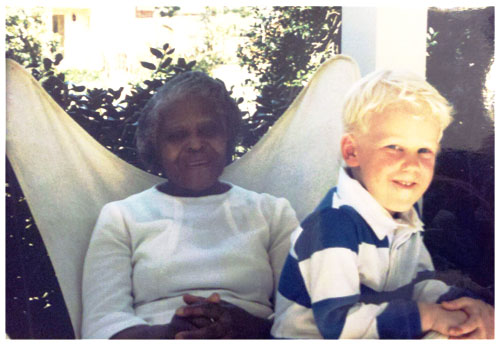
Circa 1987

Birdie and Donald, circa 1987

Birdie came to our home every single Wednesday for as long as I can remember. She worked for my parents, my grandparents, my great-grandmother, my great aunt and uncle, and my great-great aunts in whose home I live today on Pine Tree.

Two days after finally seeing the movie The Help, I stopped by my grandmother’s house. Pulling a coke zero out of her fridge, I noticed this picture pinned to the side with a magnet. There is another picture of Birdie and my cousin Katie that has been on the front of the fridge for as long as I can remember, but I have never, ever, seen this picture before. I showed it to my grandmother who began to cry, me soon to follow.

My memories of Birdie include her delicious buttermilk biscuits which I was never allowed to request that she make unless I got mom’s permission first. (I assume that these instructions were due to my waiting for mom to be somewhere else in the house, and then my asking Birdie to make things for me that I didn’t need because I knew Birdie would hook me up.) Along the same lines, I also remember the days that I wouldn’t clean my room because I knew Birdie was coming. Mom would ask Birdie not to clean my room on those days, because it was not her job to pick up my mess. Birdie would agree, and then after washing my sheets, she would stack all my clutter from bedroom to closet in neat piles on the bed that had corresponding locations on the shelves or in the drawers. Afterward, she would wink and tell me that she couldn’t clean up my room because it wasn’t her job to pick up my mess. I would put away the stacks quickly, and we both made it below the radar.

She spoiled me for sure despite my parents’ best efforts otherwise.

What I remember the most, however, is the conversation we would have every Wednesday afternoon when dropping Birdie off for the day. I would be riding in the back of our old Toyota van, and as Birdie got out of the passenger seat, I would slide the huge back door open and call out, “Birdie! If you ever need anything just call!”

Every week, the same process. The same line.

I had no idea how much Birdie needed, and how much I had in comparison. I also didn’t know how much she had that I needed like my life depended on it. I remember riding with my parents out to Birdie’s house one night so Dad could fix her water heater, and I was struck with the old, country house. Its dark walls and hanging, exposed lightbulbs. All perfectly kept and cared for. Birdie did not live like I lived, but she never called to say she needed anything from me. Birdie became magical that evening.

I think about how often even still in my own life, I call out strikingly ignorant offers to help others from my buckled up seat in the back of the van. Birdie’s legacy lives on in our family as humble, gentle, strong and faithful. She gave all she had to her church and to her family. Even still, I sit writing this in a home she has worked to make a home more than I have in my seven years here.

Mom told me one day as Birdie was walking off and I pulled the heavy sliding door closed, “Birdie will be your boss in heaven, Donald. Don’t forget that.” That day, I did not understand that comment at all.

As mom and dad and I walked out of the movie this past week, it was that phrase that immediately came to mind.

I’m only beginning to understand.

djordan
Pine Tree


Tagged , , , , , , , , , , , , , , ,

reminder of a better way


We are a people of privilege and entitlement.
We are among the haves––
we have education,
connections,
power,
and wealth.
Too often we are indulgent and self-sufficient consumers.
We speak of our achievements and accomplishments.
Sometimes we offer God liturgies of disregard,
litanies of selves made too big.
But we hear faint reminders of
a better way.

+ W. Brueggeman, “Well Arranged Lives”
from Prayers for a Privileged People


MORE FROM BRUEGGEMAN
In remembering and in hoping
Catch us up into reality
on most days, a hard mix


Tagged , , , , , , , , , , , , , , , , , , ,

skyping from kitchen to living room

I remember it pretty well, actually. About four years ago I think it was.

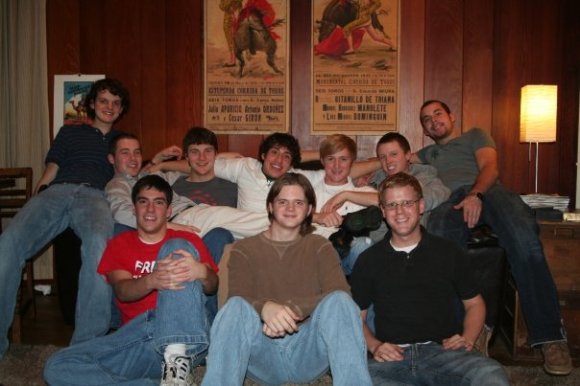
It was some kind of all-of-a-sudden party that the college folks from my Sunday night small group were getting me used to all over again. It started with “Can I come over and study?” and ended with us all sitting in different rooms of the house,  laptops open, seeing how many video skype conversations we could have going at one time.

Of course, after three or four the sounds starting echoing and whistling, my internet started gasping, and we had to shut the whole operation down.

I think, often on Sunday nights, about those guys, and all the other people they brought into my world. I think about where they are now, what they are doing, and how they are seeing and joining in signs of the kingdom all over the world these days.

Gentlemen: Ben, Quick, Coop, PeterB, Toddley, Ryan, Noah, Corey, Andrew, Bradley, Scotty Scott, Matt, Dennis, Dan, Devin, Ross…you fill me with pride.

It occurs to me this evening, actually being forced to talk to one of you via Skype because the distance has grown much greater than den to kitchen, that I would love to have you all sitting on the couch laughing, arguing, talking, praying, learning, hoping and skyping with your laptops in your hands.

But alas, the world is waiting for kingdom come, and you are those who bring it.

Gentlemen, you make me proud. Always.

djordan
Pine Tree

Tagged , , , , , , , , , , , , , , ,

thanks, London.

I feel an increasing struggle as to what it means to be who we have each been called to be, but only in the context of a grander story, the story of the world, and even bigger than that, the story of God and what he has been all along and is now doing in the world.

It’s a struggle worth increasing struggle.

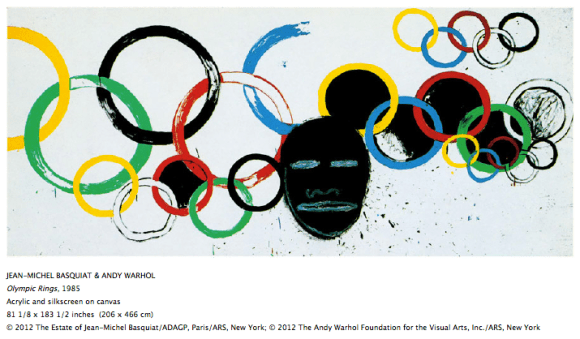
In London’s closing ceremony, all the pieces made the whole. All the pieces, faces, names, styles, dances, artists made a fascinating whole. They, with the opening ceremonies, told a story of the global mark made by individuals, groups, artists, authors, doctors, and stories. There were videos, moving sculptures, light shows…each only briefly, artistically, dramatically and perfectly making their entrance, momentary dance, and exit from the stage.

In sharp contrast to the awe-inspiring show of Beijing’s ceremonies, the spectacle was made in different ways. Beijing had the lights and the smoke and the choreography and the music, but no names, no celebrated players, no celebrated individuals making celebrated marks. A show can be made without characters, but a story cannot be told. Something no doubt was missing. But the celebration of only individuals, often our problem in the West, leaves a similar emptiness.

But a single story told by the voices of many characters… One story of humanity trying its best, with glimpses and mumblings––like the olympics––to tell a single story well together. A story of individuals making marks on a bigger storyline being written of what God is doing in and for and with the world.

Till kingdom comes.

Thanks, London.

djordan
Pine Tree

Tagged , , , , , , , , , , , , , , , , ,

the last of the twenties

It is not uncommon to think we know exactly who matters and exactly who will shape the course of our future, or join us as it shapes. At the ripe age of 16, there were several folks who would be those people. They filled the shop for a surprise party that I was too dumb to figure out. Those people still remain friends, and fewer remain close. At 18, we headed to Memphis in a limo and made predictions about the future; we were right on with most of them. And now, at 29, we will head again to Memphis for the last birthday of the twenties. All that we did know, and all that we didn’t know, wrapped up like a gift for the opening.

I remember my high school English teacher, Mrs. Kee telling us once in class that we would never talk to the people we were friends with in high school after we graduated. She was right in most things, crazy in many, but wrong about that. Yet knowing how she worked, and how crazy she was, maybe that was a dare, a challenge, a kind of psychological game to make us make it work.

And now, looking at the last of the twenties, it has worked. The picture above was taken laying down on Mom and Dad’s foyer rug on mine and Brooke’s 21st birthday. We will hop in a limo later this week to celebrate the 29th.

I suspect I can speak for all of us to say it’s a privilege to celebrate with old friends.

The privilege is likely greater, though, that the circle has grown. When I was laying down on the carpet back then, I would never have imagined the role those folks would play in my life, but I would have expected it. What I never would have expected, however, is the role that new friends who have entered the circle would play––how they would become crucial pieces in the story of who I am and who I am becoming.

There would have been no way to know.

Even 8 years ago, two years ago, I would not have guessed what people who crash into the circle would bring, how they would change my mind, broaden my understanding, invigorate my imagination, and strengthen my hope in the already-not yet kingdom come on earth as in heaven. From West Texas to South Africa; from a desert meal in Israel to a client in a trailer in Lexington; from the front porch on Pine Tree to the valleys of Napa; from a group of those wrestling with grief to a classroom of those disciplining hope; from cheese and toast around the kitchen counter to hors’ doeuvres on white tablecloths under candlelight, from a rocking chair in Nicaragua to a hammock on Pleasant Plains; from a limo ride over ten years ago to a limo ride today, I am now more sure than ever:

I am still confident of this:
I will see the goodness of the Lord
in the land of the living.
+ Psalm 27:13

djordan
Pine Tree

Tagged , , , , , , , , , , , , , , ,

the truth in aspirations

One of the guiding tenants of my profession, social work, and what must be a guiding tenant of the Christian faith as we are made in the image of a creative and compassionate God, is one of the lines from Saleeby’s strengths perspective which suggests that we must take the aspirations of others seriously.

We are trained, of course, to allow this to shape our imaginations in our work with clients, families and communities, no matter what the problem at hand is. At all costs, we take seriously the aspirations of those we serve.

In the case of this story, they are beautiful aspirations which allow others the opportunity to live when they are realized. It is, for me, a reminder of the serious truth in the aspirations of children, and it is a a challenge to take seriously every child’s aspirations, even if they are small, because we can also, as the guiding strength’s perspective says, assume that we do not know the upper limits of the capacities of others.

Enjoy.

djordan
Pine Tree

Tagged , , , , , , , , , , , , , ,

our stories are close together


The stories are always close together;
Whether banked on the west coast looking out over the Pacific
or banked on another west coast looking out over the Atlantic.

Stories of trial and error
hope and defeat
attempt and confusion
love and war
peacemaking and peacekilling
connectedness and isolation
restful work and work gin rest
redemption and destruction

an undercurrent of longing
that someone else
on one coast or another
resonates with the stories we keep
shackled behind our eyes––

stories remarkably close together––
even with miles of history or miles of dirt between.
but we keep them to ourselves
because our story, we’ve been told,
is the only one that looks this way.

and so we imagine the space between our stories
that was never there to begin with.

Our stories are always close together.

djordan
Napa Valley


Tagged , , , , , , , , , , ,