Pine Tree

In times when
we are as afraid of
ourselves as we are what
others may throw at us
djordan
Pine Tree Dr.

A mess is made whenever people get together.
Always.
And I’m amazed how others, but mostly myself, still pretend that any time people get together it will not be a mess, among all the other beautiful and stunning things that it always is as well, of course.
But beyond that mess, ever present and reliable, is something deeper and a little more true. Beyond the inevitable mess made when people get together is a promise that people stay together, in one way or another, in the mess of it all. And sometimes staying together means staying physically housed together. Sometimes it means continuing to work together.
And sometimes it means taking the pieces of each other that, as much as we thought or intended or assumed would do otherwise, still stick to us and move into new worlds and new places and new possibilities with those sticky pieces of where we come from and what we are made of.
It’s bound to us in the same way our family name is bound to us and the heritage of our story and trial and DNA are bound to us. Like it or leave it, this is where we have come from, and this is who we are.
This morning, I had the chance to celebrate the 175th anniversary of the church I was raised in. And while time has passed and circumstances have moved faster than passing time, I was struck by the celebration of the organist who has played at that church for the last fifty years. He was playing the organ for the church when my parents met, when they were married, when I was born, when I chose to commit to the faith, when I graduated, and when it was time for me to move on.
His service is marked by a long-time faithfulness to the ins and outs of the messiness of people and groups of people just as much as his long-time faithfulness to the celebration of all that is good and true in a congregation. And today, as he marched up the platform stairs with his cane to receive a gift of appreciation for his fifty-year service, I was caught emotionally off guard. His walk up the stairs reminded me of the value of the mess, and the occasional times of not-messiness, that happen when people get together, and what it can mean to see things through.
But moreso, it reminded me of the goodness of looking back, half a century later, and seeing that the work continues, and the call continues, and the kingdom still comes. Mess and no mess. God works through his people toward kingdom come on earth as in heaven.
So to Bobby, from the heart of my bottom as he would say, thanks for your longtime service, and for the reminder that the world goes not well, but the kingdom comes.
djordan
Pine Tree
We pass each other like ships in the night.
The most meaningful conversations happen in person, but there’s an ocean in between.
I can point directly back to certain days, times of day, the commons where the walk was, how the sun was, how low the tree limbs were over the sidewalk that brushed my forehead as we walked back home.
I can point directly back to the kitchen counter, the conversation where the truth coming out meant a risk had to be taken, and once taken, the floodgates open. I remember the glasses and the stools and the way I rub my hands through my hair when I can’t think of anything clever or wise or meaningful to say.
And I can point directly back to the table in the restaurant in the airport where the goodbye was looming, and the risk of the sand ticking pushed me through my cowardice to laying out on the table something other than the beer and small talk, but rather laying out the things that had refused to let me go for quite sometime.
But then I got on the plane and flew back across the ocean. Back to work. Back to class. Back to groceries and bills and friends and all the other things we come back to.
Now, like ships in the night, we pass each other. My late-night hour is the twin of his early-morning hour, and across the latitudes we pass usually only a word or two, a prayer or the promise of a prayer. And while the ocean robs two friends of the possibility of walking through that field, sitting on those stools, or leaning over that table, we still know that the other is out there. Moving and knowing. Working and waiting. Watching for signs of the kingdom together.
And we give thanks before the day ends and begins simultaneously.
djordan
Pine Tree
Related Posts | Holy Indeed | The In Between Times
In reflecting on the upcoming one-year anniversary of mosthopeful.com on August 23, I’m throwing some of the posts that readers have looked at the most back into the mix. Thanks for allowing me the space. It’s been a most humbling experience.
Special thanks to an awesome friend, Caroline Powell (www.longwindingroad.me), for including us on her sabbatical journey, and for the following guest post.
+++
View the original post and comments from June 10, 2012
“Thank you for your prayers, we are tired of war” | a guest post by Caroline Powell
Caroline Powell is a dear friend of mine and native of Cape Town, South Africa. She works with The Warehouse, also dear friends of mine seeking to see the church be a transformative presence in the community in issues of poverty, injustice and division. Caroline is on sabbatical from The Warehouse, in Caroline’s words, to seek kingdom “stories of hope and people of peace.” I’ve been following her blog these last several weeks, and this post is one I’ve enjoyed the most.
Join Caroline on her sabbatical journey at www.thelongwindingroad.me, and in the meantime, thank her for joining the guest voices here at mosthopeful.com. Her words are always words with which to spend considerable time and generous thought. Thank you Caroline.
When I was planning this trip, one of the first places I desired to visit was the town of Goma, on the Democratic Republic of Congo (DRC) side of the western border between DRC and Rwanda. There were several reasons for this. In Cape Town, I study with and enjoy the friendship and encouragement of several Congolese people, through connections at college, church and my work at The Warehouse. I have been fascinated with and deeply troubled by the story of this part of Africa for some time. I have met some very inspiring residents of Goma through Amahoro-Africa who run awe-inspiring initiatives through their churches in their town, and I longed to see first hand what they are involved with on a daily basis.
Getting there and fulfilling this dream has been a different story but one that has invited me into a deeper sense of love and committed prayer for this nation. Advised by Joel from Goma, that I must have a visa before trying to visit the DRC, I went about filling in application forms and getting invitations letters from my friends in Goma. Once this was done, and all was sent off to the embassy in Pretoria, the waiting game started. I was convinced that visiting this region was to be part of the plan for my trip and especially felt that I would love to go there to encourage my friends by receiving their hospitality – visiting them despite the fact that at times, there are more people leaving the DRC than coming to visit for a holiday. I prayed about it and felt that, while I would take no unnecessary risks at all, if it was a time of peace, I would strive to spend a portion of my trip there.
At about the same time as I was planning for my visit, rebel warlords in the region were planning their next move and just as my passport was arriving in Pretoria for processing, war was breaking out in the very region I was hoping to visit. My passport got stuck at the embassy for too long, as they were in crisis mode due to the conflict and it became clear that this was not to be part of my journey. I called the visa agency and asked them to send my passport home to me. I wrote to my friends, thanking them for the great effort they had gone to in writing invitation letters, scanning signatures and planning to host me. With a deep sadness in my heart I explained that I would not be visiting. With a hope that they did not sound like empty words, I said that I would be praying for them.
A kind reply came back to me, sharing sentiments that they hoped there would be a chance in the future. It was signed off: “Thank you for your prayers, we are tired of war”
Very few words on a computer screen have affected me as deeply as this simple, sad greeting. In much the same way as I might say “I am tired of being cold” at the end of a long winter in Cape Town, they stared back at me. A stated fact. We are tired of war. A fact that I cannot imagine for my own context and yet a fact for countless numbers of people on our planet.
I have just returned from visiting the town of Gisenyi on the border of the DRC. I had arranged to meet my friend Joel on the Rwandan side of the border that is shared between Gisenyi and Goma, and as I travelled from Kigali towards Lake Kivu, the lake that shares is shores with the two cities, the man seated next to me on the bus pointed out a large tented settlement. “Transit Camp” he told me. We were passing one of the many refugee camps that exist, sometimes temporarily, but often permanently in this part of the world. I have made friends in the past few weeks with people who grew up for many years of their childhood in a camp much like this.
Joel met me at “Grand Barrier”, a not so grand piece of road that makes the enormous difference between living in a land at war and a land in times of peace. This same piece of road operated in the opposite direction during the 1994 Rwandan genocide as thousands of people fled their homeland. Then, the transit camps were on the others side. Today, for me, it is a cul-de-sac on my long and winding road. A country that I can only dream of visiting. Homes, less than a kilometer away with rooms and beds where in more peaceful times, I would have visited and slept. Joel took me on a walking and moto tour of his town from the safe side of the border. The two towns are separated by a stone wall at most in some places, even less in others. They are reportedly the two closest border towns in the world. He showed me the region where his family home was destroyed along with thousands of others during the eruption of Ndiragongo in 2002. I took a photo of him with this still active volcano in the backdrop. He pointed toward where he now lives with his family. We walked and talked- of church, recycling, youth ministry, war, upcoming life events and hope. And then he returned home and I went back to Auberge de Gisenyi and watched some of the Queen’s Diamond Jubilee celebrations on TV in French.
It is my hope that this essay, as insignificant as it is in the grand scheme of things, will serve as a tribute to the Democratic Republic of Congo and her courageous people. There are too many wars like this one in the world for us to pray individually and with understanding for each one, but sometimes, as the case is with me in this season, God brings one thing to your attention, and all you CAN do, is pray. DRC, I pray for hope, peace, courage and patience for you. I pray too, that one day I will be able to enjoy your hospitality on your soil, not just from over a stone wall.

In reflecting on the upcoming one-year anniversary of mosthopeful.com on August 23, I’m throwing some of the posts that readers have looked at the most back into the mix. Thanks for allowing me the space. It’s been a most humbling experience.
+++
View original post from May 2, 2012

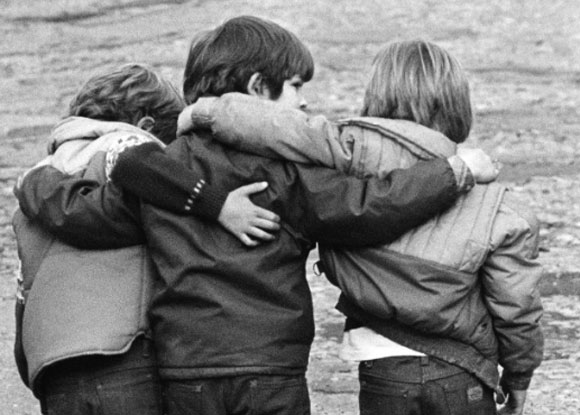
We were standing in a huddle, sixty people maybe, I can’t do numbers. The room is a room I spent many evenings in as a teenager, the church building of friends. We have misbehaved in that room, giggled, sung, prayed, pretended to pray, cried, married, listened, pretended to listen.
Tonight, no longer teenagers but many with children of our own, our parents not as young as they used to be, other new and old faces, tonight we huddled together in that room.
Prayer was being offered about one issue for one family tonight, but from the little I know of others’ lives in the room, I know that the room itself was heavy with issues that seem impossible to figure out or fix. And there we were, heavy, huddled.
Our hands feel best when we are fixing something, and our minds feel most productive when we are figuring something out, but there are many times––in fact it would probably be most times if we told the truth to ourselves––that our hands don’t know how to fix it and our minds can’t figure anything out.
We know too, however, that our hearts are telling us things are heavy and unsure and something must be done to help us move closer to the kind of shalom our brittle little hearts were made for in the first place. We don’t know what to do, but we know that something is not right.
And so we huddle together and do the only thing we know to do to give purpose to our hands and minds.
We pray.
We own up to the fact that we can’t figure out how to fix it, and we don’t know what to even think about it. We own up to the fact that our hearts can’t lie even if they wanted to when they are breaking open.
And prayer, in a huddle of people who have been there with us and seen us at our best and worst, becomes the only thing we can do.
So we pray. And we confess that we have joined the long defeat regardless of any promise of the outcome. We confess that our goal is obedience of seeking what is best for our own and our community and our children, but the goal seems out of reach, too massive, too complicated.
But something in us, perhaps the glimmer of the kingdom in us that shines when everything feels dark, something says that when nothing can be done and nothing can be said the only thing, by God, to do and say is to huddle together and pray that the kingdom would come on earth as it is in heaven.
And we resign to the fact that the huddle and the prayer and the messy people who are forming both are who and what we have been given as we hurt and hope and long together for the shalom our brittle little hearts were made for in the first place.
djordan
Pine Tree
RELATED POSTS | The Long Defeat | It’s Been a While | Time for Everything

We are a people of privilege and entitlement.
We are among the haves––
we have education,
connections,
power,
and wealth.
Too often we are indulgent and self-sufficient consumers.
We speak of our achievements and accomplishments.
Sometimes we offer God liturgies of disregard,
litanies of selves made too big.
But we hear faint reminders of
a better way.
+ W. Brueggeman, “Well Arranged Lives”
from Prayers for a Privileged People
MORE FROM BRUEGGEMAN
In remembering and in hoping
Catch us up into reality
on most days, a hard mix