Category Archives: on

cheers to the 2nd of January

Screen Shot 2013-01-02 at 7.46.40 PM

the 1st is easy enough
to be big
to be bold
to be daring
to be hopeful enough about the future
to set big goals
to make big promises;

we reflect on a year that has passed and
choose what we hope will be better
or more
or truer
or braver in the year to come.

But most days of our lives
happen on the 2nd
the day after we make
big decisions
bold promises
daring declarations
hopeful comments about the future
big goals for the days and weeks ahead
big promises for the future that waits ahead.

And so we ask that
the prayers and hopes and energies of our 1sts
become the fuel of our 2nds.
And that we hold out hope,
and join with others who do the same for us.

Happy January 2nd.

djordan
Pine Tree

Tagged , , , , ,

intolerance of uncertainty | thoughts on a new year

Las_Vegas_New_Years_Celebrations_0aede

It’s no doubt that the things which are the most important for us to know are the things which, once heard, feel the most obvious. The things which, once said, feel the most simple. And yet, it is these things which are often, once heard and said, the things which change us the most. The things which make the biggest impact in our worlds because even though they are obvious and even though they are simple, they are still the things which are most important and have the most impact.

A New Year’s resolution has been to read an article a workday. Workday means ultimately five articles a week, and article means a research or peer-reviewed journal article, so what to do when throwing a party or how to build biceps fastest doesn’t count as articles.

I was reading, a few days ago (because I’ve also learned that New Year’s resolutions I wait to start until New Year’s are 100% less likely to happen than New Year’s resolutions I start a few days before) an article* about depression, anxiety and rumination. I was reading for a client that I’ve been making little progress with, and also reading for myself as is almost always the case whether any of us in the field choose to admit it or not.

The article speaks to depression, anxiety and rumination, or ongoing perseverative thoughts about situations or details, as moderated by the intolerance of uncertainty. And while the phrase “intolerance of uncertainty” feels as common and as known and as obvious as any other phrase that’s said over coffee or in elevators or across lunch tables, I felt myself freeze in the phase of the written words, as if the obvious and known was suddenly becoming an answer to a mystery.

The more we are intolerant of what we can’t control and what we don’t know, the greater our anxiety, depression and stalling.

With multitudes of caveats and uncontrollable variables, the notion has stuck with me since. The ability that I, or others, have to tolerate uncertainty influences the way we see the future and handle its impending realities in the present. Since all of the future is uncertain, no matter the degree at which we enjoy misleading ourselves, my ability to tolerate that uncertainty is a predictor of my emotions, attitudes, and decisions.

Since reading this article, no doubt an encouragement to keep up my New Year’s resolution, I’ve been challenged to face each day with a reminder to myself that what is to come is unknown, and my trust in the fact that all things are done well and that all things work together is and will be a major factor in my ability to move forward well into the grief and joy that lies ahead in 2013.

Here’s to an uncertain new year.

djordan
Pine Tree

* Liao, K. Y. & Wei, M. (2011). Intolerance of uncertainty, depression, and anxiety: The moderating and mediating roles of rumination. Journal of clinical psychology, 67(12), 1220-1239.

Tagged , , , , , , , , , , , , , , ,

this side of history | on watching “Lincoln”

abraham lincoln

it’s one thing to sit with a huge twenty-dollar coke
watching the story unfold on the big screen
making decisions pretending like we don’t know how the story goes.

of course, i would vote for the thirteenth amendment.
i’d be a monster otherwise.
i know it has to do with money.
i know it has to do with the economy as we know it.
i know we don’t know how to move forward without slavery.
but, i’m a good enough person to know that i’m in favor of it.

i think to myself, eating popcorn,
watching the story, ending already known, unfolding on the screen.

and I think about the stories unfolding right now
the stories in congress
the stories in the courts
the stories in the projects
the stories in the suburbs
the stories in the churches
the stories in the living rooms
the stories in the villages
the stories in the high-rises
the stories unfolding right now

across not only this city
across not only this nation
but all over the globe

and i wonder,
as i eat my popcorn and drink my twenty-dollar drink,
do I have it in me
to stand for justice
to take the risk
to make the jump

when i have no idea what it will mean about money
when i have no idea what it will mean about the economy as we know it
when i have no idea what it will mean about how to move forward
when i have no idea what it will mean

but, on this side of history,
where will i be standing
one hundred and fifty years from now
when people will be eating popcorn
imagining what they would have done
had they been me.

may we be courageous.

djordan
Pine Tree

Tagged , , , , , , , , , , , , , , , , , ,

on advent | before we sing the song of Christmas

Screen Shot 2012-12-22 at 9.06.20 AM

My house is actually clean because I threw a party here a week ago.
The Christmas tree has stopped shorting out with the help of an extra extension cord.
All the gifts are in and waiting to be wrapped.
Money is in the bank, and a job waits for me when I return from the holidays.
Evenings and meals with candlelight and laughter are planned nightly for the next week.
There is plenty to be joyful for in the days approaching Christmas for me.

But couples wrestle with miscarriage.
Clients wrestle with families falling apart.
Participants wrestle with utilities being shut off.
Loved ones wrestle with pressing in depression and hopelessness.
Men wrestle with finding a bridge under which to put a pillow for the night.
Strangers wrestle with missing six-year-olds for Christmas morning.
Friends wrestle with the murdered son, husband, wife, daughter.
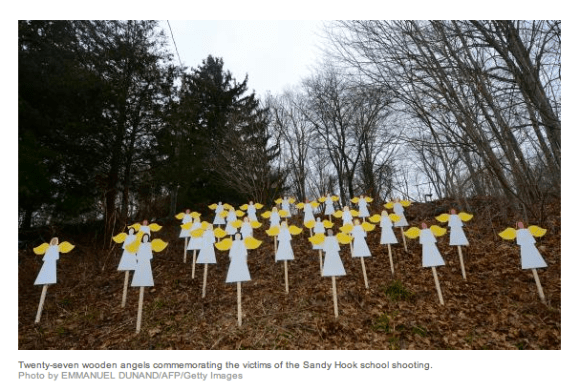
There is plenty to be broken-hearted for in the days approaching Christmas for me and others.

Enter the truth of advent.

Beyond flashy Christmas programs and shiny Christmas cards
taken twenty times until we liked the way our chins looked,
Beyond rhetoric over guns and entitlement and taxes and “wars on Christmas,”
sits a spinning world that while some goes well,
much goes not well.

Enter the truth of advent.

Skipped for Christmas morning by many churches and Christians
following in line behind consumers and the mighty dollar,
Advent waits in the dark nights before Christmas morning
telling the truth
allowing the tears
holding out hope
that while the world goes not well
the kingdom comes.

And when advent is allowed to enter
and linger under candlelight,
the words of the old hymn make a little more sense,
and make Christmas morning a little more important,
because we were allowed to wait for Christmas.

O ye beneath life’s crushing load,
Whose forms are bending low,
Who toil along the climbing way
With painful steps and slow;
Look now, for glad and golden hours
Come swiftly on the wing;
Oh rest beside the weary road
And hear the angels sing.

For lo! the days are hastening on,
By prophets seen of old,
When with the ever-circling years
Shall come the time foretold,
When the new heaven and earth shall own
The Prince of Peace, their King,
And the whole world send back the song
Which now the angels sing.

Until the new heaven and earth own their King,
May we tell ourselves the truth of Advent
before we sing the song of Christmas.

Amen.

djordan
Pine Tree

Tagged , , , , , , , , , , ,

12.1.12 World Aids Day | a guest post by Rebecca J. Vander Meulen

2012-11-cobue 227

The following post was written by a friend living and working in Mozambique whom I first met through the blogosphere. After exchanging emails, we realized we shared a mutual friend and kingdom-bringer in Cape Town, South Africa. This writing is for World Aids Day which is today, December 1, 2012. Thanks to Rebecca for her, as always, honest and difficult while hopeful and hopefilled words. 

+++

Thuli was standing in front of us, telling us that she “should” have been dead—but that she was alive, thanks to anti-HIV antiretroviral medication.  While others were crying tears of joy, I left the celebration banquet sobbing with anger and jealousy.  I rejoiced in Thuli’s health, but I was angry that she would probably have already lost her life if she had been living in Mozambique instead of South Africa.  The year was 2004, and antiretrovirals, or ARVs, were not yet widely available here.  What was the prescription for most Mozambicans who were recently diagnosed with HIV? A healthy diet (not an easy task for the average subsistence farmer), treatment of opportunistic infections, and hope.   Many people told me they’d rather die not knowing their status than find out they were living with HIV and “die early” from the associated despair and shame.  Hope, while potentially a useful supplement to medication, seemed to me to be a sorry substitute for it.

One evening this October, a woman was admitted to the health center in Cobue, a small village in a remote corner of Mozambique.  Because of the Anglican Diocese of Niassa’s comprehensive “Salt, Light, Health” community health project and many “Life Team” activists who work in the Cobue region, Cobue offers better health services than most communities its size.

I had been told that this woman was “not well.”  The next morning, upon meeting her, these words proved to be a dramatic understatement.  Infected ulcers and bed sores covered large areas of her body. These raw wounds left her unable to sit up or walk.

Cobue’s seasoned doctor, made woozy by these oozing sores, began removing dead tissue.  A traditional midwife and the patient’s mother waved cloths to keep the flies at bay.

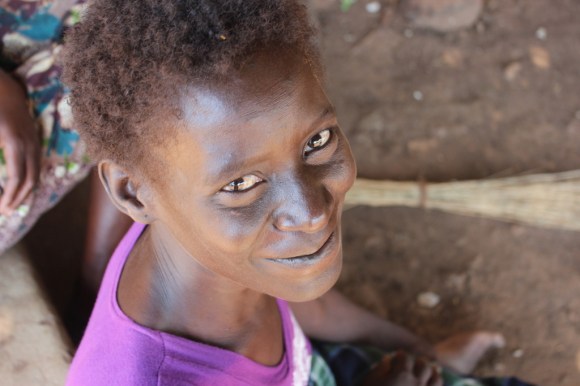
Her prognosis was poor.  But her name? Esperança. The Portuguese word for “hope.”  And for Esperança, hope proved to be stronger than the bacteria that fought for her life.

2012-10-cobue 280

A team of dedicated people worked for hours each day to clean Esperança’s sores. Though I imagine the process was agonizingly painful, I never heard Esperança complain or grumble.

But behind Esperança’s wounds lurked an even more concerning problem: her immune system had been decimated by HIV.  HIV works within the human body by attacking CD4 cells, which serve as commanders in the body’s defense system.  Someone with a healthy immune system typically has a CD4 count of maybe 1000. A CD4 count of 350 or below indicates widespread damage to the immune system, and is a cause for significant concern.  Esperança’s CD4 count was 12.

She had first been diagnosed with HIV in 2008 and had faithfully taken her ARV medications twice a day, as instructed. But the ARVs were no longer working.

In hushed discussions with the doctor, I compassionately hoped that Esperança could at least recover to the point of being able to sit up before she died.

How rational—or naïve—I was.

Three days into her wound care, with thousands of milligrams of antibiotics circulating through her body, Esperança greeted us with glee.  Giddy, she explained that she had managed to leave her bed overnight to go to the bathroom outside.  This was something she hadn’t done in weeks.

Esperança, already all too familiar with death (having lost her only child), now admits that death was on her mind during these days of hospitalization. But that morning, her joy of having been able to get out of bed overwhelmed her thoughts of death.

A team of efficient and dedicated people in high places got authorization from the national Ministry of Health for Esperança to begin a new regime of ARVs—a significantly more expensive set of “second line” medications that are only available to a small proportion of Mozambicans living with HIV.

Within days, Esperança’s increasing mobility and healing sores proved that these new ARVs were effectively halting HIV’s reproduction within her body.  Esperança continued to improve, and was discharged from the hospital only a month after I’d dreamed that she’d be able to sit up before she died.

She arrived home to surprised celebration.  Friends and neighbors told her they didn’t think she’d ever step foot in Mala again.  The “Mother’s Union” women’s group surrounded her with prayers of thanksgiving.

2012-11-cobue 140

Esperança had clung to the hope that too often eludes me. She had the courage to live beyond the facts, fully aware of the possibility of being humiliated in that hope.

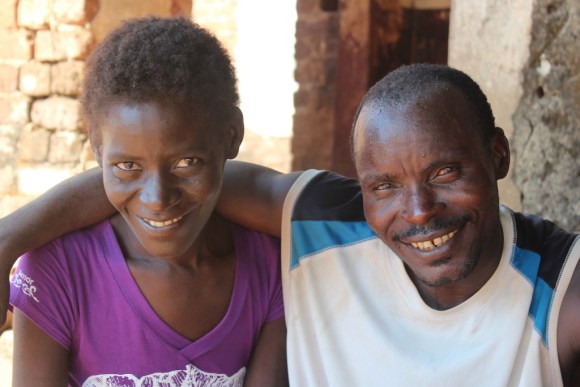
William, a fisherman turned HIV technician extraordinaire, and one of Esperança’s primary caregivers, explains “most people didn’t think she’d live to seek the weekend.” “I praise God.”

Esperança has gained seven pounds in the past two weeks.
2012-11-cobue 209

Today’s global World AIDS Day theme is  “Getting to Zero: Zero new HIV infections. Zero discrimination. Zero AIDS related deaths.”  Properly managed, HIV is no longer a death sentence.  We are still far from that reality here in Mozambique, where tens of thousands of people still die annually from AIDS-related causes. But Esperança’s life gives flesh to the vision of zero deaths.

Esperança wouldn’t be alive today without second line ARVs. She wouldn’t be alive if her family hadn’t received treatment and teaching about HIV from Salt, Light, Health and Life Team activists. She wouldn’t be alive if her mother, her primary care-giver over the past months, had given up. She wouldn’t be alive without the daily wound care she received from a team of informally trained lay people.  She wouldn’t be alive without the thoughtful conversations between several different doctors, hundreds of miles apart. She wouldn’t be alive without the activists around the world who lobbied over the years for lower ARV prices, and the PEPFAR funds that made her medication available. But the obligatory prerequisite to all of that was her own deep hope. Esperança’s esperança.

2012-11-cobue 190

Yes, medicines saved Esperança. But had she had any less esperança, she would never have made it to the phase where she could have received these medicines.  Esperança lives today not only because of the miracle of newfangled medicines, but also because of good old fashioned hard work and her resilient human spirit.

I didn’t know Esperança before October. But I imagine that she must have practiced living out her name for years.  Only a well-practiced hoper could have hoped like she did.

Cobue, 1 December 2012
Rebecca J. Vander Meulen
rvandermeulen@fastmail.fm
www.rvmphotography.com

Tagged , , , , , , , ,

sabbath tuesday mornings

the beauty of the sabbath
and the reminder of both
all we can accomplish
and all we can only hope for
in our work
is found in
the beauty of the sabbath

rest required
in small part because we need the break
in large part because we need the reminder
that we are joining in the work
not steering it
not guiding it
not forcing it
but joining it
but learning it
but trusting it

and so the sabbath
becomes the reminder
that we are invited
that we are needed
that we are a part,

and only a part
a humble
a grateful
a broken part,

of the magic of the work.
so there is always time to rest
even on sabbath Tuesday mornings.

djordan
Pine Tree

Tagged , , , , , , , , , , , , ,

today is the day | on Luke 4

He went to his hometown.
He went to the temple, like he always did.

He went to the place that taught him the scriptures.
He went to the place that raised him in the faith.
He took the papers they had taught him with.
He took the place they had raised him in.

And he turned everything upside down
even though it was all that had been there all along.

“The Spirit is on me
Because he has annointed me
to tell the poor the good news
to tell you all of the prisoners’ release
to tell of the blind being able to see
to tell of the wounded victims’ new freedom
to announce the year of God’s favor”

He handed them back the words they had long ago taught him
And sat back down where he had been sitting for many years.

They stared.

And he said, “Today is the day.”

And it wasn’t that it had never been said before.
And it wasn’t that it had never been read before.
But he was filled with something big and huge that has been
saying it since the beginning of time
and when he was in the right place
and when the time was right
the words said something they had never said before.

and that’s when the time comes, like it always comes.

djordan
Pine Tree

Tagged , , , , , , , , ,

thanks, London.

I feel an increasing struggle as to what it means to be who we have each been called to be, but only in the context of a grander story, the story of the world, and even bigger than that, the story of God and what he has been all along and is now doing in the world.

It’s a struggle worth increasing struggle.

In London’s closing ceremony, all the pieces made the whole. All the pieces, faces, names, styles, dances, artists made a fascinating whole. They, with the opening ceremonies, told a story of the global mark made by individuals, groups, artists, authors, doctors, and stories. There were videos, moving sculptures, light shows…each only briefly, artistically, dramatically and perfectly making their entrance, momentary dance, and exit from the stage.

In sharp contrast to the awe-inspiring show of Beijing’s ceremonies, the spectacle was made in different ways. Beijing had the lights and the smoke and the choreography and the music, but no names, no celebrated players, no celebrated individuals making celebrated marks. A show can be made without characters, but a story cannot be told. Something no doubt was missing. But the celebration of only individuals, often our problem in the West, leaves a similar emptiness.

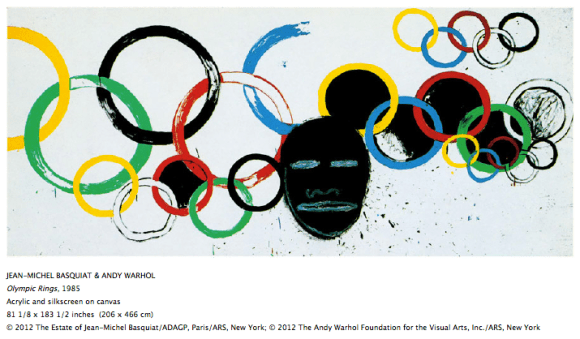
But a single story told by the voices of many characters… One story of humanity trying its best, with glimpses and mumblings––like the olympics––to tell a single story well together. A story of individuals making marks on a bigger storyline being written of what God is doing in and for and with the world.

Till kingdom comes.

Thanks, London.

djordan
Pine Tree

Tagged , , , , , , , , , , , , , , , , ,

compared with the task | on luke 4

the sharp contrast of common ambition
compared with the task of announcing the kingdom:

I’ll give you a feast;
I’m here to tell the poor their day has come.
I’ll give you authority and prestige and power;
I’m here to talk about letting the jailbirds loose.
I’ll prove you can do whatever you want and still be safe;
I’m here to announce the time has come
for those on the bottom,
for those who are poor,
for those who are blind,
for those who have been victimized,
for those who have victimized,
it is the time for God to make them his favorites.

The sharp contrast of common intention
compared with the task of announcing the kingdom:

he rolled the scroll back up and sat down.
“Today, you are watching it happen…”

djordan
Pine Tree

Tagged , , , , , , , , , , , , , , , , , , , , ,

divine proxy | intro to a series

The notion is not a new one, but it appears to be one seldom discussed explicitly, unless I am missing the entire conversation altogether (please let me know if I am). I want to spend a few posts on the idea of divine proxy. I hit the concept in “Congregation as Expert; a New Way Forward” during the “Culture and Crises” lecture series. It’s something that lurks behind practitioners in the helping fields, especially those practitioners who are Christians, as we falsely imagine that we are the changing force in the lives of our clients.  It’s something that lurks in church offices and behind the desks and efforts of those who try to help and change situations being faced by others.

Today, the idea itself could use explanation, however brief.

Divine proxy is the idea that when someone is speaking from authority, whether professional or religious, whether self given, institutionally given, or transcendently given, they are then interacted with, heard or perceived as becoming the official voice of the source of the authority.

So, …

a therapist who speaks on matters of relationships can become the final authority on a specific relationship.

a pastor who speaks on matters of moral or spiritual issues can become the actual voice of God on specific matters with individual people.

So, …

if a therapist has a misguided view, or is offering a personal, cultural or biased view on someone else’s specific relational situation, the someone heeds the advice as fact, and acts accordingly whether or not everything in them says otherwise and the result is damaging and more disabling. Or maybe they do heed advice even though they feel otherwise, and it is helpful and healing and the person comes to know that to be true later. Or, the person finally hears what deep down he or she knew all along about the situation, and they are set free because the professional speaking offers a more authoritative voice than the person views his or her own voice as being.

If a pastor has a misguided view, or is offering a personal, cultural, or biased view on someone else’s specific moral or spiritual issues, the someone heeds the view as fact––from God rather than from the individual––and acts accordingly whether or not everything in her or him says otherwise and the result is damaging and more disabling. Or maybe the advice is heeded even though the individual feels otherwise, and it is helpful and healing and the person comes to know that to be true later. Or, the person finally hears what deep down he or she knew all along about the situation, and finally freedom is experienced because a pastor speaking offers a more authoritative voice than the person views his or her own voice as being.

We can quickly see how the influence of authority gives incredible weight, whether someone turns a back and walks away from the perceived authority and the authority represented forever, or someone follows the authority because it is seen as direct from the authority source, and therefore should be heeded.

While it may sound pointless or semantic, the issue quickly becomes incredibly personal and incredibly immediate. I think about people who experience great healing because a pastor sees the presence of divine proxy, and takes great caution to express anger and action toward injustice and evil.  I think about the latest story coming out of a megachurch about a spiritual abuse and misogyny that is only headed because the pastor has an unquestioned direct link to God, and questioning is called disloyalty to him…and God. I think about other church experiences where people continued to go home to abusive homes because the pastor says the wife should act more like Jesus to make the husband come around.

So it’s not pointless, and it’s not semantic, and it’s worth the time to consider, even if it’s only mine. So, the first time for a series on mosthopeful.com. We’ll see what happens.

Next up: divine proxy | stories of the phenomenon

djordan
Pine Tree

Tagged , , , , , , , , , , , , , , , , , , , , , , , , , ,